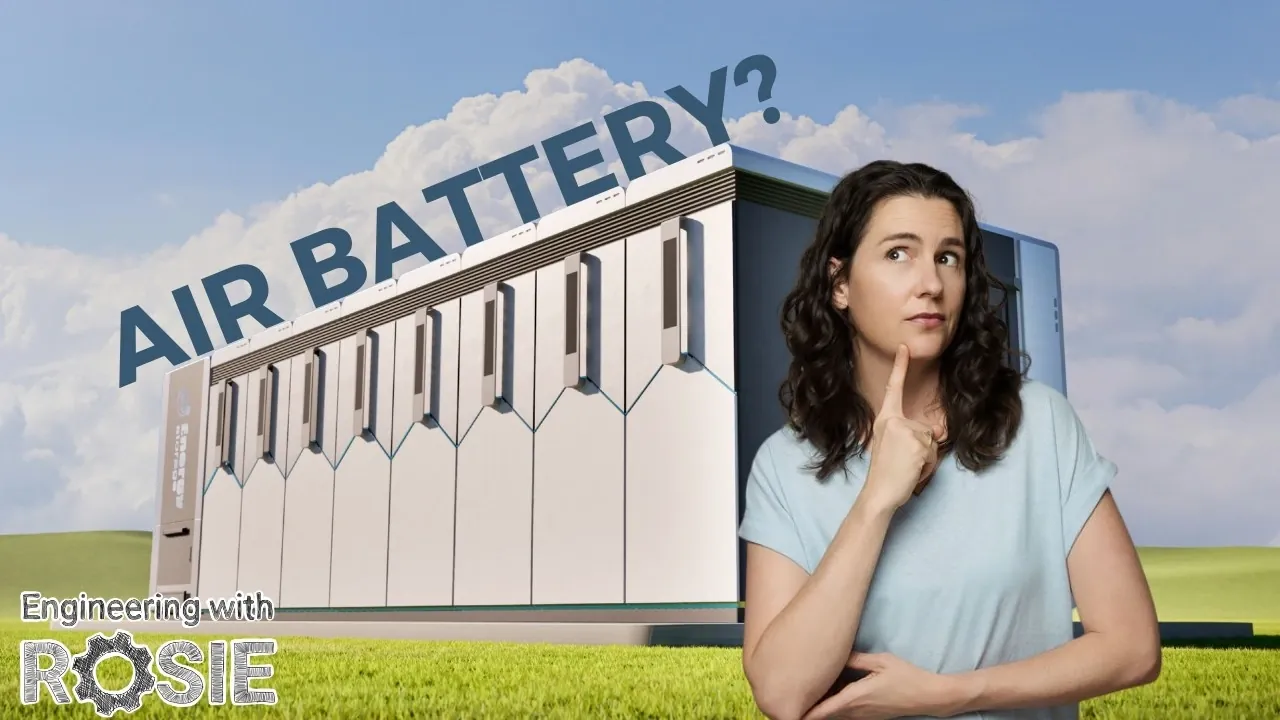
Compressed air energy storage (CAES) is emerging as a practical solution to one of renewable energy’s biggest challenges: balancing supply and demand. By compressing air during periods of excess energy production and storing it in underground caverns, CAES systems can release this stored energy when demand rises. Engineering with Rosie explores how advancements like adiabatic systems, which reuse heat generated during compression, have significantly improved the efficiency of CAES, bringing it closer to the performance of other storage technologies like lithium-ion batteries. These innovations highlight the potential of CAES to support a more stable and renewable energy grid.
In this overview, you’ll gain insight into the mechanics of CAES, from its reliance on geological formations for storage to the role of technologies like hydrostatic compensation in managing pressure. Discover how real-world projects, such as the Silver City Energy Storage Center in Australia, are demonstrating the scalability of CAES by repurposing existing infrastructure. You’ll also explore how CAES compares to lithium-ion batteries, including its advantages in longevity and cost-effectiveness, as well as the challenges it faces in broader adoption.
A Historical Perspective on Compressed Air
TL;DR Key Takeaways :
- Compressed Air Energy Storage (CAES) is gaining attention as a solution to address the intermittent nature of renewable energy by storing surplus energy in underground caverns and releasing it when needed.
- Modern advancements, such as adiabatic and isothermal systems, have significantly improved the efficiency of CAES, achieving rates of 60-70%, making it a competitive alternative to lithium-ion batteries.
- CAES relies on suitable geological formations like salt caverns or abandoned mines, with engineering solutions like hydrostatic compensation addressing challenges like pressure management and infrastructure stress.
- Real-world projects, such as the Silver City Energy Storage Center in Australia, demonstrate the scalability and practicality of CAES, with the ability to power 80,000 homes for a day at 66% efficiency.
- While CAES offers advantages like longevity and cost-effectiveness for large-scale storage, it complements rather than replaces lithium-ion batteries, contributing to a more resilient and sustainable energy ecosystem.
The use of compressed air dates back to the 19th century, when it powered pneumatic systems for energy transfer and communication. It was a innovative technology for its time, allowing industrial applications and even urban infrastructure like pneumatic mail systems. However, as electricity became the dominant energy medium due to its superior efficiency and scalability, the role of compressed air diminished. Today, the focus has shifted from energy transmission to energy storage, with CAES offering a modern application that aligns with the global push for renewable energy integration. This historical evolution underscores the adaptability of compressed air technology and its potential to meet contemporary energy challenges.
The Mechanics of CAES
CAES operates through a straightforward yet highly effective process that involves three main phases:
- Compression: During periods of excess energy production, such as when wind turbines or solar panels generate more electricity than is immediately needed, air is compressed and stored in underground caverns. This phase captures surplus energy that would otherwise go to waste.
- Storage: The compressed air remains in these caverns, often located in salt formations or abandoned mines, until energy demand increases. These geological formations provide the structural integrity needed to safely contain high-pressure air.
- Expansion: When energy demand rises, the compressed air is released and expanded. This expansion drives turbines that generate electricity, effectively converting stored energy back into a usable form.
This process not only balances energy supply and demand but also enhances the reliability of renewable energy systems by providing a buffer against fluctuations in generation.

Here is a selection of other guides from our extensive library of content you may find of interest on energy.
- Z Pinch Fusion Costs Drop, Compact Reactor Skips Magnets & Lasers
- Useful Energy vs Primary Energy: Clearer Way to Measure Electrification Gains
- Kesterite Solar Cells vs Perovskite: Efficiency and Stability
- Solar Energy S 40,000 mAh retractable solar panel and power bank
- Best Battery Life Smartphones of 2025: OnePlus 15 Leads the Way
- Airnergy Havester Battery Charges From Thin Air
- Solid-State Battery Energy Density: Donut Labs Scrutiny
- Donut Lab Solid State Battery Claims, 400 Wh/kg and Fast Charge
- Donut Lab Solid State Battery or Pseudo-Capacitor, Experts Weigh In
- Donut Labs Solid-State Battery Tests : VTT Data & Doubts
Technological Advancements in CAES
Early CAES systems faced significant challenges, particularly in terms of efficiency. Traditional designs relied on fossil fuels to reheat air during the expansion phase, resulting in efficiencies as low as 42%. However, modern innovations have addressed these shortcomings, making CAES a more competitive and sustainable option:
- Adiabatic Systems: These systems capture and store the heat generated during the compression phase. This stored heat is then reused during expansion, eliminating the need for external fuel sources and significantly improving efficiency.
- Isothermal Systems: By maintaining a constant temperature throughout the compression and expansion processes, these systems minimize energy losses and further enhance overall performance.
Thanks to these advancements, modern CAES systems can achieve efficiencies of 60-70%, bringing them closer to the performance levels of other energy storage technologies like lithium-ion batteries.
Engineering Challenges and Innovative Solutions
The implementation of CAES on a large scale is not without its challenges. Several engineering and logistical hurdles must be addressed to ensure the technology’s reliability and cost-effectiveness:
- Geological Suitability: The success of CAES depends heavily on the availability of suitable underground caverns. These storage sites must meet stringent criteria, including structural integrity, minimal air leakage and the ability to withstand repeated compression and expansion cycles.
- Pressure Management: The repeated cycling of compressed air can place significant stress on storage infrastructure. To mitigate this, technologies like hydrostatic compensation are employed. This method uses water to balance pressure changes, reducing wear and tear on the system.
By addressing these challenges, engineers are paving the way for more widespread adoption of CAES, particularly in regions with favorable geological conditions.
Real-World Applications: The Silver City Energy Storage Center
One of the most notable examples of CAES in action is the Silver City Energy Storage Center in Australia. This 200 MW facility repurposes a disused mine for compressed air storage, demonstrating the potential for CAES to use existing infrastructure. The center employs advanced technologies, including hydrostatic compensation, to achieve an efficiency rate of approximately 66%. With the capacity to supply power to 80,000 homes for an entire day, the Silver City project highlights the scalability and practicality of CAES as a solution for renewable energy storage. It serves as a model for future projects, showcasing how CAES can integrate seamlessly into modern energy grids.
Comparing CAES and Lithium-Ion Batteries
While lithium-ion batteries currently dominate the energy storage market, CAES offers distinct advantages that make it a compelling alternative in certain scenarios:
- Longevity: CAES systems have a significantly longer lifespan compared to lithium-ion batteries, which degrade over time and require frequent replacement.
- Cost-Effectiveness: In regions with suitable geological conditions, CAES can be more economical for large-scale energy storage, particularly when considering long-term operational costs.
However, CAES is not without its limitations. Its reliance on specific geological formations and higher initial capital costs can restrict its applicability. On the other hand, lithium-ion batteries offer greater versatility and scalability, making them suitable for a wider range of applications. Despite these differences, the two technologies are not mutually exclusive and can complement each other in creating a more resilient energy storage ecosystem.
The Path Forward for CAES
As the global energy landscape continues to evolve, CAES is poised to play a pivotal role in supporting the transition to renewable energy. Its ability to store large amounts of energy over extended periods makes it particularly valuable for stabilizing energy grids with high levels of renewable penetration. The future of CAES will depend on several key factors:
- Ongoing technological advancements to further improve efficiency and reduce costs.
- Identification and development of suitable geological sites for compressed air storage.
- Increased adoption of renewable energy sources, which will drive demand for large-scale storage solutions.
By addressing these factors, CAES can become an integral part of the global effort to create sustainable and reliable energy systems. As renewable energy continues to grow, the role of CAES in balancing supply and demand will only become more critical, offering a promising pathway toward a cleaner and more resilient energy future.
Media Credit: Engineering with Rosie
Disclosure: Some of our articles include affiliate links. If you buy something through one of these links, Geeky Gadgets may earn an affiliate commission. Learn about our Disclosure Policy.
