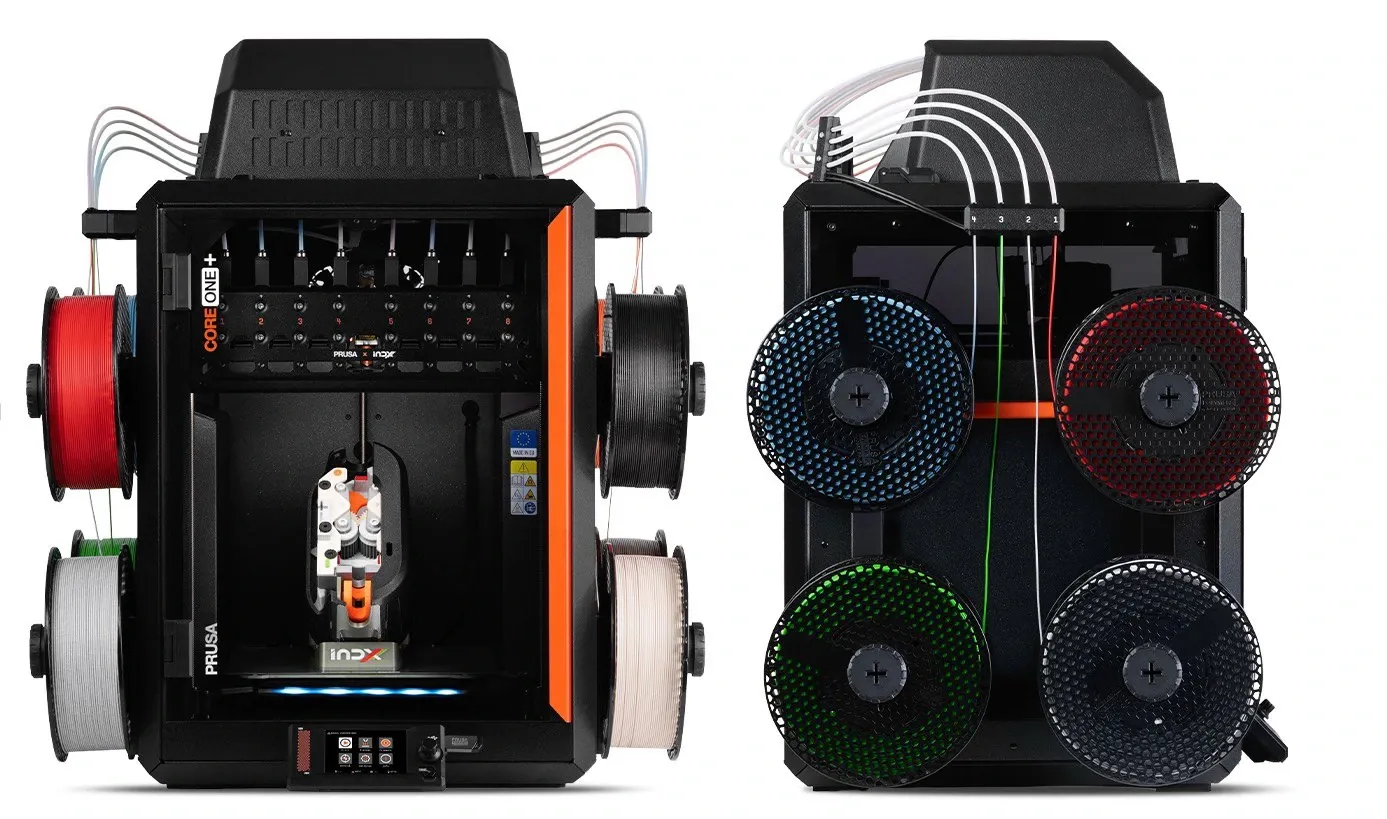
The Prusa Core One INDX, a 3D printer developed through a collaboration between Prusa and Bondtech, incorporates features such as an eight-nozzle system and induction heating to enhance functionality. However, as highlighted by Made with Layers (Thomas Sanladerer), the printer’s calibration system is heavily tailored to Prusament filaments, creating significant challenges when using alternative materials. Users have reported frequent calibration errors and difficulties with flexible or abrasive filaments, raising concerns about its versatility for diverse printing needs.
Explore the INDX’s handling of nozzle changes and how software integration issues influence its reliability during operation. Learn about the effects of limited visibility and filament mapping on user experience, as well as the durability concerns posed by firmware bugs and the absence of hardened nozzles. This feature examines these aspects to provide a clear understanding of the printer’s strengths and limitations.
TL;DR Key Takeaways :
- The Prusa Core One INDX, developed by Prusa and Bondtech, introduces innovative features like eight independent nozzles and induction heating but faces significant usability and reliability challenges.
- Calibration issues heavily optimized for Prusament filaments limit compatibility with third-party materials, reducing the printer’s versatility for advanced or experimental projects.
- User experience is hindered by obstructive design, poor lighting, limited PrusaSlicer integration and cumbersome filament mapping, complicating workflows and usability.
- Reliability concerns, including frequent tool-dropping incidents, software bugs and non-hardened nozzles, raise doubts about the printer’s durability and practicality for demanding applications.
- While the independent nozzle system and efficient tool-changing mechanisms offer unique advantages, the printer’s limitations currently overshadow its strengths, making it more of a niche product than a versatile solution.
High Expectations from a Promising Collaboration
Prusa and Bondtech, both recognized leaders in 3D printing and extruder technology, joined forces to develop the INDX. This partnership raised hopes for a new product capable of delivering exceptional performance. The extended development timeline, combined with the anticipation surrounding the collaboration, has placed the INDX under intense scrutiny. While the printer introduces several innovative features, its shortcomings have sparked debate about whether it can fulfill its potential.
Key Features of the INDX
The Prusa Core One INDX introduces a range of advanced features designed to enhance the 3D printing experience. These include:
- Eight independent nozzles: This feature minimizes material waste by reducing the need for purging, making multi-material printing more efficient.
- Induction heating and infrared temperature sensing: These technologies enable rapid heating and cooling cycles, improving overall printing efficiency.
- Passive hotend design: By eliminating onboard electronics in the hotend, this design simplifies maintenance and reduces potential failure points.
While these features distinguish the INDX from its competitors, their implementation has revealed significant flaws. These issues hinder the printer’s ability to deliver consistent performance, raising concerns about its practicality for everyday use.

Gain further expertise in 3D printers and printing by checking out these recommendations.
- $99 ChocaByte 3D Chocolate Printer In Development
- Creality Print 6 3D Print Slicing Software Beginners Guide
- New Creality SPARKX I8 3D Printer Offers Full CMYK Colors and Zero Waste from $309
- Bambu Lab H2S Review : Affordable Large-Format 3D Printing
- ELEGOO Jupiter 2 Delivers 16K Prints in a Massive Build Volume
- ELEGOO OrangeStorm Giga large volume 3D printer
- KOKONI plug-and-print family friendly 3D printer
- Ultimate Toolkit for Flawless 3D Prints – 11 Essential Tools for 3D Printing
- SV04 IDEX 3D printer with dual extruders and more only $489
- Lite3DP Gen 2 mini mSLA resin printer from $115
Calibration and Material Compatibility Issues
One of the most prominent challenges with the INDX lies in its calibration system, which is heavily optimized for Prusament filaments. This optimization creates compatibility issues with third-party materials, limiting the printer’s versatility. Specific problems include:
- Frequent calibration failures: Users often encounter inconsistent print quality when using non-Prusament filaments, making it difficult to achieve reliable results.
- Limited support for flexible and specialized materials: The printer struggles with materials such as TPU or carbon-fiber composites, restricting its application range for advanced projects.
These limitations make the INDX less appealing to users who require flexibility in material choices, particularly for experimental or professional applications. The reliance on proprietary filaments further narrows its usability, which could deter potential buyers seeking a more adaptable solution.
User Experience: A Mixed Bag
The design and software integration of the INDX present several obstacles that detract from the overall user experience. While the printer offers innovative features, its usability is hindered by key challenges:
- Obstructive design and poor lighting: The printer’s design reduces visibility during prints, making it difficult for users to monitor progress or address issues in real time.
- Limited integration with PrusaSlicer: The lack of seamless compatibility with Prusa’s own slicing software creates inefficiencies, particularly for multi-material projects that demand precise filament mapping.
- Cumbersome filament mapping: Managing high-poly models in the slicer often results in errors or delays, frustrating users and complicating workflows.
These shortcomings undermine the printer’s advanced capabilities, making it less user-friendly than anticipated. For a machine positioned as a innovative solution, these design and software flaws represent significant drawbacks.
Reliability Concerns
Reliability is another area where the INDX struggles to meet expectations. Users have reported frequent tool-dropping incidents during prints, which disrupt progress and lead to wasted materials. Additional concerns include:
- Persistent software and firmware bugs: Updates intended to address issues often introduce new problems, creating a cycle of frustration for users.
- Non-hardened nozzles: The standard nozzles wear out quickly when printing with abrasive materials, raising questions about the printer’s durability and long-term viability.
These reliability issues limit the printer’s practicality for demanding or long-term applications. For users seeking a dependable machine for professional or high-volume use, the INDX’s current state may fall short of expectations.
Strengths and Limitations
Despite its flaws, the Prusa Core One INDX offers unique capabilities that could make it valuable in specific scenarios. For instance:
- Independent nozzle system: This feature significantly reduces material waste, a major advantage for multi-material printing where efficiency is critical.
- Efficient tool-changing mechanisms: When functioning correctly, these mechanisms streamline workflows and enhance productivity.
However, these strengths are overshadowed by the printer’s limitations. The issues with calibration, material compatibility and reliability make it difficult for the INDX to serve as a versatile, all-purpose 3D printer. In its current state, the machine functions more as a proof of concept than a practical solution for most users. Substantial improvements in software integration, hardware reliability and material support are necessary to unlock its full potential.
The Prusa Core One INDX represents an ambitious attempt to push the boundaries of 3D printing technology. Its innovative features, such as independent nozzles and induction heating, highlight the possibilities for faster, cleaner and more efficient printing. However, significant challenges in calibration, user experience and reliability prevent it from fully delivering on its promise. While future updates and refinements may address these shortcomings, the INDX currently remains a niche product best suited for specific applications where its unique capabilities can be fully utilized. For most users, the printer’s limitations outweigh its benefits, making it a challenging choice in an increasingly competitive market.
Media Credit: Made with Layers (Thomas Sanladerer)
Disclosure: Some of our articles include affiliate links. If you buy something through one of these links, Geeky Gadgets may earn an affiliate commission. Learn about our Disclosure Policy.
