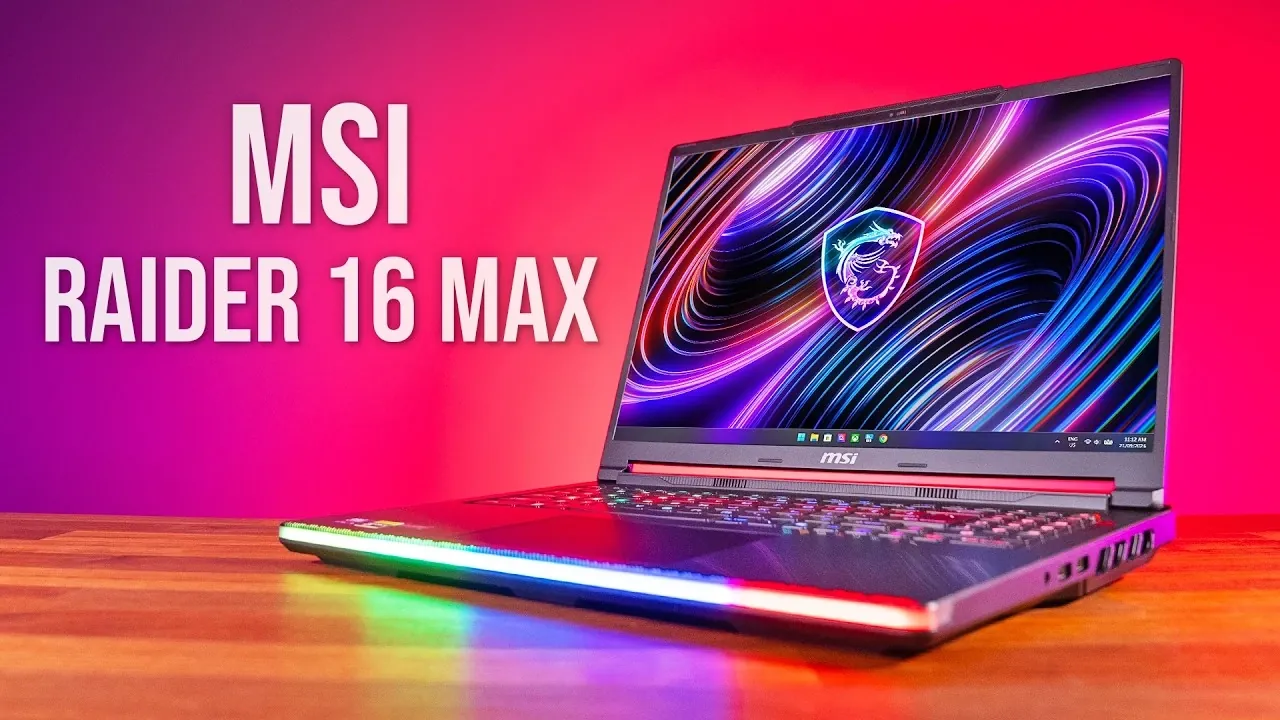
The MSI Raider 16 Max (2026) is a gaming laptop that prioritizes performance above all else, featuring standout components like the Intel 290HX CPU and Nvidia RTX 5090 GPU. With its 16-inch OLED display offering vivid colors and deep blacks, it’s designed to meet the demands of gamers and professionals alike. However, as noted by Jarrod’sTech, this power comes with trade-offs, including loud fan noise in high-performance modes and a bulky design that limits portability. The absence of features like Advanced Optimus and G-Sync also highlights some of the compromises made in this otherwise high-spec machine.
Dive into this analysis to explore how the Raider 16 Max handles intensive gaming scenarios with features like DLSS and Apex mode and learn about the practical implications of its thermal design on noise levels and usability. You’ll also gain insight into its build quality, including the durability concerns tied to its mixed-material chassis, as well as the upgradability options that make it a future-proof choice for enthusiasts. This breakdown will help you weigh its strengths and weaknesses to determine if it aligns with your specific needs.
Power for Gaming and Productivity
TL;DR Key Takeaways :
- The MSI Raider 16 Max delivers exceptional gaming and productivity performance with its Intel 290HX CPU, Nvidia RTX 5090 GPU and vibrant 16-inch OLED display, but it comes with loud fans and a high price tag.
- While the laptop offers advanced cooling and customizable performance modes, its bulky design, average build quality and short battery life hinder portability and long-term durability.
- The OLED display provides vivid visuals but lacks Advanced Optimus and G-Sync support and its glossy finish can cause reflections in bright environments.
- Upgradability is a strong point, with easy access to RAM, storage and Wi-Fi card, supporting the latest DDR5-6400 RAM and PCIe Gen 5 storage standards for future-proofing.
- Despite its premium hardware, the Raider 16 Max faces stiff competition from alternatives like the Lenovo Legion Pro 7i and ASUS ROG Scar 16, which offer similar specs at more competitive prices.
The Raider 16 Max is engineered for speed and efficiency, making it one of the most powerful laptops in its class. Whether you’re gaming at ultra settings or handling demanding workloads, this machine delivers exceptional performance.
- Gaming Excellence: Equipped with the Nvidia RTX 5090 GPU, the Raider 16 Max ensures smooth gameplay even at 4K resolutions with ray tracing enabled. DLSS technology further enhances performance, delivering fluid frame rates in modern titles without compromising visual fidelity.
- Performance Modes: The Apex mode unlocks the laptop’s full potential, offering unparalleled speed and responsiveness. However, this comes at the cost of loud fan noise and higher temperatures. Balanced mode provides a quieter experience with only a slight reduction in performance, making it more suitable for everyday use.
Build and Design: Functional but Lacking Premium Appeal
While the Raider 16 Max is designed with functionality in mind, it falls short of the premium build quality offered by some competitors. Its combination of a metal lid and plastic chassis prioritizes practicality over aesthetics.
- Weight and Portability: Weighing 5.9 lbs (2.7 kg) without the charger, the Raider 16 Max is heavier than most 16-inch gaming laptops, which limits its portability.
- Design Flaws: The surface is prone to fingerprints, though it is relatively easy to clean. Its utilitarian design may not appeal to users seeking a sleek and modern aesthetic.
- Durability Concerns: The build quality feels less robust compared to alternatives like the Lenovo Legion Pro 7i or ASUS ROG Scar 16, raising questions about its long-term durability.
Display: Vibrant OLED with Some Limitations
The 16-inch OLED display is one of the standout features of the Raider 16 Max, offering vivid colors and deep blacks that enhance gaming and media experiences. However, it does have a few shortcomings.
- Brightness and Contrast: With a peak brightness of 500 nits, the display performs well in most environments. However, the glossy finish can cause distracting reflections in brightly lit spaces, which may hinder usability.
- Missing Features: The absence of Advanced Optimus and G-Sync support may disappoint users who prioritize the smoothest possible gaming experience, especially at higher refresh rates.

Enhance your knowledge on MSI products by exploring a selection of articles and guides on the subject.
- How to Install Valve’s SteamOS on the MSI Claw 8 AI+ Handheld
- Gamers Benefit from MSI Claw 8 EX 47W Power vs MSI Claw 8 AI+
- SteamOS 3.10 on MSI Claw Ex AI Plus Lacks Intel XMX Drivers
- MSI Pro Max Edge AI+ Packs a Radeon 8060S with 96GB VRAM
- Thinking of Buying a Flagship? the Samsung S27 Ultra Changes Everything
- MSI Claw 8EX Ai+ Costs $1800 but Hits 70 FPS in Cyberpunk 2077
- MSI Claw 8 EX AI+ Beats Steam Deck in Raw Processing Power
- Insane FPS boost on MSI Claw games console using Lossless Scaling
- MSi Claw 8 Ai eGPU Desktop Mode 1440P Docked Handheld Gaming
- $7,000 MSI Titan 18 HX Draco Epic Laptop Packs an NVIDIA GeForce RTX 5090
Thermals and Noise: Effective Cooling at a Cost
The Raider 16 Max employs an advanced cooling system featuring three fans and a phase-change thermal compound to manage heat effectively. While the system ensures stable performance under load, it comes with some trade-offs.
- Cooling Efficiency: The thermal design keeps the keyboard cool even during heavy use, making sure comfort during extended gaming sessions. However, the fans become extremely loud in Apex mode, which can be distracting in quieter environments.
- Quieter Options: Balanced mode significantly reduces fan noise while maintaining respectable performance, making it a more practical choice for non-gaming tasks or shared spaces.
Keyboard and Touchpad: Functional but Uninspiring
The Raider 16 Max offers a functional keyboard and touchpad, but neither stands out in a competitive market.
- Keyboard Feel: The per-key RGB lighting, customizable through SteelSeries software, adds a layer of personalization. However, the typing experience lacks the premium tactile feedback found in competing models, which may disappoint users who prioritize a high-quality keyboard.
- Touchpad Issues: The touchpad feels loose and less responsive, which could frustrate users who rely on precise input for productivity tasks or gaming.
Portability and Battery Life: Average at Best
The Raider 16 Max’s portability is hindered by its bulky design and limited battery life, making it less ideal for users on the go.
- Battery Life: The 92-Wh battery delivers under 5 hours of light usage, which is average for a gaming laptop of this caliber. Heavy gaming sessions will require the charger to be plugged in at all times.
- Charger Weight: The 400W charger adds to the laptop’s overall bulk, further reducing its convenience for travel.
- Sleep Efficiency: On a positive note, the laptop’s sleep power consumption is more efficient than many competitors, which helps conserve battery when not in use.
Upgradability: Future-Proofing Made Easy
One of the Raider 16 Max’s key strengths is its ease of upgradability, allowing users to keep the hardware current as technology evolves.
- Accessible Components: The RAM, storage and Wi-Fi card are easily accessible, making upgrades straightforward for users who want to enhance performance over time.
- Latest Standards: The laptop supports DDR5-6400 RAM and PCIe Gen 5 storage, making sure compatibility with the latest technologies and future-proofing your investment.
Connectivity and Ports: Decent but Not Perfect
The Raider 16 Max offers a good selection of ports, though it falls short in certain areas that may matter to specific users.
- Port Layout: HDMI, Ethernet and USB-C ports are conveniently placed at the back to reduce cable clutter, improving desk organization.
- VR Limitations: The lack of a direct Nvidia GPU connection via USB-C limits its compatibility with virtual reality setups, which may be a drawback for VR enthusiasts.
Audio and Camera: Serviceable but Unremarkable
The audio and webcam performance of the Raider 16 Max are adequate but fail to leave a lasting impression.
- Speakers: The sound quality is decent for casual use, but distortion becomes noticeable at higher volumes, which may detract from the overall experience.
- Webcam: The 1080p webcam includes IR support for Windows Hello, but its mediocre image quality makes it less suitable for professional video calls or content creation.
Price and Competition: A Premium Option with Alternatives
The Raider 16 Max is positioned as a premium choice in the gaming laptop market, with a price tag that reflects its high-performance hardware. However, competitors like the Lenovo Legion Pro 7i and ASUS ROG Scar 16 offer similar specifications at more competitive prices, making them viable alternatives for budget-conscious buyers.
Pros:
- Exceptional CPU and GPU performance for gaming and productivity.
- Vibrant OLED display with deep blacks and fast response times.
- Easy upgradability for RAM and storage.
- Cool keyboard temperatures during heavy use.
Cons:
- Loud fans in high-performance modes.
- Loose touchpad and average keyboard feel.
- Heavy and bulky design for a 16-inch laptop.
- Lacks Advanced Optimus and G-Sync support.
- Short battery life and mediocre webcam quality.
- High price compared to competitors with similar specs.
Bottom Line
The MSI Raider 16 Max is a powerhouse designed for users who prioritize raw performance and customization. While it excels in processing power and display quality, its compromises in build quality, noise levels and price make it a niche choice. For performance enthusiasts willing to overlook these drawbacks, the Raider 16 Max offers a compelling package. However, for most users, more balanced and affordable options are available in the market.
Media Credit: Jarrod’sTech
Disclosure: Some of our articles include affiliate links. If you buy something through one of these links, Geeky Gadgets may earn an affiliate commission. Learn about our Disclosure Policy.
