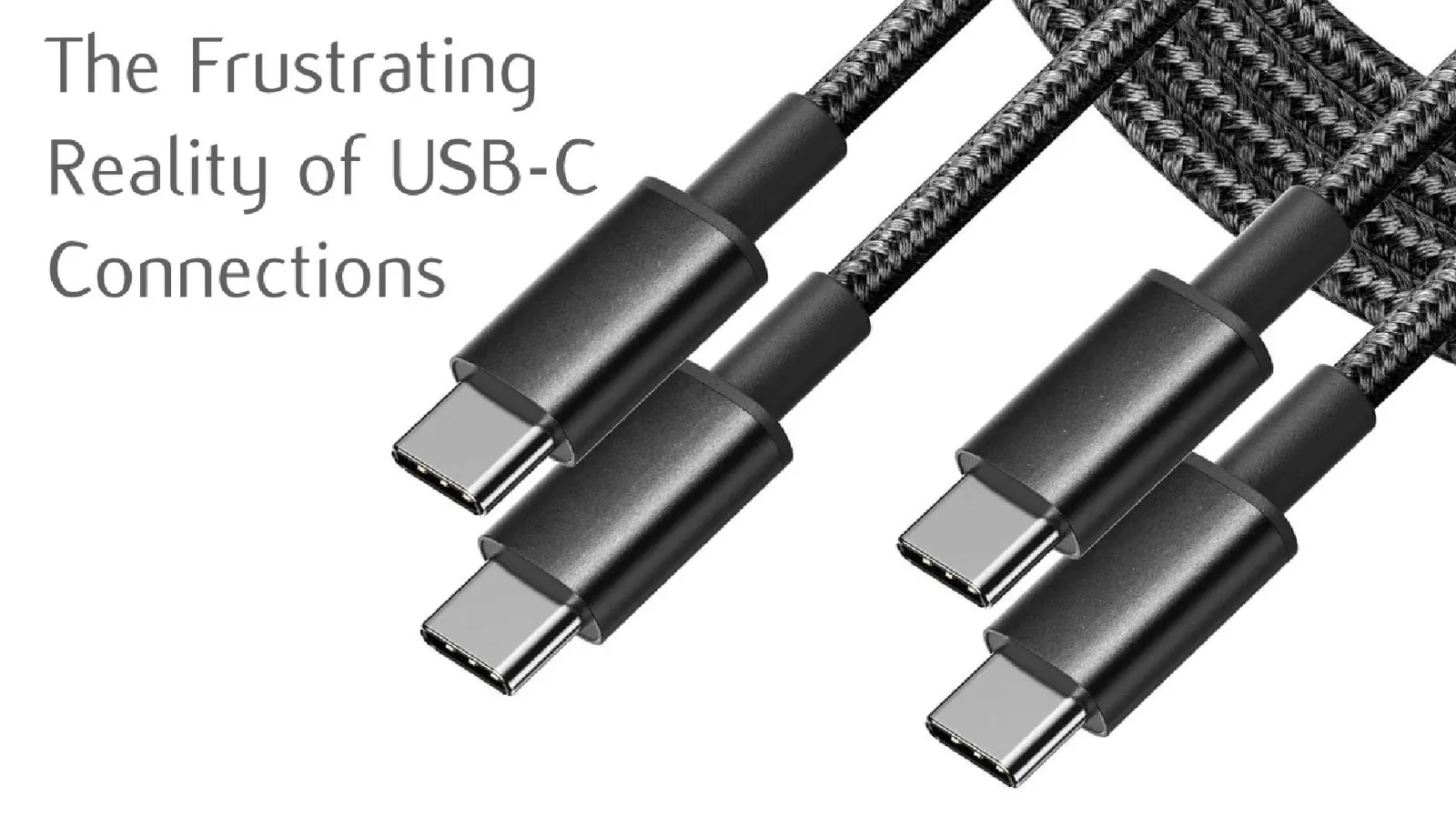
Have you ever plugged in a USB-C cable, expecting seamless charging or lightning-fast data transfer, only to be met with disappointment? You’re not alone. Despite its sleek, reversible design and promises of universal compatibility, USB-C has become a source of frustration for countless users. From cables that mysteriously fail to charge your device to others that don’t deliver the blazing speeds they advertise, the reality of USB-C is riddled with inconsistencies. The culprit? A tangled web of complex standards and poorly communicated capabilities that leave even tech-savvy users scratching their heads. What was supposed to be the ultimate connector often feels like a gamble, and it’s time we unpack why.
In the video below Switch and Click explore the messy truth behind USB-C’s shortcomings and what makes it so unreliable for many users. You’ll discover why not all USB-C cables are created equal, how hidden factors like internal wiring and e-marker chips impact performance, and why the lack of clear labeling has turned buying a cable into a guessing game. Whether you’re frustrated by slow charging, underwhelming data transfer speeds, or cables that fail to deliver on their promises, this deep dive will shed light on the challenges of navigating USB-C’s complexities. By the end, you might just see this so-called “universal” standard in a whole new light.
USB-C Challenges Explained
TL;DR Key Takeaways :
- USB-C was designed as a universal connector with a reversible design, promising higher power delivery and faster data transfer, but inconsistent standards have led to user frustration.
- Not all USB-C cables are created equal; their internal wiring and features vary, affecting functionality like charging, data transfer, and video output.
- Power Delivery (PD) enables faster charging, but many cables lack essential components like e-marker chips, limiting their ability to support high-power charging up to 240W.
- Data transfer speeds range widely, from 480 Mbps (USB 2.0) to 80 Gbps (USB 4/Thunderbolt 5), with advanced features like video output and PCIe tunneling often limited to shorter cables.
- The lack of clear labeling and universal standards makes it difficult for users to identify cable capabilities, leading to confusion and compatibility issues in the market.
What Makes USB-C Different?
USB-C represents the latest evolution of the Universal Serial Bus (USB) standard, designed to unify and improve connectivity across devices. Its reversible design eliminates the frustration of aligning connectors, while its potential for higher power delivery and faster data transfer rates makes it a significant upgrade over older connectors. However, the reality is more complicated. Not all USB-C cables are created equal, and their internal wiring can vary significantly, ranging from 6 to 24 wires. This variability directly impacts their functionality, creating confusion for users who expect uniform performance.
For instance, some cables may only support basic charging and data transfer, while others are equipped for advanced features like video output or high-speed data transfer. Without clear labeling or universal standards, it’s challenging to determine what a cable can do at a glance. This lack of transparency undermines the promise of USB-C as a truly universal solution.
Power Delivery (PD): The Promise and the Problem
One of USB-C’s most advertised features is Power Delivery (PD), which enables faster and more efficient charging. Through a process called “negotiation,” the device and charger communicate to determine the optimal voltage and current, making sure safe and efficient power transfer. In theory, this should make USB-C an ideal choice for charging everything from smartphones to laptops.
However, not all USB-C cables support high-power delivery. For example:
- Cheaper or older cables often lack critical components like resistors or e-marker chips, which are essential for safe and efficient charging.
- Cables without an e-marker chip may only support 15W charging, far below the 240W maximum that USB-C PD can achieve.
This inconsistency means that even if your charger and device support fast charging, using the wrong cable can bottleneck performance. As a result, users are left frustrated when their devices charge slower than expected or fail to charge altogether.
The Frustrating Reality of USB-C & Why it Never Works

Explore further guides and articles from our vast library that you may find relevant to your interests in USB-C.
- Plugable 240W USB-C power and charge monitor
- iPhone 14 to come with USB-C (Video)
- Reminder: HyperDrive USB-C Hub with 4K HDMI Support, Save 25
- Kolude KD-K1 keyboard and USB-C hub in one
- TS80 USB-C soldering Iron with adjustable temperature
- USB-C what is it and why it matters
- Samsung 512GB BAR Plus & FIT Plus USB-C flash drives
- Acer PM1 15.6 inch USB-C portable monitor from $130
- New Apple MacBook Equipped With USB-C Port For Charging And
- Dockcase USB-C Hub : Portable High-Speed Data Transfer
Data Transfer Speeds: A Wide Range of Capabilities
USB-C cables also vary widely in their data transfer capabilities, adding another layer of complexity. While some cables support basic speeds of 480 Mbps (USB 2.0), others can handle up to 80 Gbps with USB 4 or Thunderbolt 5. Thunderbolt, a high-performance subset of USB-C, offers advanced features such as:
- DisplayPort for video output, allowing high-resolution external displays.
- PCIe tunneling for high-speed data transfers, ideal for professional workflows.
However, these advanced capabilities come with trade-offs. For instance:
- Thunderbolt cables are often limited to shorter lengths (e.g., 3.3 feet) to maintain performance and signal integrity.
- Longer cables may not support the same speeds or features, which can be inconvenient for users with specific setups, such as connecting to distant monitors or docking stations.
This variability makes it essential to carefully evaluate a cable’s specifications before purchasing, as the wrong choice can lead to slower data transfers or limited functionality.
The Problem of Inconsistent Standards
One of the most significant challenges with USB-C is the lack of clear labeling and consistent standards. As a user, you might assume that any USB-C cable will support fast charging or high-speed data transfer, only to discover that it doesn’t. This inconsistency is further complicated by several factors:
- The absence of universal labeling, making it difficult to identify a cable’s capabilities at a glance.
- The growing trend of devices being sold without included cables, forcing users to navigate a confusing and oversaturated market.
- Length limitations for high-speed cables, which can restrict flexibility in certain setups, such as connecting to external displays or peripherals.
Without clear guidance, users are often left guessing, which increases the likelihood of purchasing cables that fail to meet their needs. This lack of standardization undermines the convenience that USB-C was supposed to deliver.
How to Choose the Right USB-C Cable
Selecting the right USB-C cable requires careful consideration of your specific needs and an understanding of the cable’s capabilities. Here are some key factors to evaluate:
- Power Delivery: If you need fast charging, look for cables that support high power delivery, such as those rated for up to 240W.
- Data Transfer Speeds: Ensure the cable supports the speeds you require, such as 10 Gbps for USB 3.2 or 80 Gbps for USB 4/Thunderbolt 5.
- Additional Features: If you need video output or high-speed data transfer, opt for certified Thunderbolt cables that include these capabilities.
- Brand and Certification: Choose cables from reputable brands with clear labeling and certifications to ensure reliability and safety.
- Cable Length: Be cautious with longer cables, as they may not support the same speeds or features as shorter ones, particularly for high-performance applications.
By prioritizing these factors, you can reduce the risk of compatibility issues and ensure better performance for your devices. Investing in high-quality, certified cables may cost more upfront but can save you time and frustration in the long run.
Understanding USB-C’s Complexities
USB-C was designed to simplify connectivity, but its inconsistent standards and varying capabilities have made it anything but straightforward. While no single cable can meet every need, understanding the specifications and limitations of USB-C can help you make informed decisions. By choosing high-quality, certified cables from reputable brands and carefully evaluating your specific requirements, you can minimize frustration and unlock the full potential of USB-C. With the right approach, USB-C can still deliver on its promise of versatility and convenience, even if it requires a bit more effort to navigate its complexities.
Media Credit: Switch and Click
Disclosure: Some of our articles include affiliate links. If you buy something through one of these links, Geeky Gadgets may earn an affiliate commission. Learn about our Disclosure Policy.
