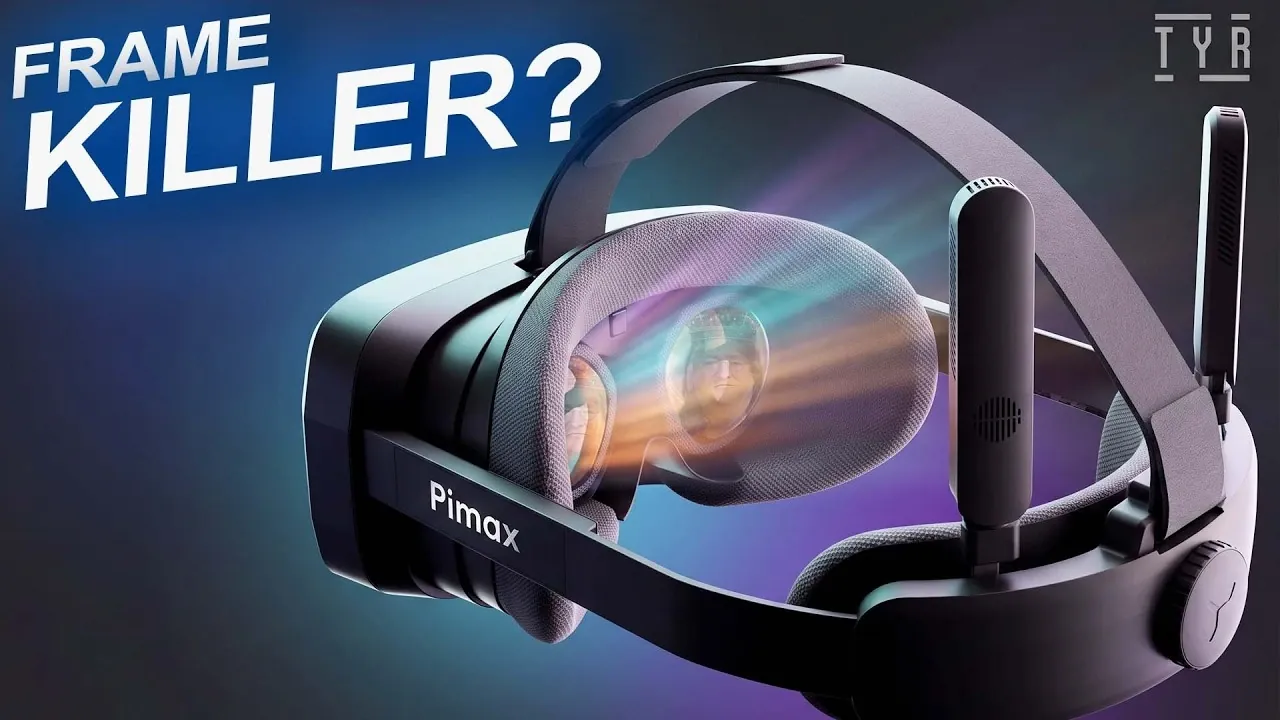
The Pimax Crystal Pro stands out as a high-end wireless PC VR headset designed to deliver sharp visuals and versatile connectivity options. Featuring dual mini LED panels with a resolution of 2880×2880 per eye, it promises an immersive visual experience with exceptional clarity. Tyriel Wood explores how the device’s modular design, including swappable faceplates and compatibility with Valve Index controllers, allows users to tailor the headset for various VR applications. However, considerations like its front-heavy weight and reliance on an external battery highlight the trade-offs between performance and comfort.
In this explainer, you’ll gain insight into the Pimax Crystal Pro’s standout features, such as its eye-tracking capabilities for foveated rendering and its integrated spatial audio system. Discover how its connectivity options, ranging from Wi-Fi 6E to a 60 GHz wireless adapter, cater to different user preferences. Additionally, learn about the challenges tied to its pricing, accessory costs and Pimax’s track record with product launches. This breakdown provides a balanced look at what the Pimax Crystal Pro offers and the factors to weigh before investing.
New Pimax Crystal Pro
TL;DR Key Takeaways :
- The Pimax Crystal Pro features dual mini LED panels with 2880×2880 resolution per eye, delivering ultra-sharp visuals but contributing to its bulk and weight.
- It offers versatile connectivity options, including Wi-Fi 6E, an optional 60 GHz wireless adapter and DisplayPort for both wireless and wired setups.
- A modular design allows for swappable faceplates, compatibility with different tracking systems and support for Valve Index controllers, enhancing customization and versatility.
- Advanced features include inside-out tracking, eye-tracking for foveated rendering and an integrated spatial audio system for immersive VR experiences.
- Priced at $1,399 for the base model, the headset targets high-end VR enthusiasts but faces criticism for its weight, high accessory costs and Pimax’s history of delayed product launches.
Display Technology: Stunning Visuals with a Trade-Off
The Pimax Crystal Pro is equipped with dual mini LED panels, offering an impressive 2880×2880 resolution per eye. This high pixel density ensures exceptionally sharp and vibrant visuals, enhancing the sense of immersion in virtual environments. The inclusion of spherical lenses minimizes glare and chromatic aberration, resulting in a clearer and more accurate image. However, these lenses contribute to the headset’s overall bulk, which could impact comfort during extended use. For users prioritizing visual fidelity, the trade-off may be worthwhile, but comfort remains a critical consideration.
Features :
- Dual mini LED panels with 2880×2880 resolution per eye for ultra-sharp visuals.
- Supports both wireless and wired connectivity, including Wi-Fi 6E and DisplayPort.
- Modular design with swappable faceplates for enhanced customization.
- Inside-out tracking with eye-tracking capabilities for foveated rendering.
- Integrated spatial audio system for an immersive sound experience.
Connectivity: Flexibility for Every Setup
The Pimax Crystal Pro offers a range of connectivity options to suit different preferences and setups. Its Wi-Fi 6E dongle enables native wireless PC VR, providing a convenient cable-free experience. For those seeking the highest-quality wireless streaming, an optional 60 GHz wireless adapter is available for an additional $300, delivering near-lossless performance. Alternatively, the DisplayPort cable ensures a stable and reliable connection for users who prefer a wired setup, eliminating concerns about battery life and offering uninterrupted gameplay. This flexibility makes the headset adaptable to a variety of user needs and environments.
Performance and Hardware: Balancing Power and Weight
Powered by the XR2 Gen 1 chipset, the Pimax Crystal Pro delivers solid performance for most VR applications. While the chipset supports standalone functionality, it falls behind newer processors in terms of raw power, which may limit its future-proofing. To address the weight issue, the headset employs an external battery design, reducing the load on the user’s head and improving overall comfort during longer sessions. However, the external battery adds complexity to the setup, which may not appeal to all users. Despite these trade-offs, the hardware strikes a balance between performance and usability, catering to a high-end VR audience.

Uncover more insights about Pimax in previous articles we have written.
- Wired-only Pimax Dream Air SE Offers a $899 Steam Frame Rival
- Is Pimax About to Reveal a New Wireless Steam Frame Competitor?
- Pimax Crystal 8K OLED VR Review : Swappable Optics, 140-degree Option, and Rich Colors
- Pimax Crystal Super: 29 Million Pixel VR Headset Redefining High Resolution Immersion
- Pimax Portal VR portable game console and worlds first Metaverse Entertainment System (MES)
- Pimax Crystal Light VR Headset Transforming Racing Simulation
- AWE 2026 VR and AR Tech Reveals and Hands-on First Looks
- Apple Vision Pro High Costs Hinder Mainstream AR Adoption
- New Pimax Reality 12K standalone VR headset launches for $2,399
- Pimax Crystal Super VR Headset CES 2025 from $1,696
Tracking and Audio: Enhancing Immersion
The Pimax Crystal Pro utilizes inside-out tracking, combining motion and infrared sensors to deliver precise positional tracking, even in low-light conditions. A standout feature is its eye-tracking technology, which enables foveated rendering. This capability optimizes system performance by focusing resources on the area of the display where the user is looking, enhancing both visual quality and efficiency. The integrated spatial audio system eliminates the need for external headphones, providing immersive sound that complements the visual experience. Together, these features significantly enhance the sense of presence and realism in virtual environments.
Modular Design: Customization for Versatility
One of the most distinctive aspects of the Pimax Crystal Pro is its modular design, which allows users to customize the headset for various applications. Swappable faceplates enable compatibility with different tracking systems, such as lighthouse tracking or mixed reality (MR) setups. Additionally, the headset supports Valve Index controllers, offering precise lighthouse tracking for advanced VR scenarios. This modularity makes the device highly versatile, catering to a wide range of user preferences and use cases. Whether you’re a gamer, developer, or VR enthusiast, the Pimax Crystal Pro’s adaptability ensures it can meet diverse needs.
Controllers: Innovative but Costly
The Pimax Crystal Pro introduces innovative ringless controllers with a modular design. These controllers can function individually for VR gaming or be combined into a single unit for traditional gaming experiences. However, the base model of the headset includes older ring controllers and the new controllers are sold separately, adding to the overall cost. While the new controllers offer enhanced functionality and a more streamlined design, their additional expense may deter some users. For those willing to invest, the controllers provide a unique and flexible input solution.
Pricing and Availability: A Premium Investment
The Pimax Crystal Pro is positioned as a premium product, with the base model priced at $1,399, including the Wi-Fi 6E dongle. For users seeking a more advanced setup, a bundle featuring the 60 GHz wireless adapter is available for $1,899. Additional accessories, such as the new controllers and modular adapters, are sold separately, further increasing the total cost of ownership. While the headset offers innovative features and performance, its high price point may limit its appeal to a niche audience of dedicated VR enthusiasts.
Concerns and Criticism: Challenges to Consider
Despite its impressive features, the Pimax Crystal Pro faces several challenges. The lack of detailed weight specifications raises concerns about its comfort, particularly given its front-heavy design. The high cost of accessories and the overall system may deter potential buyers, especially those new to VR. Additionally, Pimax’s history of delayed product launches and reliance on renders rather than physical prototypes has led to skepticism about the headset’s delivery timeline. These factors highlight the importance of careful consideration before investing in the device.
Additional Product: “Spacian” VR Gaming PC
Alongside the Pimax Crystal Pro, Pimax has announced the “Spacian,” a pre-built PC designed specifically for VR gaming. Similar in concept to Valve’s Steam Machine, the Spacian aims to provide a plug-and-play solution for high-performance VR experiences. While no pricing details have been disclosed, it is expected to be a premium offering, further emphasizing Pimax’s focus on high-end VR solutions. The Spacian could appeal to users seeking a dedicated VR gaming system, but its success will depend on its pricing and performance relative to existing options.
Media Credit: Tyriel Wood – VR Tech
Disclosure: Some of our articles include affiliate links. If you buy something through one of these links, Geeky Gadgets may earn an affiliate commission. Learn about our Disclosure Policy.
