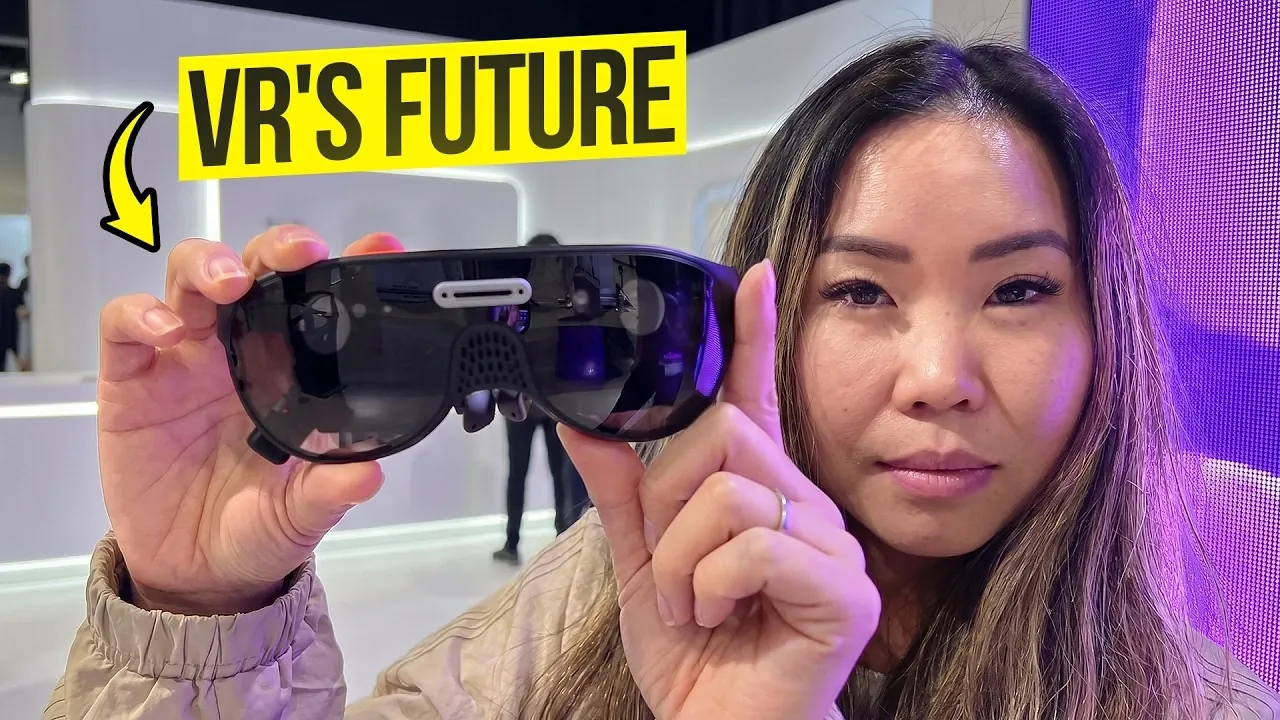
The Augmented World Expo (AWE) 2026 showcased significant developments in AR and VR, emphasizing the convergence of these immersive technologies. Cas and Chary XR highlighted devices such as the Snap SPECS, featuring a 51° field of view and electrochromic lenses and the Xreal Aura, which utilizes the Snapdragon Reality Elite chip for lightweight performance. Despite these advancements, practical hurdles like high costs and limited battery life continue to influence their accessibility and adoption.
Explore how haptic feedback is evolving with devices like the bHaptics Tact Glove DK3, designed to enhance tactile interactions in virtual spaces. Learn about display advancements, including Samsung’s Micro-OLED panels and Lumus waveguides, which aim to improve visual clarity and comfort. Gain insight into the integration of AI-driven functionalities and privacy-focused designs in devices such as the Raven Prism smart glasses, reflecting the broader trends shaping AR and VR development.
AWE 2026 Key Innovations in AR/VR Technology
TL;DR Key Takeaways :
- The Augmented World Expo (AWE) 2026 highlighted the convergence of AR and VR technologies, focusing on smaller, lighter and more user-friendly devices to drive mainstream adoption.
- Key innovations included advanced AR/VR hardware like Snap SPECS, Xreal Aura and Canon MR Headset, emphasizing usability, performance and niche applications.
- Breakthroughs in input methods and haptic feedback, such as bHaptics Tact Glove DK3 and gesture-based solutions like Keyglove, enhanced user interaction and immersion.
- Display and optics advancements, including Samsung Micro-OLED displays and Lumus waveguides, improved visual quality and comfort for AR/VR devices.
- Privacy and AI-driven features, such as Raven Prism smart glasses and Ganzin Aurora IIE eye-tracking modules, addressed user security and personalization while showcasing AI’s potential in immersive tech.
AWE 2026 spotlighted new advancements in AR/VR hardware and software, with a strong emphasis on improving usability, performance and accessibility. These innovations are shaping the trajectory of immersive technology and redefining user experiences.
- Snap SPECS: These standalone AR glasses are designed for everyday use, featuring a 51° field of view, electrochromic lenses and an impressive 7ms latency. While their $2,195 price tag and limited battery life present challenges, their robust developer ecosystem holds significant potential for future growth.
- Xreal Aura: Lightweight AR glasses powered by Qualcomm’s Snapdragon Reality Elite chip, offering a 70° field of view and dual micro-OLED displays. The inclusion of a tethered compute puck enables VR gaming and Android XR support, bridging the gap between AR and VR functionalities.
- Pimax Dream Air & Unseen Reality: Compact VR headsets featuring six degrees of freedom (6DOF) and micro-OLED panels. These devices prioritize portability and comfort, making VR more accessible for everyday users.
- Canon MR Headset: A mixed reality device tailored for professionals such as designers and 3D creators. This headset focuses on prototyping and creative applications rather than gaming, carving out a niche in the industry.
Advancements in Input and Feedback
The evolution of input methods and haptic feedback technologies was another highlight of AWE 2026. These advancements are redefining how users interact with AR/VR environments, making experiences more intuitive and immersive.
- bHaptics Tact Glove DK3: These advanced haptic gloves deliver enhanced tactile feedback, allowing users to experience a more realistic sense of touch within virtual environments.
- Keyglove & Prolo Ring: Gesture-based input solutions that enable seamless control across devices such as smart glasses and VR headsets. These innovations push the boundaries of intuitive interaction, offering users greater control and flexibility.

Gain further expertise in AR glasses by checking out these recommendations.
- Move Over, Ray-Ban Meta: Samsung’s AI Galaxy Smart Glasses Are Finally Coming This Year
- What Makes XREAL Aura the Most Important XR Release Of 2026
- Google I/O : Google and Samsung Are Changing Smart Glasses Forever
- VITURE Beast vs XREAL One Pro: Why One Set of AR Glasses Completely Dominates
- One Month Using the RayNeo Air 4 Pro Glasses: the Keep or Return Verdict
- RayNeo Air 4 Pro Offers Dual Micro OLED Displays For $239
- RayNeo X3 Pro Smart Glasses with Gemini AI, but a Major Catch Remains
- Why Snap’s New $2,195 Specs Could Be the iPhone Moment for AR
- Why the RayNeo Air 4 Pro is the Perfect DJI Neo 2 Upgrade
- Samsung’s New Smart Glasses Are Aiming Straight for Meta’s Crown
Display and Optics Breakthroughs
Improving visual quality and user comfort remains a critical focus for AR/VR adoption. AWE 2026 showcased several advancements in display and optics technologies that aim to enhance the overall user experience.
- Samsung Micro-OLED Displays: These displays deliver brightness levels of up to 40,000 nits, providing vibrant and high-resolution visuals for XR devices. This advancement significantly enhances user immersion and visual clarity.
- Lumus Waveguides: Offering a 70° field of view, these thinner and lighter waveguide optics pave the way for more compact and comfortable AR glasses, addressing a key barrier to mainstream adoption.
Privacy and AI-Driven Features
As AR/VR technologies evolve, the integration of privacy-focused features and AI-driven capabilities is becoming increasingly important. Several devices at AWE 2026 addressed these critical areas, showcasing innovations that prioritize user security and personalization.
- Raven Prism: These standalone smart glasses run on Linux-based software and feature eye tracking and hot-swappable batteries. Designed with user privacy in mind, they offer a secure and convenient experience.
- Ganzin Aurora IIE: Compact eye-tracking modules that enable gaze-based AI interactions. These modules enhance personalization and user engagement, demonstrating the potential of AI in immersive technologies.
Industry Challenges and Opportunities
While AWE 2026 highlighted remarkable progress in AR/VR technologies, it also underscored the challenges facing the industry. Developers expressed concerns about workforce reductions and the growing influence of AI, which is reshaping the industry landscape. High costs and limited battery life remain significant obstacles to widespread adoption, limiting the accessibility of these technologies for average consumers.
Despite these challenges, the event demonstrated a clear trajectory toward more accessible and user-friendly XR solutions. The innovations showcased at AWE 2026 reflect a commitment to overcoming these barriers, with a focus on creating smaller, more intuitive devices that cater to diverse user needs. As the industry continues to evolve, these advancements signal a promising future for immersive technologies, bringing them closer to achieving mainstream adoption.
Media Credit: Cas and Chary XR
Disclosure: Some of our articles include affiliate links. If you buy something through one of these links, Geeky Gadgets may earn an affiliate commission. Learn about our Disclosure Policy.
