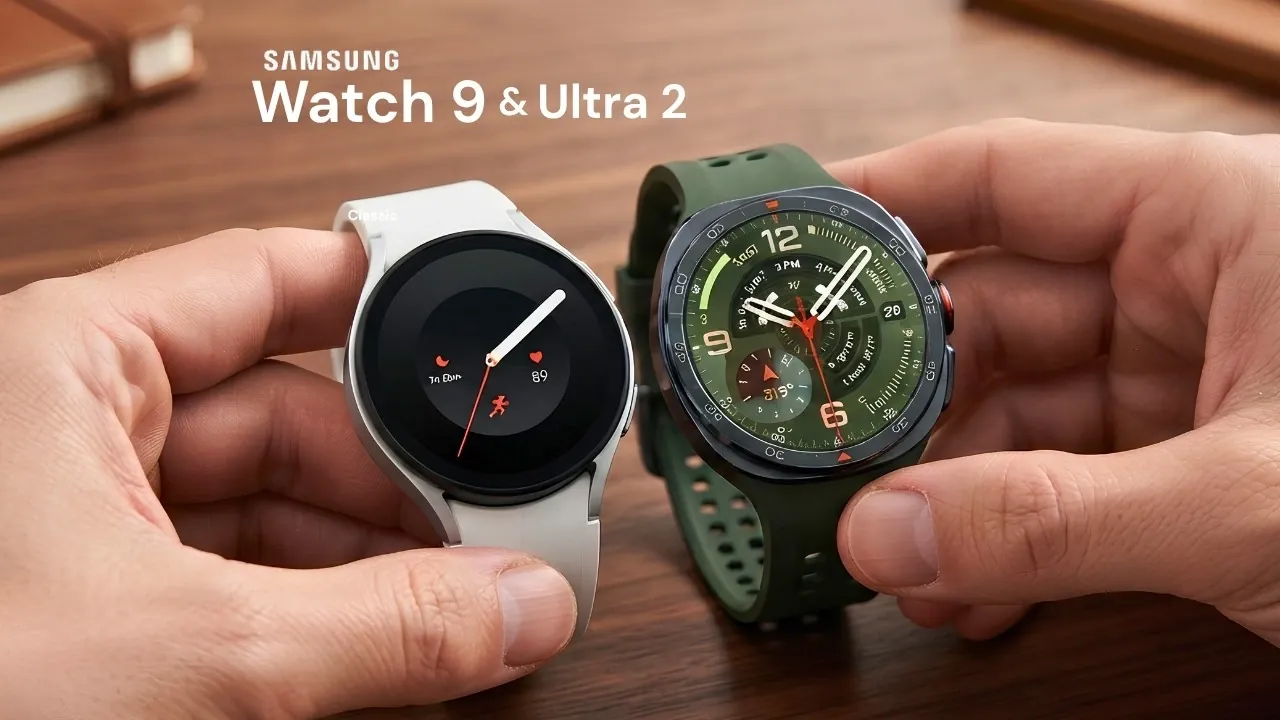
Samsung is preparing to shake up the wearable market in a way we haven’t seen in years. Ahead of the official Galaxy Unpacked event scheduled for July 22, 2026, in London, massive leaks and official teasers have painted a clear picture of what’s coming. The headline story? Samsung is reportedly abandoning its long-running in-house Exynos wearable processors.
Instead, the upcoming Galaxy Watch 9 and premium Galaxy Watch Ultra 2 are set to make a historic leap to Qualcomm’s brand-new 3nm powerhouse: the Snapdragon Wear Elite platform.
This processor shift is not just a minor spec bump—it represents a fundamental rewiring of how Samsung’s flagship smartwatches will perform, process on-device AI, and manage battery consumption.
The video below from Talks Daily Tech breaks down the initial official teasers, setting the stage for what could be the biggest wearable upgrade of the decade.

The Death of Exynos: Why the Snapdragon Wear Elite Chip is a Game Changer
For consecutive generations, Samsung has relied on its Exynos wearable silicon (most recently the Exynos W1000). While functional, Exynos has often lagged behind Qualcomm’s architectures in pure thermal efficiency and modem power draw.
By pivoting to the Snapdragon Wear Elite platform, built on a cutting-edge 3nm process, Samsung is unlocking massive performance ceilings:
- Unprecedented Speed: Leaks suggest the Wear Elite platform can deliver a stunning jump in CPU and GPU performance compared to older wearable architectures.
- Local AI Processing: The chip boasts a dedicated NPU rated at up to 10 TOPS, capable of running complex 2-billion-parameter language models directly on your wrist.
- Connectivity Upgrades: The new silicon brings support for ultra-fast 5G RedCap and the highly anticipated Bluetooth 6.0 standard, ensuring stronger, lower-latency connections.
Unprecedented Battery Upgrades: What the Leaks Reveal
Battery life has long been the primary pain point for Wear OS users. Thanks to the highly efficient 3nm Snapdragon architecture and physical hardware updates, Samsung is poised to deliver a major endurance boost across the entire lineup.
The leaked battery capacities reveal a fascinating strategy:
- Galaxy Watch 9 (40mm): Expected to hold steady with a 325mAh or slightly optimized 382mAh cell, focusing its gains purely on processor efficiency.
- Galaxy Watch 9 (44mm): Tipped to receive a modest bump up to 445mAh (up from 435mAh on the previous generation).
- Galaxy Watch Ultra 2: This is where the headline lies. The flagship rugged model is rumored to feature a colossal 800mAh battery (a massive jump from the original Ultra’s 590mAh cell). Combined with the Snapdragon Wear Elite’s efficiency, this could realistically push the Ultra 2 into multi-day adventure territory.
Rugged Titanium and Stunning New Displays
While the core circular and “squircle” design aesthetics remain familiar, Samsung is elevating the hardware durability. A massive portion of the Galaxy Watch Ultra 2 chassis will utilize lightweight, military-grade titanium to survive extreme outdoor elements.
The displays are also getting a premium upgrade:
- The 40mm Galaxy Watch 9 will feature a vibrant 438 x 438-pixel Super AMOLED display.
- The 44mm Watch 9 and the Ultra 2 will sport a larger, sharper 480 x 480-pixel screen protected by ultra-scratch-resistant sapphire crystal glass. Rumors suggest the Ultra 2’s panel could reach a peak brightness of up to 5,000 nits for effortless readability under direct desert sunlight.
Next-Gen Health Tracking and Google Gemini “Raise to Talk”
Samsung is utilizing the Snapdragon Wear Elite’s advanced NPU to launch a suite of smarter, highly predictive health features under One UI Watch 9 (built on Wear OS 7).
The physical BioActive sensor array has been redesigned to offer highly precise, real-time tracking for calories burned, complex sleep stages, heart-rate variability, and personalized metabolic tracking. A built-in Personal Health Coach acts as an on-device digital advisor, interpreting your wellness metrics to give daily actionable lifestyle guidance.
Perhaps the most exciting software feature teased is the seamless integration of Google’s Gemini “Raise to Talk” assistant. Users will be able to raise their wrist and speak naturally to Gemini, receiving rapid, context-aware answers computed locally on the watch’s hardware, bypassing the usual lag associated with cloud processing.
Expected Pricing and Availability
With premium materials and cutting-edge silicon under the hood, rumors suggest we might see a slight upward price adjustment. Early leaks point to European pricing starting around €409 (approx. $468 USD) for the base 40mm Bluetooth Galaxy Watch 9, scaling up to €489 (approx. $560 USD) for the 44mm LTE model.
The heavy-duty, titanium-clad Galaxy Watch Ultra 2 LTE is rumored to land around $699 to $857 USD, depending on cellular configurations, though reports suggest a highly anticipated, slightly cheaper Bluetooth-only variant may also be released in select regions.
Samsung will officially pull back the curtain on all the exact specifications, pricing, and launch dates on July 22, 2026, live from London. Stay tuned as we cover every breaking announcement from the Galaxy Unpacked floor.
Below are more guides on the Samsung Galaxy Watch 9 from our extensive range of articles:
- Oops: Samsung Just Accidentally Confirmed the Galaxy Watch 9 & Ultra 2
- Samsung Galaxy Watch 9 & Ultra 2 Leak Reveals an Innovative Hardware Upgrade
- Why the Galaxy Watch 9 Could Finally Dethrone the Apple Watch
- Why Samsung’s Rumored Galaxy Watch 9 and Ultra 2 Are Turning Heads
- 30% Better Battery Life Makes the Galaxy Watch 9 a Massive Upgrade
Source & Image Credit: Talks Daily Tech
Disclosure: Some of our articles include affiliate links. If you buy something through one of these links, Geeky Gadgets may earn an affiliate commission. Learn about our Disclosure Policy.
