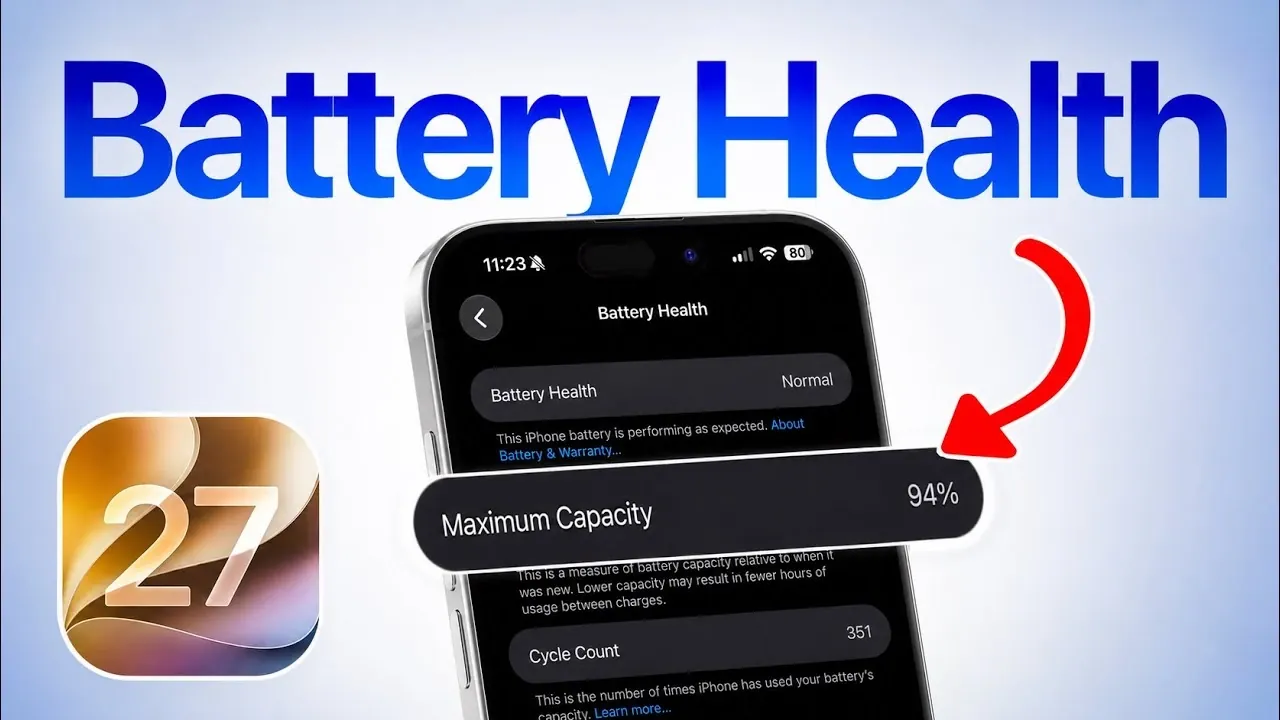
For years, iPhone users have expressed concerns about battery health, particularly those who rely on Pro Max models for their extended battery life. With the release of iOS 27 and the latest iPhone lineup, Apple appears to have made notable progress in addressing these long-standing issues. This article provide more insights into the battery performance of the iPhone 15 Pro Max, 16 Pro Max and 17 Pro Max over a one-year period, focusing on advancements in battery technology, software optimization, and charging efficiency. By examining these improvements, we aim to assess whether Apple has truly resolved the challenges surrounding battery health.

Battery Health: A Year in Review
Battery health retention has become a critical metric for evaluating iPhone performance over time. The comparison of the iPhone 15 Pro Max, 16 Pro Max and 17 Pro Max reveals a clear trend of improvement in battery longevity. Here’s how each model performed after one year of use:
- iPhone 15 Pro Max: Retained 86% of its original battery capacity after 554 charging cycles, reflecting the limitations of earlier battery designs.
- iPhone 16 Pro Max: Showed a significant leap forward, maintaining 93% battery capacity after 493 charging cycles, thanks to enhanced materials and software.
- iPhone 17 Pro Max: Currently holds 94% battery capacity after 10 months and 351 charging cycles, with projections suggesting it will finish its first year at 92–93% capacity.
The data highlights a steady progression in battery health retention, particularly between the 15 and 16 Pro Max models. While the 17 Pro Max offers more incremental gains, it continues to build on Apple’s advancements in battery technology and management.
How Charging Features Preserve Battery Health
Apple’s approach to battery health relies heavily on its software-driven charging features, which are designed to minimize wear and extend battery lifespan. These features are present across the 15, 16 and 17 Pro Max models and include the following:
- Charging Limit: Devices are capped at 90% during regular charging to reduce strain on the battery and prevent overcharging.
- Optimized Battery Charging: Slows the charging process after reaching 80%, reducing heat generation and wear on the battery over time.
- Clean Energy Charging: Aligns charging times with periods of lower carbon emissions, reflecting Apple’s broader sustainability goals while indirectly benefiting battery health.
These features work in tandem to ensure that the battery remains in optimal condition, even with frequent use. By addressing common causes of battery degradation, such as heat and overcharging, Apple has created a system that prioritizes long-term performance.
Performance Gains: What’s Driving the Improvement?
The leap in battery performance from the iPhone 15 Pro Max to the 16 Pro Max is particularly noteworthy. Several factors contribute to this improvement, highlighting Apple’s focus on both hardware and software advancements:
- Battery Technology: The 16 Pro Max introduced more efficient battery materials and designs, allowing better energy retention and durability.
- Software Optimization: Enhanced algorithms now manage charging cycles and thermal performance more effectively, reducing unnecessary strain on the battery.
- Thermal Management: Improved heat dissipation mechanisms help maintain battery health during intensive tasks, such as gaming or video editing.
While the iPhone 17 Pro Max builds on these advancements, its improvements are more evolutionary than innovative. The focus has shifted toward refining existing technologies, making sure consistent performance and reliability.
Real-World Usage: A Reliable Benchmark
To evaluate battery health under realistic conditions, all three devices were subjected to consistent usage patterns. This approach provides a reliable benchmark for assessing Apple’s advancements in battery management. The usage scenarios included:
- Daily activities such as messaging, streaming, browsing and social media use.
- Frequent beta software installations and regular iOS updates to simulate real-world software demands.
- Charging habits that mimic typical user behavior, including overnight charging and quick top-ups during the day.
Despite these demanding conditions, the 16 and 17 Pro Max models demonstrated strong battery health retention. This performance underscores the effectiveness of Apple’s recent innovations, which aim to balance user convenience with long-term battery durability.
Advancing Toward Reliable Battery Health
Apple has made significant strides in addressing battery health concerns, particularly with the iPhone 16 Pro Max. The jump in battery capacity retention and charging efficiency between the 15 and 16 Pro Max models highlights meaningful advancements in both hardware and software. While the 17 Pro Max offers only incremental improvements, its performance suggests that Apple has reached a level of maturity in its battery management strategies.
For users considering an upgrade, the 16 and 17 Pro Max models stand out as reliable options for long-term battery health. These devices not only reflect Apple’s commitment to innovation but also provide tangible benefits for users who prioritize battery longevity. By combining advanced technology with practical software features, Apple has set a new standard for battery performance in the smartphone industry.
Here are additional guides from our expansive article library that you may find useful on iOS 27.
- Apple’s iOS 27 Beta 3 Is Just Days Away: Here’s When It Drops
- iOS 27 Leaks Reveal the End of an Era: Apple’s New Priorities Confirmed
- iOS 27 Beta 2 Changes: What Apple Is Modifying to Improve Performance
- Should You Install iOS 27 Beta 3 or Wait for the Public Beta?
- iOS 27 Could Be Apple’s ‘Snow Leopard’ Moment—Focusing on One Huge Change
- The Difference Between the iOS 27 Public and Developer Betas
Source & Image Credit: iDeviceHelp
Disclosure: Some of our articles include affiliate links. If you buy something through one of these links, Geeky Gadgets may earn an affiliate commission. Learn about our Disclosure Policy.
