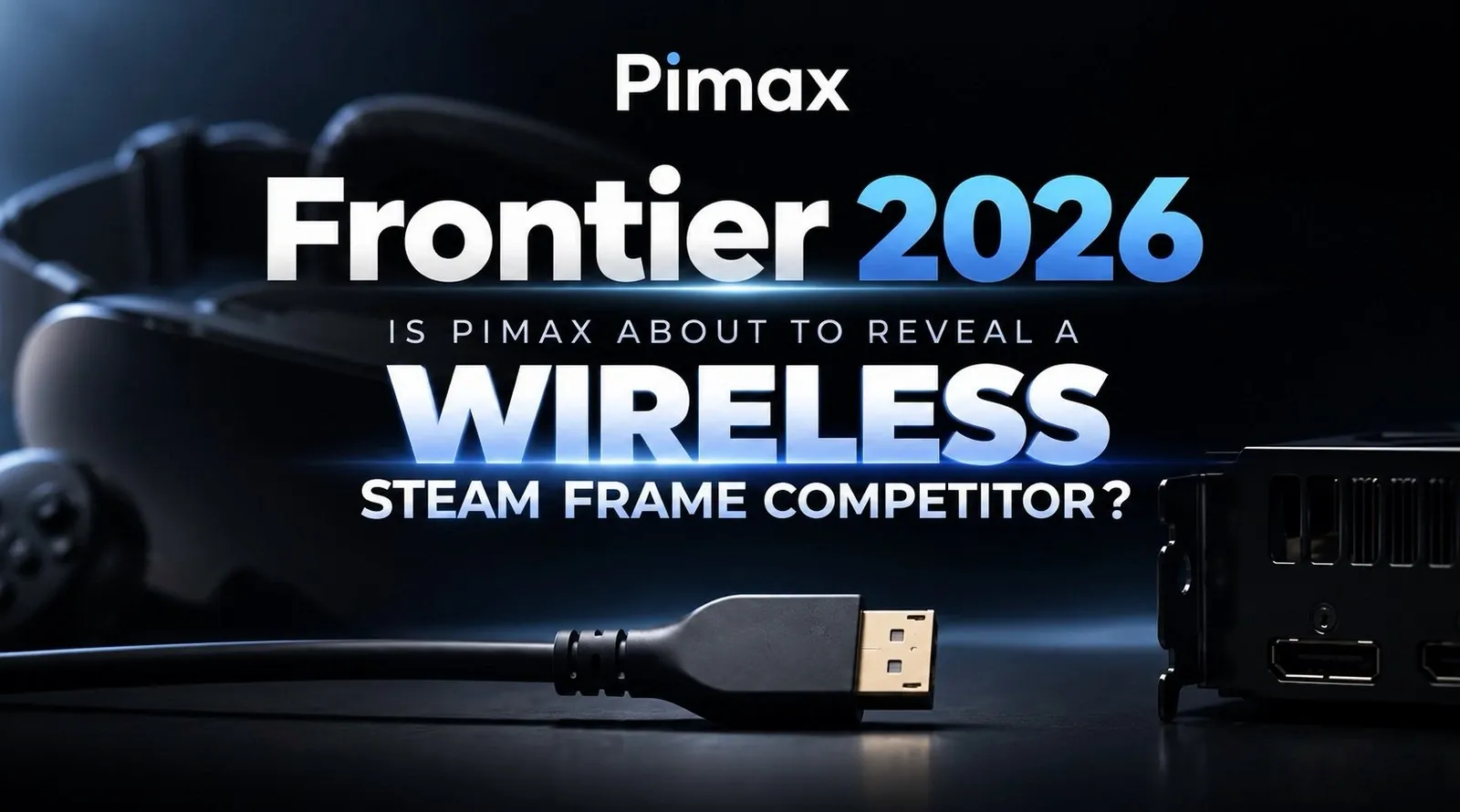
Pimax has captured the attention of the VR community with its upcoming “Pimax Frontier” event, sparking speculation about a potential wireless VR solution. The teaser tagline, “Change to Stay the Same,” hints at a product that could either expand Pimax’s current lineup or introduce a new direction for the company. MRTV explores the possibility of a wireless accessory using 60GHz technology for low-latency, high-bandwidth performance, or a standalone VR headset designed for high-resolution, untethered experiences. Both options reflect the growing demand for greater mobility in VR without compromising visual fidelity.
Dive into this breakdown to uncover how Pimax’s announcement could reshape its product ecosystem and impact the broader VR market. You’ll gain insight into the potential features of a wireless accessory, the implications of a standalone headset for simulation enthusiasts and the challenges of balancing innovation with compatibility. This deep dive also examines how Pimax might address concerns about product longevity and user trust as it seeks to solidify its position in the competitive VR landscape.
What Could Be on the Horizon?
TL;DR Key Takeaways :
- Pimax’s “Pimax Frontier 2026” event teaser, with the tagline “Change to Stay the Same,” hints at a major innovation in wireless VR technology, potentially unveiling either a standalone wireless VR headset or a wireless accessory for existing headsets.
- The wireless accessory, if announced, is expected to feature a 60GHz module for low-latency, high-bandwidth performance, allowing high-resolution VR experiences without physical PC connections.
- A standalone wireless VR headset could target simulation enthusiasts with high-resolution displays, but its introduction may raise questions about compatibility and positioning within Pimax’s existing Dream Air lineup.
- Pimax faces the challenge of balancing innovation with support for its current products, making sure new offerings complement rather than overshadow existing headsets while addressing concerns about product longevity and updates.
- The VR community is cautiously optimistic, excited about the potential for untethered VR experiences but wary of Pimax’s history of execution issues, making the “Pimax Frontier” event a critical moment for the company’s reputation and market impact.
The anticipation surrounding this event reflects the growing demand for untethered VR experiences that combine high performance with greater freedom of movement. As the VR industry continues to evolve, Pimax’s announcement could mark a pivotal moment in shaping the future of immersive technology. The speculation surrounding the “Pimax Frontier” event primarily revolves around two potential product announcements:
- A standalone wireless VR headset
- A wireless accessory designed for existing Pimax headsets
Pimax Frontier Event 2026
The event will start in a just over an hour time later today at 16:00 CEST or 3pm BST October 6th 2026

If Pimax unveils a wireless accessory, it is likely to incorporate a 60GHz wireless module. This innovative technology is renowned for its ability to deliver low-latency and high-bandwidth performance, allowing users to experience high-resolution VR without the limitations of a physical connection to a PC. Such an accessory would appeal to VR enthusiasts seeking enhanced mobility without sacrificing visual fidelity, making it a compelling addition to Pimax’s ecosystem.
Alternatively, Pimax may introduce a completely new standalone VR headset. This device would likely feature high-resolution displays and a design optimized for simulation enthusiasts who prioritize visual precision and immersive experiences. However, the introduction of a standalone headset raises questions about its positioning within Pimax’s existing lineup, particularly in relation to the Dream Air and Dream Air SE headsets. The company will need to carefully balance innovation with compatibility to ensure its new product complements, rather than competes with, its current offerings.
How Would This Impact the Current Lineup?
Pimax’s Dream Air and Dream Air SE headsets have earned acclaim for their exceptional visual quality, achieved through DisplayPort connectivity. These devices cater to users who demand high-resolution visuals for immersive simulation experiences, making them a popular choice among VR enthusiasts. However, the potential introduction of a wireless alternative could significantly shift the focus within Pimax’s product lineup.
A wireless device capable of matching or surpassing the performance of the Dream Air series could attract users seeking greater convenience and freedom of movement. This shift in consumer interest may raise concerns among current Dream Air users about the long-term relevance of their headsets. Questions regarding software updates, compatibility and ongoing support are likely to emerge, highlighting the importance of Pimax’s ability to reassure its existing customer base while introducing new innovations.
For Pimax, the challenge lies in maintaining a balance between pioneering new technologies and making sure the longevity of its current products. Successfully navigating this dynamic will be critical in determining the reception of its upcoming announcement and its broader impact on the VR market.
Pimax’s History: Bold Innovation with Room for Growth
Pimax has established itself as a trailblazer in the VR industry, consistently pushing the boundaries of what is possible with immersive technology. From ultra-wide field-of-view headsets to high-resolution displays, the company has demonstrated a commitment to innovation that has earned it a dedicated following. However, this ambitious approach has not been without its challenges.
Past product launches, such as the Pimax Portal gaming device, showcased the company’s creative potential but also revealed execution issues that tempered initial enthusiasm. These experiences have fostered a sense of cautious optimism within the VR community. While Pimax’s dedication to innovation is widely acknowledged, its ability to deliver polished and reliable products at launch remains a point of concern.
The “Pimax Frontier” event represents an opportunity for the company to address these concerns and demonstrate its growth. By delivering a product that combines innovative technology with dependable performance, Pimax could solidify its reputation as a leader in the VR market while dispelling lingering doubts about its ability to execute on its ambitious vision.

Here are more guides from our previous articles and guides related to Pimax that you may find helpful.
- Wired-only Pimax Dream Air SE Offers a $899 Steam Frame Rival
- Pimax Crystal 8K OLED VR Review : Swappable Optics, 140-degree Option, and Rich Colors
- Pimax Crystal Super: 29 Million Pixel VR Headset Redefining High Resolution Immersion
- Pimax Portal VR portable game console and worlds first Metaverse Entertainment System (MES)
- Pimax Crystal Light VR Headset Transforming Racing Simulation
- AWE 2026 VR and AR Tech Reveals and Hands-on First Looks
- Apple Vision Pro High Costs Hinder Mainstream AR Adoption
- New Pimax Reality 12K standalone VR headset launches for $2,399
- Pimax Crystal Super VR Headset CES 2025 from $1,696
Community Sentiment: Excitement Meets Caution
The VR community’s reaction to the “Pimax Frontier” teaser has been a mix of anticipation and skepticism. On one hand, the prospect of a wireless VR solution aligns with the increasing demand for untethered, high-performance experiences. The idea of eliminating cables while maintaining high-resolution visuals and low-latency performance is undeniably appealing to both casual users and simulation enthusiasts.
On the other hand, Pimax’s history of post-launch refinements has tempered expectations. While the company has consistently introduced innovative products, the need for subsequent updates and adjustments has occasionally overshadowed its initial announcements. This duality has led to a cautious yet hopeful outlook among VR enthusiasts, who are eager to see if Pimax can deliver a product that meets its ambitious promises.
If Pimax succeeds in unveiling a wireless VR device that combines reliability, performance, and compatibility, it could significantly enhance its standing in the competitive VR market. However, the company must also address concerns about product longevity and ensure that its new offerings integrate seamlessly with its existing ecosystem to maintain the trust of its user base.
What’s Next for Pimax?
The “Pimax Frontier” event has set the stage for a potentially significant development in the evolution of wireless VR technology. Whether the announcement involves a standalone headset or a wireless accessory, the implications for Pimax’s product ecosystem and the broader VR market are substantial.
As the event approaches, the VR community will be closely watching to see if Pimax can deliver on its promise of innovation while addressing the challenges that have accompanied its past endeavors. A successful launch could not only redefine Pimax’s position in the industry but also contribute to the ongoing advancement of immersive technology, offering users a glimpse into the future of VR experiences.
Media Credit: MRTV – MIXED REALITY TV
Disclosure: Some of our articles include affiliate links. If you buy something through one of these links, Geeky Gadgets may earn an affiliate commission. Learn about our Disclosure Policy.
