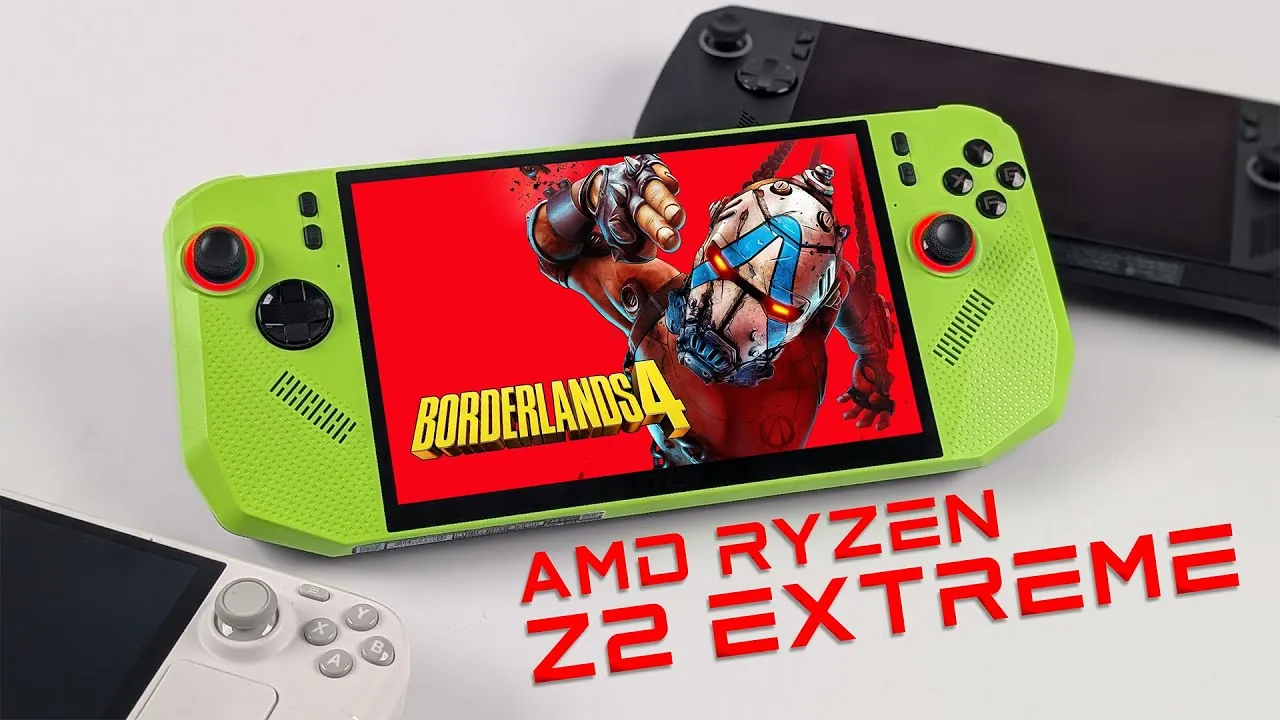
Can a handheld gaming device truly deliver the immersive experience of a graphically demanding AAA title like Borderlands 4? The AMD Ryzen Z2 Extreme, powering the sleek MSI Claw A8, promises innovative performance with its advanced APU, 24GB of RAM, and an 8-inch 1200p display. Yet, when faced with the chaotic landscapes and fast-paced action of Borderlands 4, this portable powerhouse reveals its limits. Despite using technologies like FidelityFX Super Resolution (FSR) and Variable Refresh Rate (VRR), the Z2 Extreme struggles to maintain smooth gameplay at higher resolutions, raising a critical question: is the dream of uncompromised AAA gaming on handhelds still out of reach? For gamers seeking portability without sacrificing quality, the answer may not be as straightforward as they’d hope.
ETA Prime checks out the performance of the AMD Z2 Extreme, exploring how it handles the intense demands of Borderlands 4 on the MSI Claw A8. From frame rates and resolution scaling to the delicate balance of power efficiency and visual fidelity, we’ll uncover the trade-offs that come with pushing handheld gaming hardware to its limits. Whether you’re curious about how the Z2 Extreme compares to competitors like the Steam Deck or wondering if its advanced features can truly redefine portable gaming, this analysis offers a closer look at the challenges and possibilities of gaming on the go. As we navigate the intersection of innovation and limitation, one thing becomes clear: the future of handheld gaming hinges on more than just raw power, it’s about finding the perfect balance.
AMD Z2 Extreme Limitations
TL;DR Key Takeaways :
- The AMD Ryzen Z2 Extreme APU powers the MSI Claw A8 handheld gaming device, offering advanced features like FidelityFX Super Resolution (FSR) and Variable Refresh Rate (VRR), but struggles with demanding AAA games like Borderlands 4 at higher resolutions and settings.
- The MSI Claw A8 features an 8-inch 1200p display, 24GB of RAM, and an 80Wh battery, aiming to balance portability and performance in the handheld gaming market.
- Performance testing reveals challenges in maintaining stable frame rates, with the device struggling to achieve 30 FPS at 1080p and medium settings, even with FSR enabled, highlighting the limitations of the APU for graphically intensive games.
- Battery life is a trade-off, with higher TDP settings improving performance but significantly reducing battery longevity, while lower TDP settings extend battery life but compromise gaming performance.
- Compared to competitors like the Steam Deck, the MSI Claw A8 offers better performance but still faces broader challenges in running AAA titles, emphasizing the need for further hardware and software optimizations in handheld gaming devices.
Key Features of the MSI Claw A8
The MSI Claw A8 is designed to compete in the rapidly expanding handheld gaming market, offering a blend of portability and power. Its hardware specifications include:
- AMD Ryzen Z2 Extreme APU, designed for high-performance gaming
- 24GB of RAM, making sure multitasking capability
- An 8-inch 1200p display with VRR support for smoother visuals
- A robust 80Wh battery for extended gaming sessions
These features aim to deliver a premium gaming experience. VRR reduces screen tearing, while FSR enhances performance by upscaling visuals without significantly compromising quality. However, these technologies are pushed to their limits when running resource-intensive games like Borderlands 4, exposing the challenges of balancing performance and portability.
Performance Testing: Balancing TDP and Resolution
Performance testing of the Z2 Extreme on the MSI Claw A8 reveals a mixed performance profile. At its maximum Thermal Design Power (TDP) of 35W, the device struggles to maintain a stable 30 frames per second (FPS) at 1080p with medium settings, even with FSR set to balanced. Lowering the resolution to 900p and reducing settings to low improves performance slightly, but frame rates still dip below 60 FPS during graphically intense scenes.
At 800p, the gameplay becomes noticeably smoother, but the trade-off in visual quality is significant. In battery-saving mode, where the TDP is capped at 18W, performance drops further. While this mode extends battery life, it fails to provide a consistent gaming experience, especially for extended sessions. Short-term power boosts, which temporarily increase TDP, offer minor improvements but are not sustainable for prolonged gameplay. This highlights the difficulty of achieving a balance between performance and power efficiency in handheld devices.
Borderlands 4 on AMD Ryzen Z2 Extreme Tested

Unlock more potential in gaming handhelds by reading previous articles we have written.
- RG35XX H mini handheld games console
- PyGamer open source handheld games console $39.95
- Retroid Pocket 4 Pro retro handheld games console
- JSAUX 6-in-1 handheld games docking station
- Ayaneo Next Lite upcoming AMD Ryzen handheld game console
- Retroid Pocket 4 Pro handheld games console preorders open from
- Evercade retro handheld game console from $80
- AYANEO Slide handheld games console from $699 hands-on review
- Raspberry Pi PiBoy XRS handheld games console reviewed
Frame Generation and Resolution Scaling
Frame generation technology, which interpolates additional frames to improve perceived smoothness, offers some relief by allowing the Z2 Extreme to achieve higher frame rates. However, even with this feature, the device struggles to consistently hit 60 FPS. Lowering the resolution to 800p provides a more stable experience, but the resulting loss in visual clarity underscores the limitations of the APU when handling graphically demanding games like Borderlands 4.
This trade-off between performance and visual fidelity illustrates the broader challenges of running AAA titles on portable devices. While technologies like FSR and frame generation help mitigate some of these issues, they cannot fully compensate for the hardware constraints of handheld platforms.
Battery Life: A Balancing Act
Battery life is a critical consideration for handheld gaming devices, and the MSI Claw A8 attempts to strike a balance between performance and portability. At an 18W TDP, the device offers extended battery life, but this comes at the cost of reduced performance, making it unsuitable for demanding games. Conversely, running the device at 35W significantly improves performance but drains the battery quickly, limiting its portability.
Dynamic TDP adjustments aim to provide a middle ground, but they often fall short of delivering a seamless experience for graphically intensive titles like Borderlands 4. This highlights the ongoing challenge of optimizing power management for handheld gaming devices, where both performance and battery life are equally important.
How It Compares to Other Handhelds
When compared to competitors like the Steam Deck, the MSI Claw A8 with the Z2 Extreme demonstrates superior performance under similar conditions. The Steam Deck, equipped with a less powerful APU, faces even greater challenges when running Borderlands 4. However, neither device is able to deliver an optimal experience for this AAA title, underscoring the broader issue of hardware limitations in the handheld gaming market.
This comparison highlights a key point: many AAA games are designed with high-end desktop or console hardware in mind, leaving handheld devices struggling to keep up. While the MSI Claw A8 offers a glimpse into the potential of portable gaming, it also reveals the need for further advancements in both hardware and software optimization.
Broader Challenges and Potential Optimizations
The performance issues observed with the Z2 Extreme reflect a larger challenge in adapting AAA games like Borderlands 4 for handheld devices. These games are often developed with powerful desktop GPUs and CPUs in mind, making it difficult for lower-end APUs to deliver a comparable experience.
Future updates from game developers could address these optimization gaps, potentially improving performance on portable platforms. Additionally, advancements in APU technology and power management could help bridge the gap between handheld and desktop gaming. Until these improvements are realized, handheld gamers may need to adjust their expectations or focus on less demanding titles for a smoother experience.
Final Thoughts on the AMD Ryzen Z2 Extreme
The AMD Ryzen Z2 Extreme in the MSI Claw A8 demonstrates impressive potential for handheld gaming but falls short of delivering a consistently smooth experience for Borderlands 4. While lowering settings and resolutions can make the game playable, the compromises in visual quality and performance are evident.
For handheld gaming to fully embrace AAA titles, both hardware advancements and software optimizations are essential. The Z2 Extreme represents a promising step forward, but it also highlights the limitations of current technology in meeting the demands of modern gaming. As the industry continues to evolve, the hope is that future devices will offer a more seamless blend of performance, portability, and power efficiency.
Media Credit: ETA PRIME
Disclosure: Some of our articles include affiliate links. If you buy something through one of these links, Geeky Gadgets may earn an affiliate commission. Learn about our Disclosure Policy.
