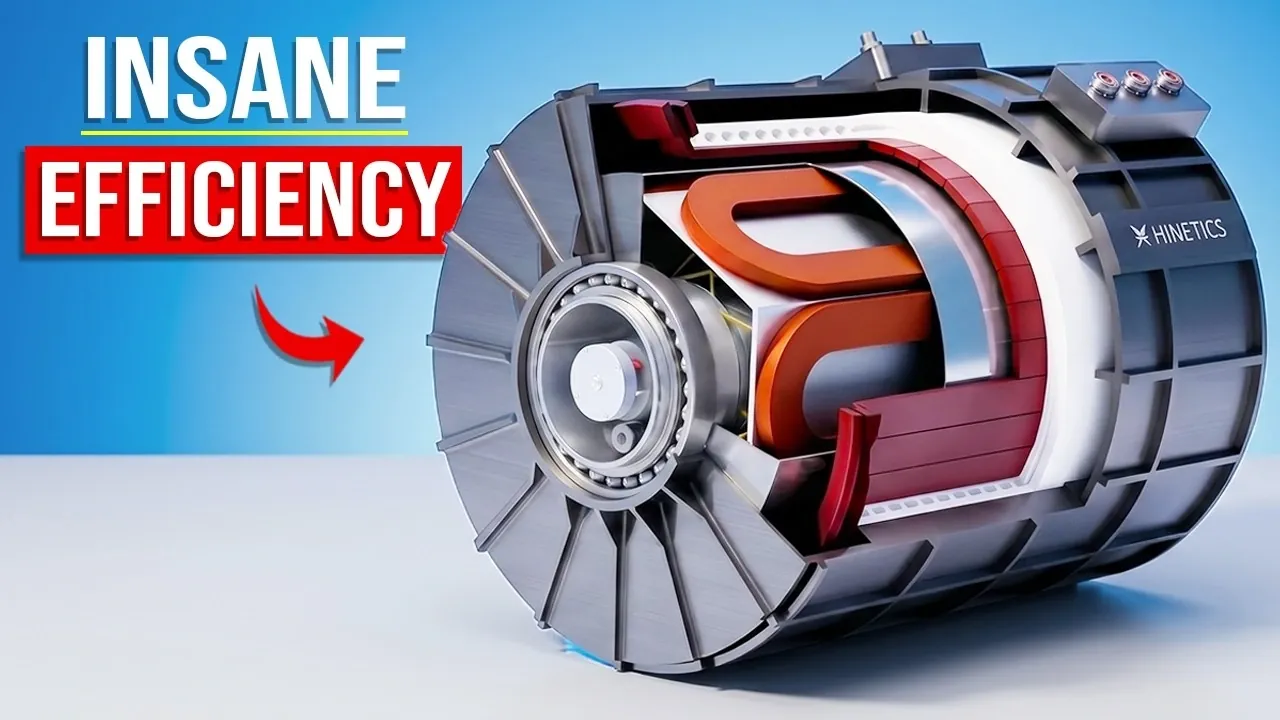
Superconducting motors are pushing the boundaries of electric system performance by achieving extraordinary levels of efficiency and power density. Unlike conventional motors, these systems use superconductors, materials that exhibit zero electrical resistance at low temperatures, to virtually eliminate energy losses. Ziroth explores how Hinetics has developed a new superconducting motor, integrating advanced features such as cryogen-free cooling and Kevlar-based insulation to overcome key engineering challenges. One standout achievement is the motor’s ability to deliver an impressive 40 kW/kg power density, a metric that far surpasses traditional alternatives.
Dive into this explainer to understand how these motors are poised to reshape industries. You’ll gain insight into the unique properties of high-temperature superconductors, the practical advantages of cryogen-free cooling systems and the specific engineering solutions that make this technology scalable. From aviation to heavy machinery, explore how superconducting motors could drive energy efficiency and performance in diverse applications, offering a glimpse into the future of electric propulsion systems.
What Makes Superconductors Unique?
TL;DR Key Takeaways :
- Hinetics has developed the first practical superconducting motor, achieving unprecedented efficiency (99.5%) and power density (40 kW/kg), surpassing conventional motor technologies.
- The motor uses high-temperature superconductors (HTS) and innovative features like cryogen-free cooling and Kevlar-based insulation to enhance performance and scalability.
- Key engineering advancements include minimal cooling power requirements (10 watts) and thermal/mechanical isolation to ensure reliability in demanding environments.
- Potential applications span aviation, data centers and heavy machinery, offering fantastic benefits in energy efficiency, sustainability and operational performance.
- Prototype validation and decreasing HTS material costs are paving the way for commercial adoption, making superconducting motors more accessible across industries.
Hinetics has pioneered the development of the first practical superconducting motor, overcoming significant challenges in design, cooling and material costs. This innovation holds the potential to transform industries such as aviation, data centers, and heavy machinery, marking a pivotal moment in the evolution of electric propulsion systems.
Superconductors are materials that exhibit zero electrical resistance and expel magnetic fields when cooled below their critical temperature. This unique property eliminates energy losses, allowing highly efficient energy transfer and storage. High-temperature superconductors (HTS), such as yttrium barium copper oxide (REBCO), have further advanced the feasibility of these applications by operating at relatively higher temperatures compared to traditional superconductors, reducing the complexity of cooling systems.
Hinetics’ motor design uses HTS materials to achieve a combination of high performance and scalability. The integration of these advanced materials is central to the motor’s ability to deliver unmatched efficiency and power density, making it a new innovation in electric motor technology.
Innovative Motor Design
Hinetics’ superconducting motor introduces a series of engineering advancements that set it apart from traditional electric motors. Unlike conventional synchronous motors, which rely on permanent magnets, this motor employs superconducting electromagnets. This design choice significantly enhances both power density and efficiency, addressing the limitations of existing technologies.
Key innovations include:
- Cryogen-Free Cooling: The motor incorporates a Stirling cycle engine within the rotor, eliminating the need for liquid cryogens. This simplifies thermal management and reduces operational complexity, making the system more practical for real-world applications.
- Advanced Insulation: Kevlar-based insulation is used to manage both thermal and mechanical stresses. This ensures the motor’s durability and reliability, even under demanding operating conditions.
These design elements not only improve the motor’s performance but also address critical challenges in thermal and mechanical engineering, paving the way for its adoption in various industries.

Here is a selection of other guides from our extensive library of content you may find of interest on energy.
- Solar Energy S 40,000 mAh retractable solar panel and power bank
- Primary Energy Fallacy Explained: Why Useful Energy Shows Faster Renewable Progress
- The Island is Shrinking: iPhone 18 Pro Max Leaks Confirm Apple’s Cleanest Display Ever
- The Best Camera Ever: Why the iPhone 18 Pro’s Variable Aperture is the Real Star of 2026
- Why NASA’s Mechanical Battery Could Be the Future of Energy Storage
- iPhone 18 Pro: What Apple Isn’t Telling You Yet
- Best Phone Battery Life 2025: OnePlus 15, vivo X300 Pro, & iPhone 17 Pro Max
- Airnergy Havester Battery Charges From Thin Air
- What Donut Labs Data Shows on Solid-State Battery Energy Density
- iOS 27 Leaks Reveal the End of an Era: Apple’s New Priorities Confirmed
Unmatched Performance Metrics
The performance of Hinetics’ superconducting motor sets a new standard for electric systems. It achieves:
- Power Density: 40 kW/kg, a significant improvement over the power density of conventional electric motors.
- Efficiency: 99.5%, minimizing energy losses and maximizing output.
In addition to these metrics, the motor demonstrates consistent efficiency across a wide range of torque and speed values. This versatility makes it suitable for diverse applications, from lightweight aviation systems to high-torque industrial machinery. The combination of high efficiency and power density positions this motor as a compelling solution for industries seeking to optimize energy consumption and performance.
Overcoming Engineering Challenges
Developing a practical superconducting motor required addressing several complex engineering challenges. Hinetics has implemented innovative solutions to overcome these obstacles, making sure the motor’s reliability and efficiency.
- Heat Management: The motor operates with minimal cooling power, requiring only 10 watts to maintain optimal temperatures. This is achieved through precise thermal design and the use of advanced insulation materials.
- Thermal and Mechanical Isolation: Flexible mechanical links are used to absorb vibrations and isolate the cold rotor from the warm stator and output shaft. This ensures system stability and prevents thermal stresses from compromising performance.
These engineering advancements address the inherent thermal and mechanical complexities of superconducting motor design, allowing robust and reliable operation in demanding environments.
Applications and Industry Impact
The potential applications of superconducting motors span a wide range of industries, offering significant benefits in terms of efficiency, performance and sustainability. Key areas of impact include:
- Aviation: Lightweight and efficient motors could transform electric propulsion systems, reducing fuel consumption and emissions while allowing the development of more sustainable aircraft.
- Data Centers: Ultra-efficient generators powered by superconducting motors could lower energy consumption and operational costs, supporting the growth of sustainable digital infrastructure.
- Heavy Machinery: High-torque applications, such as industrial equipment and maritime vessels, could benefit from the motor’s exceptional power density and efficiency, improving operational performance and reducing energy costs.
These applications underscore the fantastic potential of superconducting motors in addressing the growing demand for energy-efficient and high-performance solutions across multiple sectors.
Prototype Validation and Future Accessibility
Hinetics has demonstrated the practicality of its superconducting motor through the “Baby Yoda” prototype. This prototype integrates all key subsystems, including the cryogen-free cooling system and Kevlar-based insulation, into a cohesive and functional design. Extensive testing, conducted over hundreds of hours, has validated the motor’s performance, reliability and scalability, laying the groundwork for commercial deployment.
Historically, the high cost of HTS materials has been a barrier to widespread adoption. However, as demand for these materials grows in sectors such as fusion reactor development, economies of scale are driving down costs. This trend is expected to make superconducting motors more accessible, accelerating their adoption across industries and allowing broader implementation of this innovative technology.
Media Credit: Ziroth
Disclosure: Some of our articles include affiliate links. If you buy something through one of these links, Geeky Gadgets may earn an affiliate commission. Learn about our Disclosure Policy.
