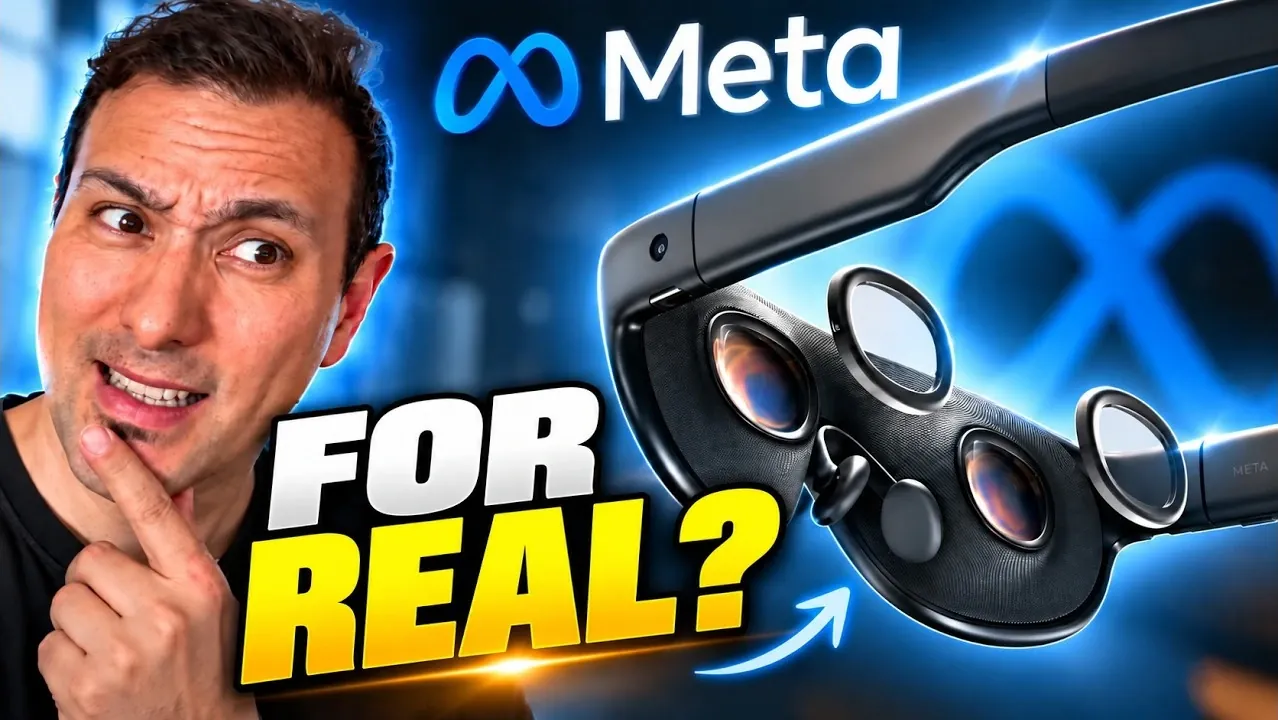
Meta’s latest VR headset, codenamed “Project Meta Phoenix,” has been leaked and it marks a significant departure from the gaming-focused design of its predecessor, the Quest 3. As detailed by MRTV, the Phoenix prioritizes productivity and mixed reality applications, featuring a lightweight, glasses-like form factor and a resolution of 2560×2560 per eye through micro-OLED displays. However, this shift comes with trade-offs, including a narrower 90-degree field of view and reduced emphasis on gaming immersion. These design choices reflect Meta’s intent to cater to professionals and enterprise users, signaling a broader focus on virtual workspaces, media consumption and collaborative environments.
Explore how the Phoenix’s compact design and Snapdragon Reality chip integration enhance comfort and performance for extended use, while its advanced tracking features, such as eye and hand tracking, enable more intuitive interactions in professional settings. You’ll also gain insight into the trade-offs involved, from the absence of gaming-first optimizations to the premium $999 price point. This breakdown will help you understand how Meta’s strategic pivot reshapes its VR offerings and what it means for both professionals and casual users.
Compact and Lightweight Design for Professional Use
TL;DR Key Takeaways :
- The Meta Phoenix VR headset is designed for productivity, mixed reality and media consumption, marking a shift away from gaming-focused devices like the Quest 3.
- Its compact, glasses-like design prioritizes comfort and portability, making it ideal for professional use, though it sacrifices gaming immersion.
- Equipped with micro-OLED displays (2560×2560 per eye), it delivers high-resolution visuals but features a narrower 90-degree field of view, limiting gaming immersion.
- Powered by the Snapdragon Reality chip and Horizon OS, the headset integrates advanced tracking technologies (eye, hand and potentially face tracking) for professional applications.
- Launching in 2027 at a premium price of $999, the Meta Phoenix targets enterprise users with features tailored to virtual workspaces, media consumption and mixed reality, rather than gaming.
The Meta Phoenix headset adopts a compact form factor that closely resembles glasses rather than traditional VR headsets. This design prioritizes comfort and portability, making it ideal for extended use in professional environments or casual media consumption. The lightweight build reduces strain during prolonged sessions, a feature particularly appealing to users who rely on virtual workspaces or immersive meetings. However, this emphasis on portability comes with trade-offs. The device is not optimized for high-intensity gaming and its design may fall short for users seeking a gaming-first experience. For professionals, though, the Phoenix offers a practical and ergonomic solution for daily use.
Micro-OLED Displays: High Resolution with Trade-Offs
The Meta Phoenix is equipped with state-of-the-art micro-OLED displays, delivering a resolution of 2560×2560 per eye. This ensures crisp, vibrant visuals, making it well-suited for tasks such as virtual workspaces, streaming high-definition content and consuming media. The display technology enhances clarity and color accuracy, providing an immersive experience for productivity and entertainment. However, the device’s diagonal field of view (FOV) is limited to approximately 90 degrees, narrower than the Quest 3. While this narrower FOV improves portability and reduces hardware bulk, it diminishes the sense of immersion in expansive virtual environments, particularly for gaming enthusiasts. This trade-off underscores the headset’s focus on professional applications rather than gaming.

Here are more detailed guides and articles that you may find helpful on Meta.
- $20 Price Gap Pits XREAL Aura Against Meta VR Glasses
- Quest 3 vs New Meta VR Headset: Which One Should You Buy?
- Meta Project Phoenix is Expected to Launch in Early 2027
- Meta VR Glasses vs URXR One: $1,299 Standalone vs $899 Modular
- Meta Phoenix Quest Air VR Headset First Official Image Leaked?
- Immersive Meta VR Glasses Challenge XREAL Aura AR Vision
- MetaQuest Emulator Brings Batman VR to Non-Meta Headsets
- How Meta Muse Wonder Stacks Up Against GPT 6.1 Sol
- New Meta VR Glasses Pack an IMAX-certified Cinema and Weigh Just 100g
- Two Months with $299 Meta Smart Glasses Reveals Key Issues
Innovative Hardware and Software Integration
At the core of the Meta Phoenix is the Snapdragon Reality chip, housed in a separate compute unit that also contains the battery. This innovative design reduces the weight of the headset itself, enhancing comfort during prolonged use. The external compute unit allows for better heat management and improved performance, making sure the device remains efficient even during demanding tasks. The headset runs on Horizon OS, which supports the Quest app catalog, offering users access to a wide range of applications. However, the software ecosystem is tailored toward productivity tools and mixed reality applications, signaling a deliberate shift away from gaming-focused functionality. This integration of hardware and software positions the Meta Phoenix as a versatile tool for professionals.
Advanced Tracking Features for Enhanced Interactions
The Meta Phoenix introduces innovative tracking technologies, including eye tracking, hand tracking and potentially face tracking. These features enable more intuitive and natural interactions, making the headset particularly valuable for professional applications such as virtual meetings, collaborative workspaces and training simulations. Eye tracking enhances focus-based navigation, while hand tracking allows for precise gesture control, reducing the need for physical controllers. These innovations improve the overall user experience in productivity-focused scenarios. However, their benefits for gaming are limited, further emphasizing the device’s enterprise-oriented design. For professionals, these advanced tracking capabilities represent a significant step forward in virtual reality technology.
Premium Pricing Reflects Enterprise Focus
The Meta Phoenix is expected to launch in the first half of 2027, with a starting price of approximately $999. This positions the device as a premium offering aimed at professionals and enterprise users. The pricing strategy aligns the Meta Phoenix with competitors like the Apple Vision Pro, targeting a high-end market segment. Notably, the base package may not include controllers, potentially increasing the overall cost for users who require additional peripherals. This approach reflects Meta’s focus on delivering a high-performance device for productivity and mixed reality applications, rather than a budget-friendly gaming solution. The premium pricing underscores the headset’s advanced features and enterprise-grade capabilities.
Key Use Cases for the Meta Phoenix
The Meta Phoenix is designed to cater to professionals and enterprise users, offering a range of features tailored to productivity and media consumption. Key use cases include:
- Creating and managing virtual workspaces for enhanced collaboration and efficiency.
- Streaming PC content on high-resolution virtual screens for an immersive desktop experience.
- Watching movies or consuming media with exceptional visual clarity and vibrant colors.
These features make the Meta Phoenix an attractive option for users seeking a high-performance mixed reality headset. However, the device’s limited FOV and lack of gaming-focused optimizations may deter gamers. By prioritizing productivity and media consumption, the Meta Phoenix appeals to a niche audience of professionals and enterprise users.
Meta’s Strategic Pivot in Virtual Reality
The Meta Phoenix represents a clear shift in Meta’s virtual reality strategy, moving away from gaming-centric devices toward solutions designed for productivity and mixed reality. For professionals seeking a lightweight, high-resolution headset for work and media consumption, the Phoenix offers a compelling set of features. Its advanced tracking technologies, innovative hardware design and focus on enterprise applications position it as a strong competitor in the high-end mixed reality market. However, for gamers, the narrower field of view and lack of immersive gaming capabilities may be disappointing. As Meta continues to refine its VR offerings, the Phoenix signals a strategic pivot, emphasizing enterprise applications and professional use cases over traditional gaming experiences.
Media Credit: MRTV – MIXED REALITY TV
Disclosure: Some of our articles include affiliate links. If you buy something through one of these links, Geeky Gadgets may earn an affiliate commission. Learn about our Disclosure Policy.
