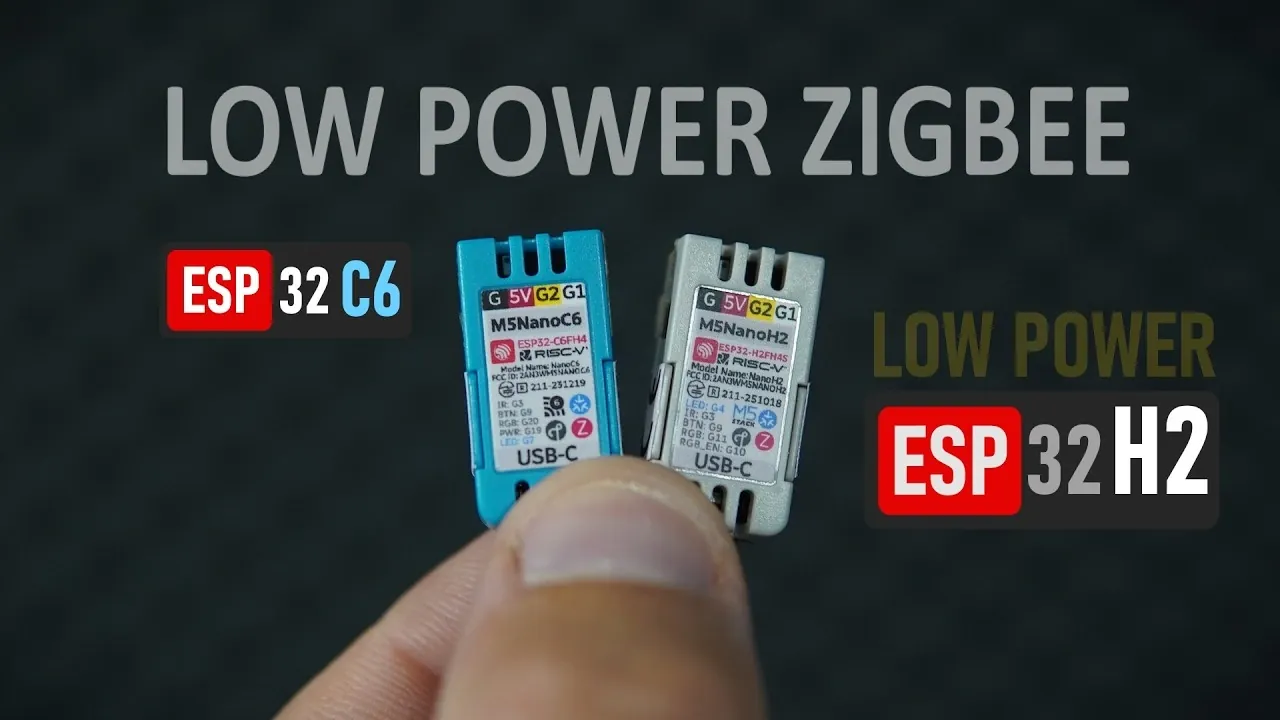
The ESP32-H2 microcontroller is designed for developers seeking energy-efficient solutions in Zigbee and Thread applications. Consuming just 20mA during active use, it is well-suited for battery-powered devices such as temperature sensors and motion detectors. By focusing on a streamlined architecture with a single-core CPU running at 96 MHz, the chip balances essential functionality with reduced power consumption. According to Volos Projects, this makes the ESP32-H2 a practical choice for scenarios where energy efficiency is a priority.
Explore the specific advantages of the ESP32-H2, including its integration with Zigbee and Thread ecosystems and its compatibility with platforms like the Arduino IDE. Learn how its low-power modes can extend battery life, why it fits well in compact IoT designs and how it compares to other ESP32 variants for smart home and industrial use. This guide offers a clear framework to help you assess its suitability for your development needs.
How Does the ESP32-H2 Compare to the ESP32-C6?
TL;DR Key Takeaways :
- The ESP32-H2 microcontroller is optimized for energy efficiency, making it ideal for battery-powered smart home devices using Zigbee and Thread communication.
- Compared to the ESP32-C6, the ESP32-H2 prioritizes low power consumption (20mA active vs. 77mA for the C6) and simpler tasks with a single-core CPU at 96 MHz.
- It is particularly suited for applications like temperature sensors, motion detectors and industrial IoT systems, offering extended battery life and seamless integration into smart home ecosystems.
- The ESP32-H2 supports easy prototyping with M5Stack components and the Arduino IDE, allowing faster development cycles for energy-efficient IoT projects.
- Key advantages include low power consumption, support for Zigbee and Thread, compact design, cost-effectiveness and a developer-friendly ecosystem for sustainable IoT solutions.
The ESP32-H2 and ESP32-C6 are designed with different priorities, catering to distinct use cases. While the ESP32-C6 offers more robust capabilities, the ESP32-H2 focuses on low-power operation. Here’s a detailed comparison:
- Power Consumption: The ESP32-H2 consumes just 20mA during active operation, significantly less than the ESP32-C6’s 77mA. This makes the H2 ideal for devices that rely on batteries for extended periods, such as sensors or remote controls.
- Processing Power: The ESP32-H2 features a single-core CPU running at 96 MHz, while the ESP32-C6 is equipped with a dual-core CPU at 160 MHz. The H2 prioritizes energy efficiency over raw processing power, making it better suited for simpler tasks.
- Wireless Capabilities: The ESP32-H2 is optimized for Zigbee and Thread communication via the 802.15.4 protocol. In contrast, the ESP32-C6 supports Wi-Fi, Bluetooth and Zigbee, offering greater versatility but at the cost of higher power consumption.
For developers focused on energy efficiency rather than processing power or multi-protocol support, the ESP32-H2 is the clear choice. Its design aligns with the needs of battery-operated devices, where conserving power is paramount.
Applications of the ESP32-H2
The ESP32-H2 is particularly well-suited for smart home devices that rely on Zigbee and Thread communication. Its ability to operate efficiently in low-power modes makes it an excellent choice for a variety of applications, including:
- Temperature and Humidity Sensors: The ESP32-H2 can power sensors that periodically transmit environmental data to a central hub. With a sleep mode power consumption of less than 1mA, it significantly extends battery life, reducing the need for frequent replacements.
- Smart Home Automation: Devices such as motion detectors, door sensors and light controllers benefit from the H2’s energy-efficient design. These devices can operate reliably for months or even years on a single battery charge.
- Industrial IoT Applications: Beyond smart homes, the ESP32-H2 can be used in industrial settings for low-power monitoring systems, making sure consistent performance in remote or hard-to-reach locations.
By focusing exclusively on Zigbee and Thread, the ESP32-H2 ensures seamless integration into existing smart home ecosystems, making it an invaluable tool for developers working on IoT projects.
Here are more detailed guides and articles that you may find helpful on ESP32.
- $5 ESP32-S3 Super Mini Packs Wi-Fi and Bluetooth
- How an $8 ESP32 S3 Microcontroller Runs a 28.9M Parameter Local LLM
- $4 ESP32 Module Brings Wi-Fi and Bluetooth to IoT Projects
- ESP32-S3 Super Mini Brings 240 MHz Dual-Core Power For $4
- ESP32 S31 Devkit Hands-on: 320 MHz RISC-V Chip Adds Wi-Fi 6
- $4 ESP32-S3 Super Mini Packs a 0.96-Inch IPS TFT Screen
- Build a DIY Open-Source Flipper Zero Using a ESP32-DIV
- $9 CYD ESP32 Module Includes a 2.88-Inch LCD Screen
- ESP32-S3 Automation System Packs 16 Relays for Smart Homes
- ESP32 Minimalist AI Note Taker Features OpenAI Whisper for Text Dictation
Prototyping and Development with the ESP32-H2
Developers will find the ESP32-H2 easy to work with, thanks to its compatibility with M5Stack components and the Arduino IDE. These tools simplify the prototyping process, allowing faster development cycles. For instance:
- A Zigbee-based temperature and humidity sensor can be quickly assembled using an ESP32-H2, M5Stack modules and a 900mAh battery. This setup demonstrates the chip’s ability to support compact, energy-efficient designs.
- The Arduino IDE includes built-in Zigbee examples, allowing developers to customize settings for Zigbee mode and device partitioning. This flexibility caters to both novice and experienced developers, making sure a smooth development experience.
The straightforward prototyping process allows developers to focus on refining their designs rather than dealing with complex setup requirements. This ease of use makes the ESP32-H2 a practical choice for both small-scale projects and larger IoT deployments.
Key Advantages of the ESP32-H2
The ESP32-H2 offers several features that make it a compelling choice for energy-efficient IoT projects. These include:
- Low Power Consumption: Its energy-efficient design ensures extended battery life, reducing maintenance needs and operational costs.
- Support for Zigbee and Thread: The 802.15.4 protocol provides reliable communication, making it ideal for smart home and industrial IoT applications.
- Compact and Cost-Effective: The chip’s small size and affordability make it suitable for a wide range of applications, from consumer devices to industrial systems.
- Optimized for Low-Power Modes: The ESP32-H2 minimizes energy usage during idle periods, further enhancing its suitability for battery-operated devices.
- Developer-Friendly Ecosystem: Compatibility with M5Stack and Arduino IDE ensures a smooth development process, reducing time-to-market for new products.
These advantages position the ESP32-H2 as a practical and sustainable choice for developers aiming to create energy-efficient solutions for the IoT landscape.
Why Choose the ESP32-H2 for Your Next Project?
The ESP32-H2 microcontroller is purpose-built for Zigbee and Thread applications, offering a low-power alternative to more feature-rich chips like the ESP32-C6. By sacrificing processing power and Wi-Fi capabilities, it achieves exceptional energy efficiency, making it ideal for battery-powered smart home devices. Whether you’re developing temperature sensors, motion detectors, or other Zigbee-based devices, the ESP32-H2 provides the tools you need to create compact, reliable and energy-efficient solutions.
With its compatibility with M5Stack components and the Arduino IDE, the ESP32-H2 simplifies the prototyping process, empowering developers to bring their IoT projects to life. If your focus is on sustainability and long-lasting performance, the ESP32-H2 is a chip worth considering for your next project.
Media Credit: Volos Projects
Disclosure: Some of our articles include affiliate links. If you buy something through one of these links, Geeky Gadgets may earn an affiliate commission. Learn about our Disclosure Policy.
