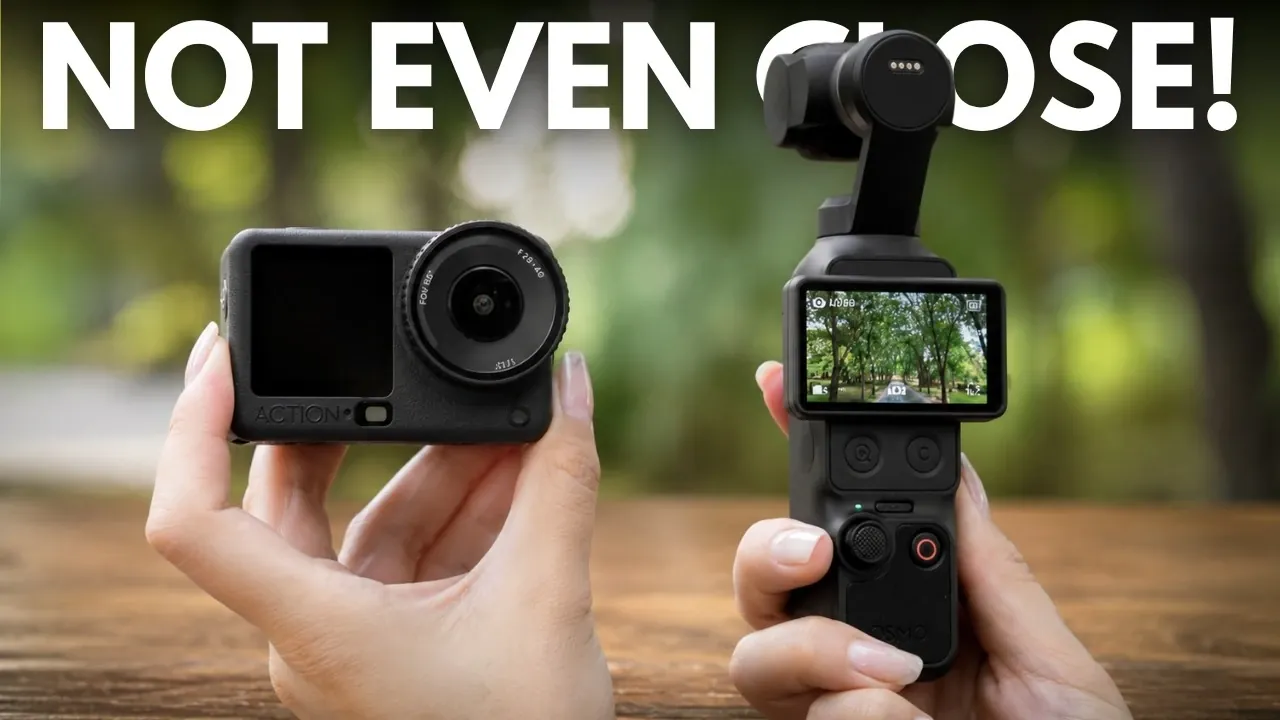
When deciding between the DJI Pocket 4 and the DJI Osmo Action 6, it’s essential to consider how and where you plan to use your camera. As highlighted by Tech Court, these two devices cater to distinct creative needs. The Pocket 4, with its 1-inch sensor and mechanical gimbal, is tailored for creators seeking cinematic visuals and smooth, controlled shots, making it ideal for travel vlogs or narrative-driven projects. On the other hand, the Action 6, with its rugged build and wide-angle lens, thrives in high-energy outdoor environments, such as skiing or biking, where durability and versatility are key.
Explore how these cameras differ in areas like stabilization, field of view and recording features to determine which one aligns with your goals. You’ll gain insight into the Pocket 4’s ability to deliver polished, professional-quality footage and the Action 6’s knack for capturing dynamic, action-packed moments. This guide will help you weigh the strengths of each option, making sure you make an informed decision based on your filming priorities.
Who Are These Cameras For?
TL;DR Key Takeaways :
- The DJI Pocket 4 is ideal for cinematic storytelling, offering advanced features like a 1-inch sensor, mechanical gimbal stabilization and 4K recording at 240fps, making it perfect for controlled environments and professional-quality visuals.
- The DJI Osmo Action 6 is designed for adventure enthusiasts, featuring a rugged, waterproof build, wide-angle lens and 8K recording capabilities, making it suitable for outdoor and high-energy scenarios.
- The Pocket 4 excels in smooth, deliberate shots with superior stabilization and a narrower field of view, while the Action 6 is better for dynamic, immersive scenes with electronic stabilization and a broader perspective.
- Battery life and storage differ: the Pocket 4 offers longer recording time and substantial internal storage, while the Action 6 supports expandable memory but has slightly shorter battery life.
- Price reflects purpose: the Pocket 4 is more expensive, catering to professional creators, while the Action 6 is more affordable and practical for casual users and extreme environments.
The DJI Pocket 4 is designed for creators who prioritize cinematic storytelling. With its advanced features, it excels in producing polished, professional-looking footage, making it ideal for travel vlogs, YouTube content and narrative-driven projects. If your focus is on smooth, high-quality visuals in controlled settings, this camera is an excellent option.
In contrast, the DJI Osmo Action 6 caters to adventure enthusiasts and outdoor explorers. Its rugged design and wide-angle lens make it perfect for capturing action-packed moments, such as skiing, mountain biking, or underwater scenes. If you need a durable, versatile camera for unpredictable environments, the Action 6 is a dependable choice.
Design and Durability
– DJI Pocket 4: Built with precision in mind, the Pocket 4 features a mechanical gimbal that ensures smooth and stable footage. However, its less rugged construction means it’s better suited for indoor or controlled environments. Careful handling is essential to maintain its performance.
– DJI Osmo Action 6: Compact and robust, the Action 6 is designed to withstand harsh conditions. It is waterproof up to 20 meters and built to endure extreme environments, making it a reliable companion for outdoor adventures and high-intensity activities.

Here are more detailed guides and articles that you may find helpful on DJI Pocket 4.
- What the DJI Pocket 4P’s Dual-Camera System Means for Creators
- DJI Osmo Pocket 4P: Uncovering Its Biggest Hidden Trade-Offs
- Why the DJI Osmo Pocket 4P Might Disappoint Social Media Creators
- What DJI Left Out of the Osmo Pocket 4P and Why It Matters
- DJI Pocket 4P Telephoto Lens: the Hidden Flaws Creators Must Know
- Why the DJI Pocket 4P Might Disappoint Modern Social Media Creators
- DJI Pocket 4P vs Insta360 Luna Ultra: the Ultimate Buying Guide
- Why the Pocket 4P is Arriving in America Without the DJI Name
- Inside the Massive DJI Osmo Pocket 4P Upgrade : 17 Stops of Dynamic Range & More
- What the Pocket 4P and Luna Ultra Divide Means for Content Creators
Image Quality: Depth vs Breadth
– Pocket 4: Equipped with a 1-inch sensor, the Pocket 4 delivers cinematic visuals with exceptional detail and depth of field. Its f/2 aperture and advanced autofocus system allow it to perform well in low-light conditions, making it a strong choice for creators seeking natural, professional-quality footage.
– Action 6: Featuring a 1/1.7-inch sensor and a fixed-focus lens, the Action 6 emphasizes versatility. While it doesn’t offer the same depth of field as the Pocket 4, its wide-angle lens captures expansive scenes, making it ideal for dynamic environments and POV shots.
Stabilization: Smooth vs Dynamic
– Pocket 4: The mechanical gimbal provides superior stabilization, particularly for slow, deliberate shots. This feature is especially valuable in low-light settings, where electronic stabilization often struggles. For cinematic movement and controlled compositions, the Pocket 4 stands out.
– Action 6: Using electronic stabilization, the Action 6 excels in chaotic, high-energy scenarios. Whether you’re running, biking, or filming extreme sports, it effectively minimizes motion blur and keeps footage steady, even in unpredictable conditions.
Field of View: Narrow vs Wide
– Pocket 4: With its narrower field of view, the Pocket 4 offers a natural perspective that’s well-suited for traditional filmmaking, close-ups and controlled compositions. This makes it a strong choice for creators who value precision and focus in their shots.
– Action 6: The wide-angle lens of the Action 6 captures more of the scene, making it perfect for immersive storytelling and action-packed shots. Its broader perspective ensures that no detail is missed, even in fast-paced environments.
Recording Features
– Pocket 4: Supports 4K recording at 240fps, allowing smooth slow-motion footage. This capability is particularly useful for creating cinematic B-roll and enhancing storytelling with dramatic visual effects.
– Action 6: Offers 8K recording, delivering higher resolution and greater flexibility for cropping or reframing during post-production. Its square sensor also allows seamless content creation across multiple formats, from widescreen to vertical, catering to diverse platforms.
Battery Life and Storage
– Pocket 4: Offers an impressive battery life of up to 3 hours and 24 minutes when recording at 4K 30fps. Additionally, it includes over 100GB of internal storage, reducing the need for external memory cards and making sure extended recording sessions without interruptions.
– Action 6: Provides slightly less battery life, lasting up to 2 hours and 27 minutes at 4K 30fps. While its internal storage is more limited, it supports expandable memory through external cards, making it adaptable for longer shoots.
Audio Capabilities
Both cameras are compatible with DJI wireless microphones, making sure high-quality audio capture. However, the Pocket 4 offers additional audio options, making it a better choice for creators who prioritize sound quality in their projects. This added flexibility is particularly beneficial for narrative-driven content or professional productions.
Price and Value
– Pocket 4: Positioned at a higher price point, the Pocket 4 reflects its advanced features and focus on cinematic quality. It’s best suited for creators who value professional-grade visuals and controlled filming environments.
– Action 6: More affordable and practical, the Action 6 is ideal for casual users or those filming in rugged conditions. Its durability and versatility make it an excellent choice for outdoor enthusiasts and action filmmakers.
Which Camera Should You Choose?
Your choice ultimately depends on your filming priorities and creative goals:
– Opt for the DJI Pocket 4 if you’re focused on cinematic quality, controlled environments and professional storytelling. Its advanced features and polished visuals make it a top choice for filmmakers and content creators.
– Choose the DJI Osmo Action 6 if you need a durable, action-ready camera for outdoor adventures and fast-paced scenarios. Its rugged design and wide-angle lens ensure it can handle the demands of extreme environments.
Both cameras excel in their respective domains, offering tools to bring your creative vision to life. By understanding their unique strengths, you can confidently select the camera that aligns with your needs and aspirations.
Media Credit: Tech Court
Disclosure: Some of our articles include affiliate links. If you buy something through one of these links, Geeky Gadgets may earn an affiliate commission. Learn about our Disclosure Policy.
