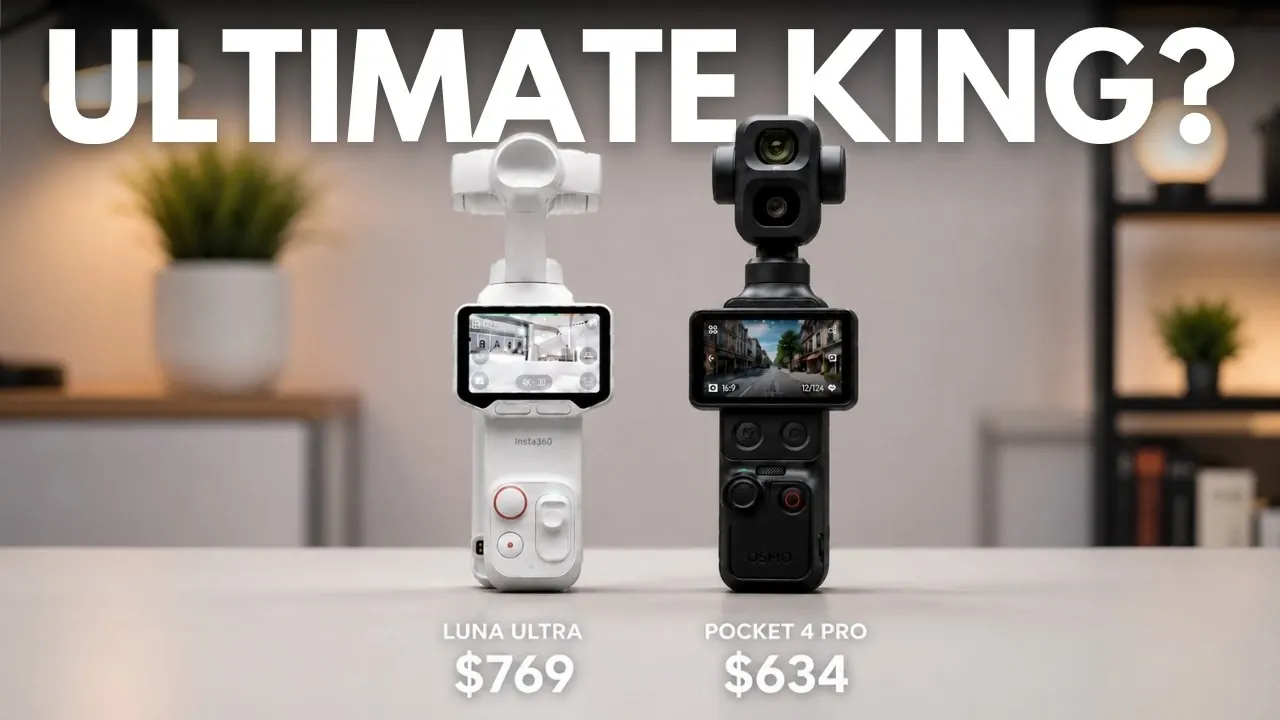
The DJI Pocket 4P and Insta360 Luna Ultra are compact cameras designed for creators with different priorities. Tech Court highlights that the DJI Pocket 4P features a dual-camera system, including a telephoto lens and supports a D-Log 2 color profile with 17 stops of dynamic range, making it well-suited for cinematic visuals. On the other hand, the Insta360 Luna Ultra offers a detachable screen that functions as both a wireless microphone and remote control, appealing to solo creators who value flexibility during shoots.
Discover how these cameras compare in areas like image quality, workflow integration and creative adaptability. Gain insight into the DJI Pocket 4P’s compatibility with professional production setups and the Insta360 Luna Ultra’s advanced features such as head tracking and Leica-enhanced optics. This overview will help you evaluate which device better fits your specific creative needs.
Compact Powerhouse for Cinematic Visuals
TL;DR Key Takeaways :
- The DJI Pocket 4P is designed for professional-grade cinematic visuals, featuring a dual-camera system, D-Log 2 color profile and 17 stops of dynamic range for exceptional image quality.
- The Insta360 Luna Ultra focuses on innovation and efficiency, offering a detachable screen that doubles as a remote control and wireless microphone, along with advanced head tracking and 8K recording.
- The DJI Pocket 4P integrates seamlessly into DJI’s ecosystem, providing access to a wide range of accessories and tools for professional workflows.
- The Insta360 Luna Ultra is ideal for solo creators, emphasizing convenience and adaptability with features like Leica-enhanced optics and a streamlined design for on-the-go shooting.
- Choosing between the two depends on your priorities: the Pocket 4P excels in cinematic quality and ecosystem integration, while the Luna Ultra prioritizes flexibility and ease of use for solo creators.
The DJI Pocket 4P is a compact yet powerful cinema camera designed for creators who demand exceptional image quality. Its dual-camera system, which includes a telephoto lens, offers unmatched versatility for capturing diverse perspectives. With large sensors and a D-Log 2 color profile, the Pocket 4P delivers an impressive 17 stops of dynamic range, making sure superior detail and color accuracy for cinematic results.
This camera is particularly suited for filmmakers and content creators who prioritize polished, professional visuals. Seamlessly integrating into DJI’s established ecosystem, the Pocket 4P supports a wide range of accessories and tools, making it a reliable choice for professional projects. If your goal is to produce high-quality, cinematic content, the Pocket 4P provides the tools and flexibility you need to bring your vision to life.
Insta360 Luna Ultra: Designed for Solo Creators
The Insta360 Luna Ultra, on the other hand, is tailored for creators who value innovation and efficiency. Its standout feature is a detachable screen that doubles as a remote control and wireless microphone, offering greater flexibility during shoots. Advanced technologies like head tracking ensure your subject remains in focus, even during dynamic movements, while 8K recording and enhanced photo modes elevate the quality of your content.
A collaboration with Leica enhances the Luna Ultra’s photographic capabilities, delivering superior optics and refined color science. This camera is ideal for solo creators who prioritize tools that simplify the content creation process without compromising on quality. If you’re looking for a device that adapts to your workflow while maintaining high performance, the Luna Ultra is a compelling choice.
Take a look at other insightful guides from our broad collection that might capture your interest in DJI Pocket 4P.
- DJI Osmo Pocket 4P vs Insta360 Luna Ultra : Key Differences Explained
- DJI Pocket 4 vs Pocket 4P : Are the New Pro Features Worth the Upgrade?
- DJI Osmo Pocket 4P Global Launch is Finally Here
- What the DJI Pocket 4P’s Dual-Camera System Means for Creators
- Why the DJI Osmo Pocket 4P Might Disappoint Social Media Creators
- What DJI Left Out of the Osmo Pocket 4P and Why It Matters
- Why DJI Kept the Osmo Pocket 4P Specs a Secret at Cannes
- Everything We Know About the DJI Pocket 4 Pro Sensor Upgrade
- How the Insta360 Luna Ultra Challenges DJI’s Cinematic Dominance
- What the Latest DJI Osmo Pocket 4P Leaks Actually Mean
Key Differences: What Sets Them Apart?
While both cameras share some common features, such as dual cameras, telephoto lenses and large sensors, they excel in different areas. Understanding these distinctions is crucial for determining which camera aligns with your creative needs.
- Image Quality: The DJI Pocket 4P’s D-Log 2 profile and 17 stops of dynamic range make it the superior choice for cinematic projects requiring professional-grade visuals.
- Workflow Efficiency: The Insta360 Luna Ultra’s detachable screen and head tracking features simplify shooting, particularly for solo creators who need flexibility and ease of use.
- Flexibility: While both cameras are versatile, the Luna Ultra’s design is better suited for creators on the move, offering adaptability for various shooting scenarios.
- Ecosystem Integration: The Pocket 4P benefits from DJI’s established ecosystem, providing access to a wide range of accessories and tools for professional workflows.
Which Camera Should You Choose?
Choosing between the DJI Pocket 4P and Insta360 Luna Ultra ultimately comes down to your creative priorities. If your focus is on achieving cinematic visuals, professional-grade image quality and using a robust ecosystem of tools and accessories, the Pocket 4P is the ideal choice. Its advanced imaging capabilities and seamless integration into DJI’s ecosystem make it a reliable option for filmmakers and content creators aiming for polished results.
On the other hand, if you value convenience, innovative features and a streamlined workflow, the Insta360 Luna Ultra is better suited to your needs. Its detachable screen, head tracking and collaboration with Leica provide a unique combination of efficiency and quality, making it perfect for solo creators or those who frequently shoot on the go.
Both cameras offer impressive capabilities, but their distinct approaches cater to different types of creators. By identifying your creative goals and understanding how each camera addresses them, you can make an informed decision that aligns with your vision and enhances your content creation process.
Media Credit: Tech Court
Disclosure: Some of our articles include affiliate links. If you buy something through one of these links, Geeky Gadgets may earn an affiliate commission. Learn about our Disclosure Policy.
