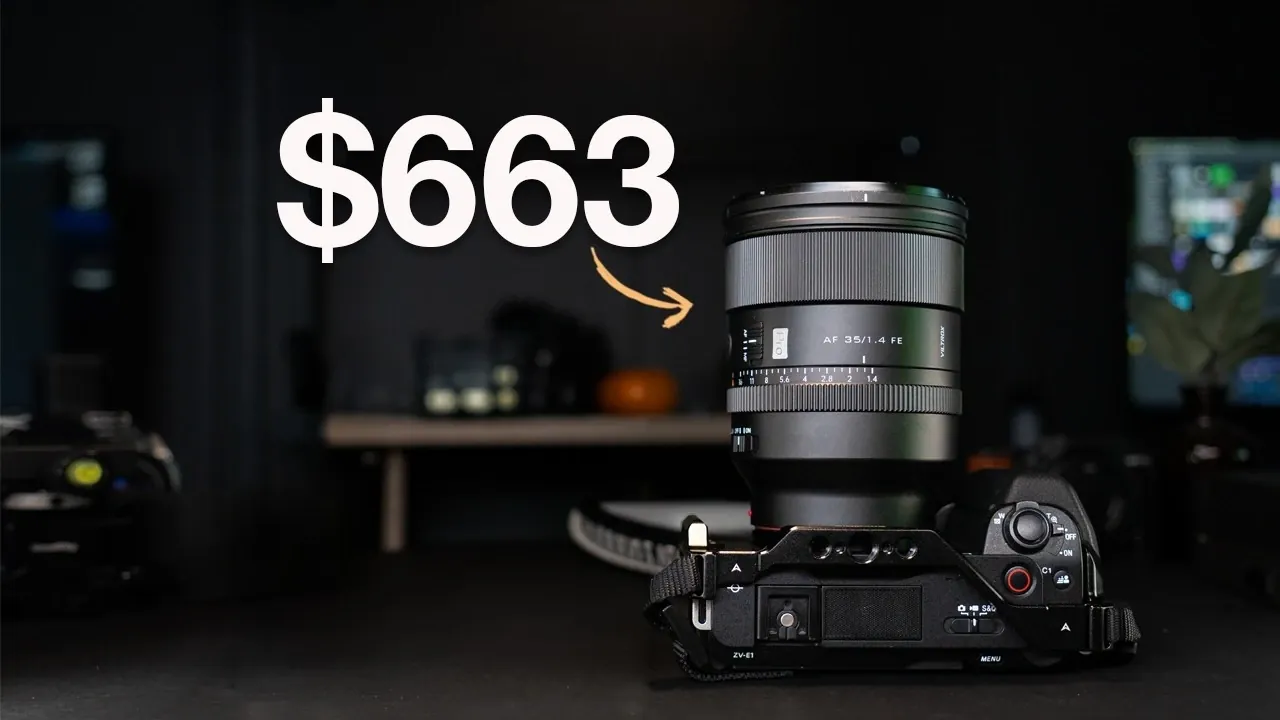
Upgrading from an APS-C to a full-frame camera system is a significant decision that hinges on your specific needs and shooting scenarios. Full-frame cameras offer advantages like enhanced image quality, better lowlight performance, and stronger background blur, making them ideal for applications such as portrait photography or professional video work. As highlighted by The Film Alliance, the Viltrox 35mm f1.4 Pro lens exemplifies these benefits with its wide aperture, reliable autofocus, and compatibility with Sony cameras. For instance, when used in talking head setups, this lens provides a practical balance of sharpness and background separation, especially at apertures like f/2, where the focus window is wide enough to maintain clarity across the subject’s face.
In this deep dive, you’ll gain insight into how sensor size impacts field of view and depth of field, with examples comparing APS-C and full-frame systems. Explore why full-frame excels in scenarios requiring a “true 35mm look” and how lenses like the Viltrox 35mm f1.4 Pro enhance these setups. You’ll also learn how APS-C systems remain a viable choice for those prioritizing portability and affordability, with practical examples for travel and budget-conscious workflows. This guide will help you weigh the trade-offs and determine whether a full-frame upgrade aligns with your creative goals.
TL;DR Key Takeaways :
- Full-frame cameras are reportedly preferred for their superior image quality, stronger background blur, and better lowlight performance, while APS-C systems are valued for their portability and affordability.
- The Viltrox full-frame 35mm f1.4 Pro lens is highlighted as a durable and feature-rich option for those considering a move to full-frame, offering weather sealing, customizable controls, and fast, quiet autofocus.
- Full-frame systems are claimed to excel in scenarios like client shoots, weddings, and talking head videos, providing better background separation and a “true 35mm look” compared to APS-C systems.
- APS-C systems remain a practical choice for users prioritizing portability and cost, with lighter and more affordable lenses like the Viltrox APS-C 35mm f1.7 lens being suitable for travel and budget-conscious setups.
- The Film Alliance concludes that upgrading to full-frame depends on individual needs, with full-frame systems being a strong investment for those seeking enhanced image quality and background blur, while APS-C setups are recommended for those prioritizing affordability and compactness.
Full-Frame vs APS-C: Key Differences
The main difference between full-frame and APS-C systems lies in sensor size. APS-C sensors are about 1.5 times smaller than full-frame sensors, varying slightly by brand. This size difference affects both field of view and depth of field. For instance, a 35mm lens on an APS-C camera provides a field of view similar to a 52mm lens on a full-frame camera. To achieve a true 35mm equivalent on APS-C, a lens closer to 23mm is needed. Alternatively, a 20mm lens on APS-C delivers a 35mm equivalent field of view.
Depth of field also differs significantly. APS-C sensors naturally produce more depth of field, resulting in less background blur compared to full-frame sensors. To match the background blur of an f/1.4 lens on full-frame, an APS-C lens would require an aperture closer to f/0.95 or f/1.0. This makes full-frame systems particularly appealing for portrait photography or talking head videos, where background separation is often desired.
The Viltrox 35mm f1.4 Pro Lens: Features and Performance
The Viltrox full-frame 35mm f1.4 Pro lens is a compelling option for those considering a move to full-frame. It features a durable metal body with weather sealing, including a rubber gasket at the mount and a water- and smudge-resistant coating on the front element. The lens includes a smooth focus ring, an aperture ring with a tactile click switch, and an autofocus/manual focus toggle. A customizable function button, defaulting to focus hold on Sony cameras, adds versatility. It also supports firmware updates via a USB-C port and accommodates 77mm filters. The aperture range spans from f/1.4 to f/16.
The lens uses a hyper VCM focus system for fast, quiet autofocus. When paired with a Sony camera, such as the ZV1, it supports eye tracking and integrates well with the camera body. These features make it particularly effective for talking head setups, where precise focus and reliable communication between the lens and camera are crucial.

Uncover more insights about cameras in previous articles we have written.
- DJI Neo 3 vs Neo 2: Leaks Show a 64% Battery Increase
- New Dyson CameraJet Toothbrush Features a 1mm Camera for Plaque Detection
- What to Expect from Apple’s iPhone 18 Pro: Design Changes, Specs, and Costs
- MemoMind Smart Glasses Drop to $399 Before $600 Price Return
- Major Design Change Leaks for the Samsung Galaxy S27 Ultra
- Massive Battery and Redesigned Cameras: The Galaxy S27 Ultra Shift Is Real
- Why the Samsung Galaxy S27 Ultra is a Massive Leap Forward
- iPhone 18 Pro vs. iPhone 17 Pro: the Upgrades That Actually Matter
- Apple AirPods Pro with Camera Hardware Surface in New Leak
- Samsung Galaxy S27 Ultra Leak: Major Design Overhaul Revealed
Use Cases: When Full-Frame Shines
Full-frame cameras excel in scenarios requiring high image quality, strong background blur, and good lowlight performance. They are often preferred for client shoots, weddings, and headshots, offering better background separation and cleaner lowlight images than APS-C systems. This is often referred to as achieving a “true 35mm look.”
For talking head videos, a 35mm full-frame lens provides more practical framing than a 35mm APS-C lens, which requires the camera to be positioned farther back for similar framing. The Viltrox 35mm f1.4 Pro lens is particularly suited for such setups. At f/2, it offers a focus window wide enough to keep the entire head in focus, avoiding the excessive blur that can occur with wider apertures. This makes it ideal for stationary tripod-mounted setups.
APS-C: Portability and Affordability
Despite the advantages of full-frame systems, APS-C setups remain a practical choice for many users. They are lighter, more compact, and significantly more affordable. For example, the Viltrox APS-C 35mm f1.7 lens weighs 170 grams and costs far less than the 760-gram Viltrox full-frame 35mm f1.4 Pro lens. These factors make APS-C systems particularly appealing for travel or situations where portability is essential.
For budget-conscious users, transitioning to full-frame can still be achieved affordably. Combining a used Sony A7S II camera with the Viltrox full-frame 35mm f1.4 Pro lens offers a cost-effective entry point for those moving to full-frame, especially for talking head setups.
The Film Alliance concludes that upgrading to full-frame depends on your specific needs. If you prioritize a “true 35mm look” with better background separation and lowlight performance, full-frame systems like the Viltrox 35mm f1.4 Pro lens are a strong investment. With features such as weather sealing, customizable controls, and seamless compatibility with Sony cameras, this lens is an excellent starting point for those transitioning from APS-C. However, if portability and affordability are more important, APS-C setups remain a practical and reliable alternative.
Media Credit: The Film Alliance
Disclosure: Some of our articles include affiliate links. If you buy something through one of these links, Geeky Gadgets may earn an affiliate commission. Learn about our Disclosure Policy.
