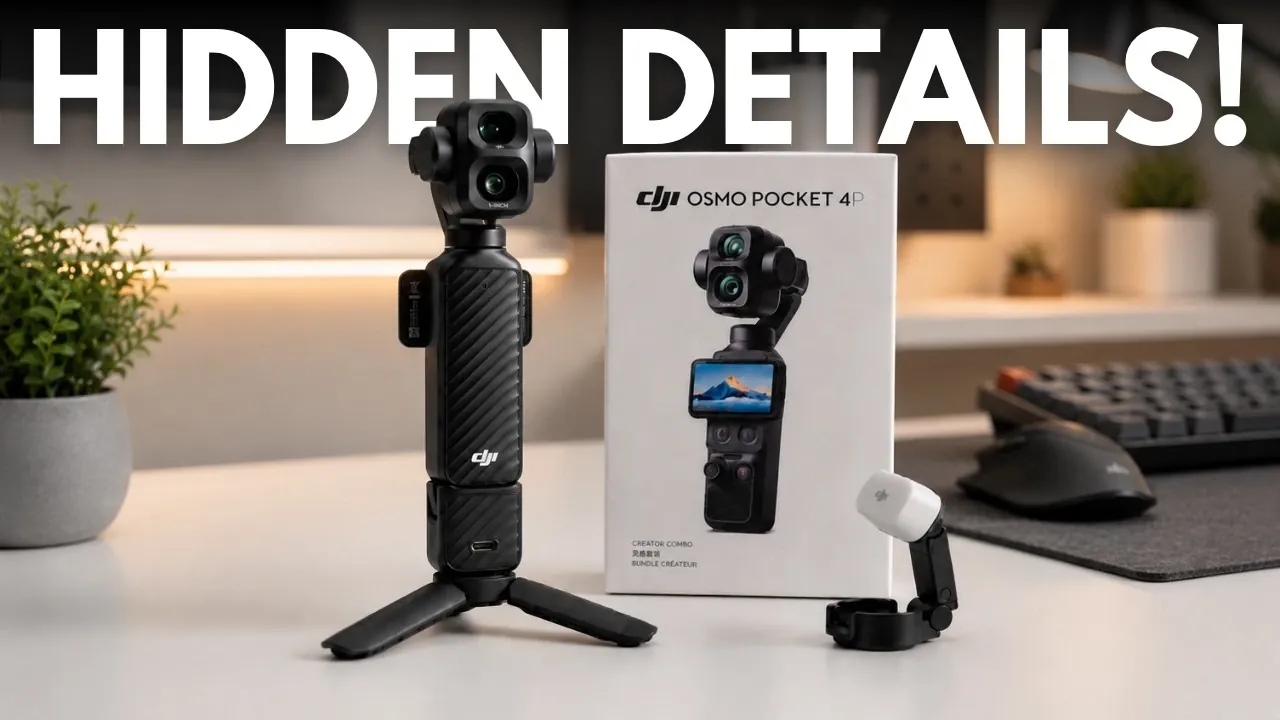
The DJI Pocket 4P introduces a dual-camera system that pairs a 1-inch main sensor with a 60mm telephoto lens, aiming to offer creators both versatility and portability. However, as Tech Court highlights, this setup comes with notable trade-offs. While the main sensor excels with features like 17 stops of dynamic range through the Dlog-M2 profile, the telephoto lens lacks key capabilities such as low-light mode and time-lapse recording. These distinctions position the telephoto lens as more of a supplementary option, which may not meet the expectations of users seeking a fully balanced system.
Explore how these design choices influence the Pocket 4P’s real-world usability, from its slow-motion performance to the enhanced subject tracking provided by ActiveTrack 8.0. Gain insight into how the internal storage capacity of 103 GB, while convenient, might limit creators working on long-form projects. This breakdown will help you assess whether the Pocket 4P’s features align with your creative workflow and whether its compromises are worth the trade-off for your specific needs.
Strengths and Shortcomings
TL;DR Key Takeaways :
- The DJI Pocket 4P features a dual-camera system with a 1-inch main sensor for exceptional image quality and a 60mm telephoto lens for creative flexibility, though the telephoto lens lacks certain features like low-light mode and time-lapse recording.
- ActiveTrack 8.0 introduces advanced subject tracking capabilities, including multi-person tracking, group framing and zoom-assisted tracking, enhancing usability for dynamic shooting scenarios.
- The main camera supports 4K slow-motion recording at 240 FPS and features 17 stops of dynamic range, while the telephoto lens offers limited functionality, emphasizing its role as a secondary tool.
- With 103 GB of internal storage, the Pocket 4P ensures convenience for uninterrupted shooting, but the lack of expandable storage may be a drawback for professionals requiring extensive recording capacity.
- The Pocket 4P targets creators seeking portability and professional-grade performance, but its specialized features and limitations may not appeal to all users, making real-world performance and comparisons with competitors critical to its success.
Dual-Camera System
The dual-camera system is the DJI Pocket 4P’s most defining feature, combining a 1-inch main sensor with a 60mm telephoto lens. Each camera serves a distinct purpose, offering unique advantages and limitations.
- Main Camera: The 1-inch sensor is engineered for exceptional image quality, boasting 17 stops of dynamic range through the Dlog-M2 profile. This ensures detailed highlights and shadows, making it ideal for professional-grade content creation, from cinematic videos to high-resolution photography.
- Telephoto Lens: The 60mm lens provides creative flexibility, particularly for capturing distant subjects or achieving a natural compression effect. However, it lacks certain features such as low-light mode and time-lapse recording, which limits its versatility compared to the main sensor.
While the main camera is a powerhouse for most scenarios, the telephoto lens feels more like a complementary tool rather than a fully capable alternative. This distinction may appeal to users who prioritize the primary sensor’s capabilities but could deter those seeking a more balanced dual-camera system.
Slow Motion and Dynamic Range: A Tale of Two Cameras
The DJI Pocket 4P excels in slow-motion capabilities, particularly with its main camera, which supports 4K resolution at 240 frames per second (FPS). This feature is perfect for capturing fast-moving scenes with cinematic smoothness, making it a valuable tool for action shots or creative storytelling.
However, the telephoto lens does not offer the same level of slow-motion functionality, which may limit its appeal for users who frequently rely on this feature. Similarly, the disparity in dynamic range between the two cameras is notable. The main sensor’s 17 stops of dynamic range ensure superior image quality, preserving intricate details in both highlights and shadows. In contrast, the telephoto lens lacks this capability, further emphasizing its role as a secondary option.
This uneven performance between the two cameras underscores the primary sensor’s dominance, positioning it as the system’s workhorse while relegating the telephoto lens to more specialized use cases.

Uncover more insights about DJI Pocket 4P in previous articles we have written.
- DJI Osmo Pocket 4P vs Insta360 Luna Ultra : Key Differences Explained
- DJI Pocket 4 vs Pocket 4P : Are the New Pro Features Worth the Upgrade?
- DJI Osmo Pocket 4P Global Launch is Finally Here
- What the DJI Pocket 4P’s Dual-Camera System Means for Creators
- Why the DJI Osmo Pocket 4P Might Disappoint Social Media Creators
- What DJI Left Out of the Osmo Pocket 4P and Why It Matters
- Why DJI Kept the Osmo Pocket 4P Specs a Secret at Cannes
- Why the DJI Pocket 4P Might Disappoint Modern Social Media Creators
- Everything We Know About the DJI Pocket 4 Pro Sensor Upgrade
- DJI Pocket 4P vs Insta360 Luna Ultra: the Ultimate Buying Guide
ActiveTrack 8.0: Smarter Subject Tracking
ActiveTrack 8.0 represents a significant leap forward in subject tracking technology, enhancing the DJI Pocket 4P’s appeal for dynamic shooting environments. The system introduces several key improvements:
- Multi-Person Tracking: The ability to track multiple subjects simultaneously makes it ideal for group settings, such as interviews, family gatherings, or collaborative projects.
- Group Framing: This feature automatically adjusts the framing to ensure all subjects remain in view, enhancing usability in dynamic or unpredictable scenes.
- Zoom-Assisted Tracking: By using the telephoto lens, the system maintains focus on subjects even as they move farther away, making sure consistent results across various distances.
These enhancements make the Pocket 4P a versatile tool for creators who frequently shoot multi-subject or fast-paced content. However, its real-world effectiveness, particularly in challenging environments with complex movements or low lighting, remains to be fully tested.
Internal Storage: Convenience with Limits
The inclusion of 103 GB of internal storage is a practical feature that sets the DJI Pocket 4P apart from many competitors. This built-in storage is particularly useful for travel vloggers, casual users, or creators who may occasionally forget to carry memory cards. It ensures uninterrupted shooting sessions, even in situations where external storage options are unavailable.
However, the lack of expandable storage could be a significant drawback for professionals or users who frequently shoot long-form content. For those requiring extensive recording capacity, this limitation may necessitate frequent file transfers, potentially disrupting workflows. While the internal storage is a convenient feature, its fixed capacity may not meet the demands of all users.
Positioning in a Competitive Market
The DJI Pocket 4P enters a competitive market, aiming to stand out with its dual-camera system, advanced tracking features and creative tools. It directly challenges other compact cameras, such as the Luna Ultra, by offering a blend of portability and professional-grade performance. Additionally, the availability of new color options and accessories broadens its appeal, catering to a wider audience.
Despite these advancements, the telephoto lens’s limitations may deter users seeking an all-in-one solution. Its specialized nature positions it as a tool for creators with specific needs rather than a universal option. Comparisons with competitors will ultimately determine whether the Pocket 4P can carve out a strong position in the market.
Real-World Performance: The Final Test
While the DJI Pocket 4P impresses with its specifications, its real-world performance will be the ultimate measure of its success. Key questions remain regarding its practical capabilities:
- How well does the telephoto lens perform in diverse shooting scenarios?
- Does the zoom feature maintain consistent image quality across different distances?
- Is ActiveTrack 8.0 reliable in complex environments, such as crowded or low-light settings?
These factors will play a crucial role in determining whether the Pocket 4P lives up to its promise or falls short of expectations. For creators, the answers to these questions will be pivotal in deciding whether this compact camera meets their needs.
A Specialized Tool for Creative Professionals
The DJI Pocket 4P offers a compelling mix of features designed to cater to creators seeking a portable yet powerful camera. Its main camera delivers outstanding image quality, while the telephoto lens adds creative possibilities, albeit with some trade-offs. Enhanced tracking features and internal storage further enhance its usability, making it a versatile tool for specific use cases.
However, its specialized nature and certain limitations mean it may not suit everyone. For those prioritizing high-quality imaging and advanced tracking in a compact package, the Pocket 4P is a strong contender. Yet, its true value will only become evident after real-world testing and comparisons with competitors. If you’re considering a compact camera that balances portability with professional-grade performance, the DJI Pocket 4P is worth exploring, just be mindful of its limitations and ensure it aligns with your creative needs.
Media Credit: Tech Court
Disclosure: Some of our articles include affiliate links. If you buy something through one of these links, Geeky Gadgets may earn an affiliate commission. Learn about our Disclosure Policy.
