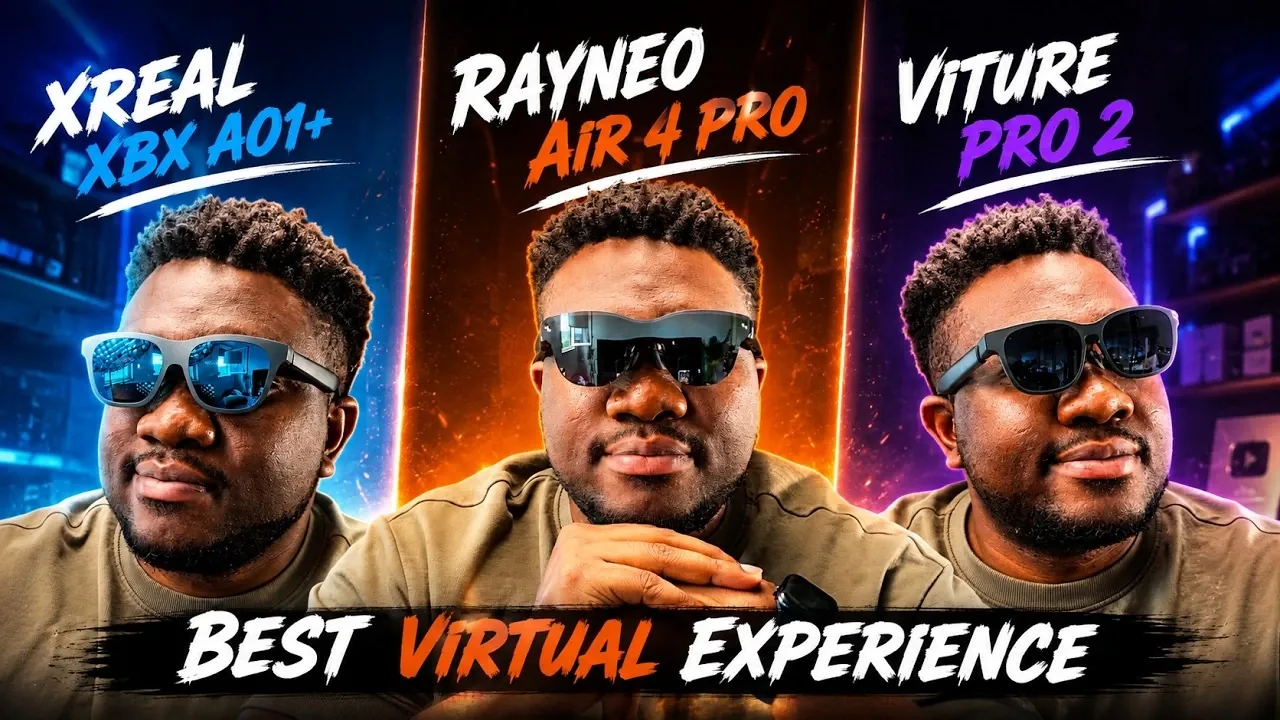
Extended reality (XR) glasses are becoming increasingly accessible, with several models now available at the $299 price point. Gadgets Guardian examines three contenders, the VITURE Pro 2, XREAL XBX and RayNeo Air 4 Pro, by comparing their performance in areas like image clarity, text readability and comfort. While each device has its strengths, the VITURE Pro 2 stood out as the most balanced option, offering sharp visuals and ergonomic design, though it lacks native HDR10 support.
Explore how these XR glasses handle tasks such as gaming, productivity and media consumption. You’ll gain insight into the VITURE Pro 2’s superior comfort for long-term wear, the XREAL XBX’s HDR10 capabilities and the RayNeo Air 4 Pro’s challenges with edge clarity. This breakdown will help you better understand which device aligns with your needs, whether you prioritize immersive visuals or practical usability.
Image Quality: Clarity and Comfort
TL;DR Key Takeaways :
- The VITURE Pro 2 stands out as the most well-rounded XR glasses option, excelling in image clarity, text readability, color accuracy and comfort, making it ideal for diverse applications.
- In terms of image clarity, the VITURE Pro 2 provides sharp, natural visuals with minimal eye strain, outperforming the XREAL XBX and RayNeo Air 4 Pro.
- For productivity tasks, the VITURE Pro 2 offers superior text readability, while the XREAL XBX and RayNeo Air 4 Pro face challenges with positioning and edge clarity.
- Color accuracy is best on the VITURE Pro 2, delivering precise and balanced colors, whereas the XREAL XBX and RayNeo Air 4 Pro lean toward oversaturation.
- The VITURE Pro 2 provides the best comfort and usability for extended wear, making it the top choice for gaming, 3D visuals and long-term use compared to its competitors.
Image clarity is a cornerstone of XR performance, as it directly impacts user experience during extended use. The VITURE Pro 2 excelled in this category, offering a natural and sharp visual experience that minimized eye strain.
- VITURE Pro 2: Delivered crisp, natural visuals with minimal strain, making it ideal for prolonged use.
- XREAL XBX: Included HDR10 support but suffered from slightly soft visuals and noticeable edge color shifts, which detracted from overall clarity.
- RayNeo Air 4 Pro: Struggled with framing issues and caused discomfort during extended sessions, ranking lowest in this category.
The VITURE Pro 2’s ability to maintain clarity and reduce strain makes it particularly appealing for users who prioritize comfort and visual fidelity.
Text Readability: Productivity Matters
For productivity tasks such as reading documents, coding, or reviewing spreadsheets, text clarity is essential. The VITURE Pro 2 once again stood out, offering sharp and legible text that supports efficient work.
- VITURE Pro 2: Provided excellent text clarity, making it the best choice for productivity-focused users.
- XREAL XBX: Required users to adjust positioning for comfortable readability, which could be inconvenient over time.
- RayNeo Air 4 Pro: Faced challenges with edge clarity, making text harder to read and less suitable for detailed tasks.
The VITURE Pro 2’s superior text readability positions it as the most practical option for users who rely on XR glasses for work-related activities.

Find more information on XR glasses by browsing our extensive range of articles, guides and tutorials.
- $159 AOC Air Mega AR Glasses Focus on Casual 1080P Gaming
- XREAL Aura : Inside the $1,500 Spatial Computing Smart Glasses
- VITURE Pro 2 XR Glasses Remove Harman Audio to Hit $299 Price Tag
- Xreal 1 Pro vs Viture Beast: Best 2026 XR Glasses for Multitasking and Portable Work
- URXR One vs XREAL Aura: AR Glasses Specs and Features Compared
- Why Google’s New Audio Glasses Could Change How You Navigate the World
- Why Xreal Aura’s $1,500 AR Glasses Are Ditching Traditional VR for Spatial Computing
- XREAL Aura Might Make Apple’s $3,500 Vision Pro Pointless
- RayNeo Air 4 Pro Offers Dual Micro OLED Displays For $239
- Meet XREAL’s $1,500 Aura XR Glasses Coming in Fall 2026
Color Accuracy: Precision vs Saturation
Color accuracy is critical for tasks like photo editing, video production, or enjoying high-quality media. The VITURE Pro 2 delivered the most precise and consistent colors, closely aligning with professional-grade displays.
- VITURE Pro 2: Offered accurate and balanced color reproduction, making it suitable for color-critical tasks.
- XREAL XBX: Displayed oversaturated tones, which, while visually striking, lacked the fidelity needed for precision work.
- RayNeo Air 4 Pro: Also leaned toward oversaturation, further limiting its appeal for users requiring accurate color representation.
For users who value precision in color reproduction, the VITURE Pro 2 remains the most reliable choice.
Gaming Performance: Immersion and Responsiveness
Gaming with XR glasses demands a seamless blend of visual clarity, responsiveness, and comfort. The VITURE Pro 2 provided the most immersive gaming experience, excelling in these areas.
- VITURE Pro 2: Delivered clear visuals and reduced discomfort, making it ideal for extended gaming sessions.
- XREAL XBX: Performed well with HDR10 support but introduced slight eye strain and edge softness, which affected long-term usability.
- RayNeo Air 4 Pro: Struggled with motion blur and edge clarity, detracting from the overall gaming experience.
The VITURE Pro 2’s ability to maintain clarity and comfort during gaming makes it the top choice for gamers seeking an engaging XR experience.
3D and Spatial Features: Depth and Stability
In 3D visuals and spatial computing, depth perception and stability are key to creating an immersive experience. Both the VITURE Pro 2 and XREAL XBX performed well in this category, while the RayNeo Air 4 Pro faced notable challenges.
- VITURE Pro 2 and XREAL XBX: Provided better depth perception and reduced motion blur, enhancing the sense of immersion.
- RayNeo Air 4 Pro: Supported three degrees of freedom (3DOF) but struggled with visual inconsistencies and lacked stabilization, limiting its usability.
For users exploring 3D and spatial features, the VITURE Pro 2 and XREAL XBX offer more reliable performance, with the VITURE Pro 2 maintaining an edge in overall comfort.
Comfort and Usability: Long-Term Wearability
Comfort is a critical consideration for XR glasses, especially for users who plan to wear them for extended periods. The VITURE Pro 2 stood out with its ergonomic design and consistent performance across various tasks.
- VITURE Pro 2: Offered the best long-term wearability, with reduced eye strain and a lightweight design.
- XREAL XBX: Provided strong features but required compromises in stabilization and comfort during extended use.
- RayNeo Air 4 Pro: Was less comfortable and visually demanding, making it less suitable for prolonged sessions.
The VITURE Pro 2’s focus on comfort and usability makes it the most practical option for users seeking a reliable and enjoyable XR experience.
Final Verdict: The Best Choice for $299
After evaluating the VITURE Pro 2, XREAL XBX and RayNeo Air 4 Pro across multiple performance categories, the VITURE Pro 2 emerged as the clear winner. Its balanced performance, superior comfort and natural image clarity make it the most user-friendly option for a variety of applications.
- VITURE Pro 2: Excels in image clarity, text readability, color accuracy and comfort, making it the best overall choice.
- XREAL XBX: Offers notable HDR10 support but falls short in comfort and edge clarity.
- RayNeo Air 4 Pro: Provides basic spatial features but struggles with usability and visual performance.
For users seeking high-quality XR glasses at an affordable price, the VITURE Pro 2 delivers the most comprehensive and satisfying experience.
Media Credit: Gadgets Guardian
Disclosure: Some of our articles include affiliate links. If you buy something through one of these links, Geeky Gadgets may earn an affiliate commission. Learn about our Disclosure Policy.
