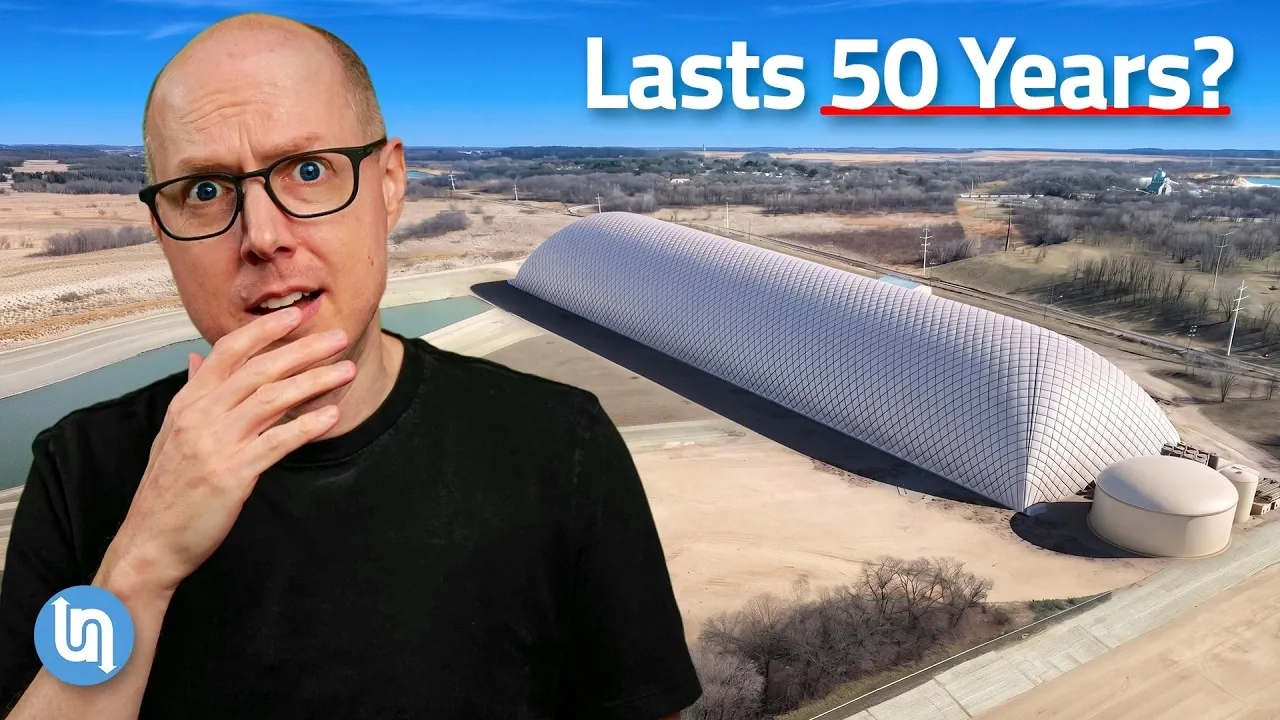
China has recently constructed the world’s largest compressed air energy storage (CAES) system in Huai’an, Jiangsu province, marking a significant step in energy storage innovation. This facility utilizes underground salt caverns to store compressed air, achieving an impressive 71% round-trip efficiency by reusing heat generated during compression. As highlighted by Undecided with Matt Ferrell, this approach offers a cost-effective alternative to lithium-ion batteries for short-term energy storage, addressing challenges like rising material costs and supply chain disruptions. However, with a storage capacity of only four hours, the system raises critical questions about its role in supporting long-duration energy storage needs, which are vital for integrating renewable energy sources into the grid.
Explore how CAES technology compares to lithium-ion batteries in terms of cost, scalability and efficiency. Gain insight into the geological constraints that influence where CAES systems can be deployed and the broader implications for renewable energy integration. Additionally, understand how China’s energy storage goals align with its efforts to stabilize the grid and reduce reliance on fossil fuels. This overview provides a detailed breakdown of the opportunities and limitations of CAES, offering a clearer picture of its potential role in the evolving energy landscape.
How Compressed Air Energy Storage (CAES) Works
TL;DR Key Takeaways :
- China has built the world’s largest compressed air energy storage (CAES) system in Huai’an, Jiangsu province, achieving a 71% round-trip efficiency by reusing heat generated during air compression.
- CAES systems offer a cost-effective alternative to lithium-ion batteries, with storage costs around $20/kWh compared to $300/kWh for lithium-ion, but are limited to regions with suitable underground salt caverns.
- The system’s 4-hour storage capacity is effective for grid balancing and peak shaving but falls short of the long-duration storage needed for full renewable energy integration.
- Global innovations, such as CO2-based energy storage and advanced adiabatic CAES, are emerging to address long-duration storage challenges, though they face high costs and permitting hurdles.
- China’s CAES project aligns with its goals to reduce fossil fuel reliance and stabilize the grid, showcasing the potential for CAES to complement other energy storage technologies in a sustainable energy future.
CAES technology operates by compressing air and storing it in underground salt caverns. When electricity demand rises, the compressed air is released, expanded and converted back into electricity through turbines. A key innovation in China’s system is its ability to reuse the heat generated during the compression process. This feature significantly improves efficiency and minimizes energy losses, allowing the system to achieve a 71% round-trip efficiency, higher than older CAES designs that relied on external heat sources such as natural gas.
The use of underground salt caverns is a cornerstone of CAES technology. These natural formations provide a secure and cost-effective medium for storing compressed air. However, the reliance on specific geological conditions limits the scalability of CAES to regions with suitable formations. This geographical dependency remains a critical factor in determining where such systems can be deployed effectively.
How CAES Compares to Lithium-Ion Batteries
Lithium-ion batteries have long dominated the energy storage market, particularly for short-duration applications lasting up to four hours. Their compact design, versatility and widespread use make them a popular choice. However, rising material costs and supply chain disruptions have increased their price, creating opportunities for alternative technologies like CAES in specific scenarios.
CAES systems offer a distinct economic advantage, with a significantly lower cost per kilowatt-hour of storage capacity, approximately $20/kWh compared to $300/kWh for lithium-ion batteries. This cost efficiency makes CAES an attractive option for large-scale energy storage. However, CAES systems require substantial upfront investment in infrastructure and are less flexible than lithium-ion batteries. Additionally, their current limitation to short-duration storage restricts their ability to compete across all use cases, particularly in applications requiring longer storage durations.

Check out more relevant guides from our extensive collection on energy that you might find useful.
- Proxima Fusion Plans the Alpha Stellarator for the Early 2030S
- How the Super Soaker Inventor Built a Heat Engine Without Moving Parts
- Best Phone Battery Life 2025: OnePlus 15, vivo X300 Pro, & iPhone 17 Pro Max
- SeaTwirl’s IKEA-Style Turbines Cut Deep-Water Energy Costs
- IKEA Smart Home 2026: Affordable Automation with Hidden Limits
- Apple Silicon AI Performance: Local Al on Apple Silicon Uses 7X Less RAM
- Apple Watch Ultra 4 Leak Reveals Redesign and Health Features
- What Makes the Seawater Battery a Breakthrough for Sustainability
- Google DeepMind CEO Says AGI Could Arrive in 3 to 5 Years
- iPhone Ultra Fold Leaks Reveal Apple’s First Foldable Phone
China’s Energy Storage Goals
China’s CAES project is a strategic effort to address critical challenges in balancing the national power grid. Renewable energy sources like wind and solar are inherently intermittent, often generating electricity at times that do not align with peak demand. The CAES system helps stabilize the grid by providing reliable power during evening demand surges, serving as an alternative to traditional gas peaker plants. This aligns with China’s broader objectives of reducing reliance on fossil fuels and enhancing grid stability.
While the system’s 4-hour capacity is well-suited for peak shaving and grid balancing, it falls short of the long-duration storage required to fully integrate renewable energy into the grid. This limitation underscores the need for complementary technologies to bridge the gap and achieve a sustainable energy future.
Global Innovations in Long-Duration Storage
China’s CAES system represents a significant advancement in short-duration energy storage, but other technologies are emerging globally to address the need for long-duration solutions. Some notable innovations include:
- CO2-Based Energy Storage: Systems like Energy Dome’s design use compressed carbon dioxide instead of air, offering higher energy density and storage durations exceeding eight hours. This approach could provide a viable solution for long-duration storage needs.
- Advanced Adiabatic CAES: Projects such as Hydrostor’s Willow Rock in the United States aim to enhance CAES efficiency by improving heat storage and reuse. While promising, these projects face challenges such as high upfront costs and lengthy permitting processes.
These developments highlight the global push to diversify energy storage technologies, making sure that various solutions can complement one another to meet the growing demand for renewable energy integration.
Economic and Technical Considerations
CAES systems offer several economic and technical benefits. They have lower operational costs and do not depend on rare or expensive materials, unlike lithium-ion batteries. The use of underground salt caverns further reduces storage costs, making CAES a cost-effective option in regions with suitable geological conditions. These factors position CAES as a promising alternative for large-scale energy storage.
However, the technology is not without its challenges. Its reliance on specific geological formations limits its applicability to certain regions and there is limited global experience with large-scale adiabatic CAES systems. Efficiency improvements, such as advanced heat storage and reuse mechanisms, are critical for making CAES competitive in long-duration applications. China’s advancements in this area set a new benchmark, but further innovation and investment will be necessary to expand its potential.
The Future of Energy Storage
The energy storage landscape is undergoing rapid transformation, with CAES systems gaining attention for their cost-effectiveness and durability. China’s leadership in developing and deploying CAES technology is driving down costs and demonstrating its potential for grid applications. However, long-duration storage remains an area of ongoing research and development, with most large-scale projects targeting completion between 2028 and 2030.
The competition between lithium-ion batteries and CAES will likely depend on regional energy needs, policy incentives and technological advancements. As renewable energy adoption accelerates, the demand for diverse storage solutions will continue to grow. This creates opportunities for both technologies to coexist and complement each other, paving the way for a more resilient and sustainable energy future.
Media Credit: Undecided with Matt Ferrell
Disclosure: Some of our articles include affiliate links. If you buy something through one of these links, Geeky Gadgets may earn an affiliate commission. Learn about our Disclosure Policy.
