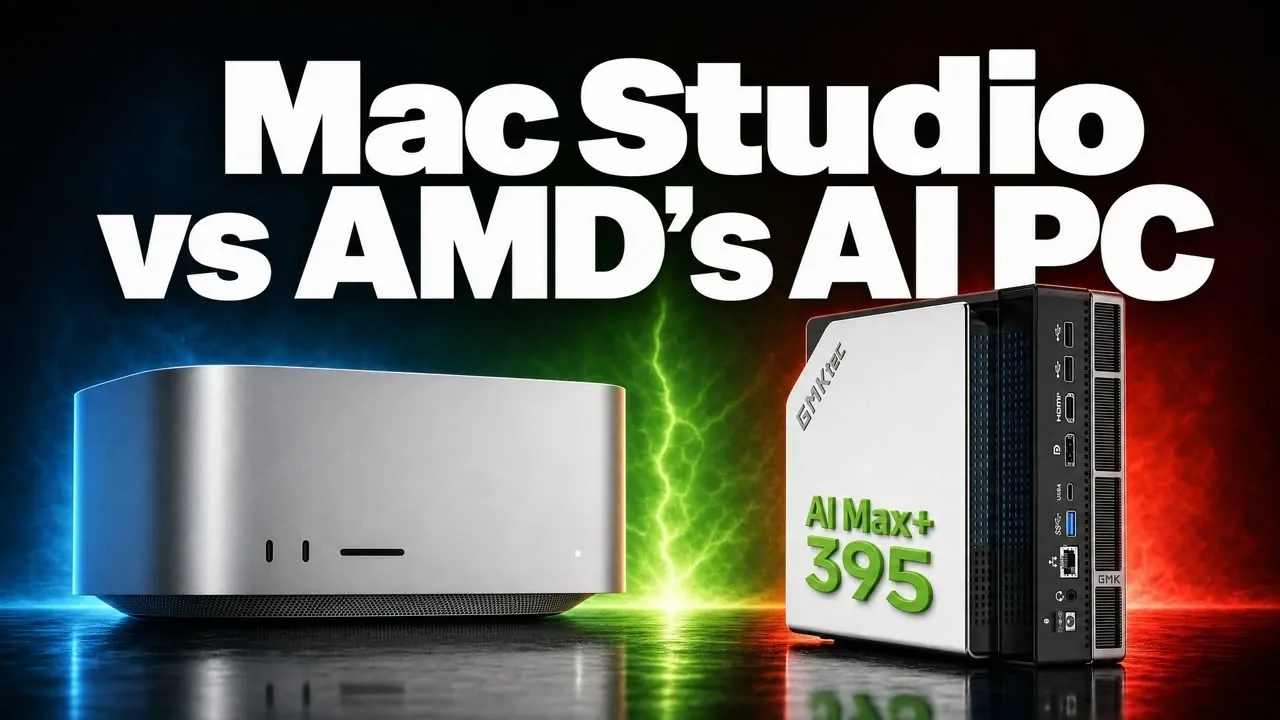
When it comes to running AI models locally, the choice between Apple’s $10,000 Mac Studio and AMD’s $3,500 Strix Halo Mini PC hinges on workload demands, budget and energy efficiency. The Stack explores how these systems cater to different AI needs, from the Mac Studio’s exceptional handling of dense AI models to the Strix Halo Mini PC’s cost-effective performance for mixture-of-experts models. For instance, AMD’s system features a 40-core Radeon 8060S GPU and 128 GB of shared memory, making it ideal for distributed tasks, though it struggles with memory-intensive computations. Meanwhile, Apple’s Mac Studio, with its M5 Ultra configuration offering 1.2 TB/s memory bandwidth, excels in processing large datasets but comes with significantly higher power consumption and upgrade costs.
Dive into this breakdown to understand how each system aligns with specific AI workloads. Learn how AMD’s energy-efficient design can save operational costs while supporting moderately complex models and discover why Apple’s Mac Studio is better suited for users requiring high-speed computations and superior memory bandwidth. This guide also touches on future developments, such as AMD’s upcoming Ryzen AI Max 400 series and Apple’s expanded memory options, to help you weigh long-term considerations when choosing the right system for your AI projects.
Strix Halo vs Mac Studio
TL;DR Key Takeaways :
- AMD’s Strix Halo Mini PC is a cost-effective and energy-efficient option for AI workloads, featuring 16 Zen 5 cores, a 40-core Radeon 8060S GPU and 128 GB of shared memory, but struggles with dense AI models requiring high memory bandwidth.
- Apple’s Mac Studio offers superior performance for dense AI models and general computing tasks, with configurations ranging from $2,499 to $10,000 and up to 1.2 TB/s memory bandwidth in the M5 Ultra model.
- The Strix Halo Mini PC is ideal for mixture-of-experts AI models and users prioritizing lower operational costs, while the Mac Studio excels in handling large datasets and high-speed computations.
- Rising memory costs are narrowing the price gap between the two systems, with Apple’s memory upgrades being significantly more expensive but offering unmatched performance for demanding workloads.
- Future developments include AMD’s Ryzen AI Max 400 series with increased memory capacity and Apple’s anticipated 512 GB memory option for the M5 Ultra, which will further enhance their respective capabilities for AI processing.
AMD Strix Halo Mini PC: Affordable, Compact and Energy-Efficient
Priced at $3,500, AMD’s Strix Halo Mini PC offers a cost-effective solution for AI workloads without compromising on essential performance. Its standout features include:
- 16 Zen 5 cores for efficient multi-threaded processing.
- A 40-core Radeon 8060S GPU optimized for AI computations.
- A Neural Processing Unit (NPU) capable of delivering 50 TOPS (trillion operations per second).
- 128 GB of shared memory for handling moderately complex AI models.
This system is particularly effective for mixture-of-experts AI models, which rely on distributing tasks across smaller, specialized models. Its energy efficiency is a key advantage, with a default power draw of just 55W, configurable up to 120W for more demanding workloads. This makes it an attractive option for users prioritizing lower operational costs and environmental impact.
However, the Strix Halo Mini PC has its limitations. It struggles with dense AI models that demand higher memory bandwidth and processing power. This restricts its versatility for users working with large datasets or requiring high-speed computations, making it less suitable for certain advanced AI applications.
Apple Mac Studio: Premium Performance at a Higher Cost
Apple’s Mac Studio is designed for users who demand top-tier performance for AI workloads. Its configurations range from $2,499 for the M5 Max to nearly $10,000 for the M5 Ultra, which includes 256 GB of memory. The M5 Ultra configuration stands out with:
- 1.2 TB/s memory bandwidth, significantly higher than the 614 GB/s offered by the M5 Max.
- Exceptional performance for dense AI models requiring high memory bandwidth.
- Advanced processing capabilities for general computing tasks beyond AI workloads.
The Mac Studio excels in handling dense AI models, making it ideal for users working with large datasets or requiring rapid computations. However, this performance comes at a cost. The system’s power consumption can reach up to 480W, significantly higher than AMD’s Strix Halo Mini PC. Additionally, Apple’s memory upgrades are notably expensive, with a 512 GB memory option for the M5 Ultra expected to launch in late October 2026, further increasing the total cost of ownership.

Learn more about local AI with other articles and guides we have written below.
- Ollama Runs 32B Local AI Models on a $599 Mac via Quantization for Free
- How DeepSeek Fits a 284B Parameter AI Model on a Single Laptop
- Awesome DIY Raspberry Pi 5 Offline AI Companion Inspired by BMO from Adventure Time
- Beelink GTR9 Pro : The AMD Ryzen AI Max Plus 395 Mini PC Outperforming the Big Guys
- $40K Apple Mac Studio RDMA Setup: 1 TFLOP per Node, 3.7 TFLOPS Across Four
- New AMD’s $1,500 Strix Halo PC Runs 120B AI Models Locally
- New DeepSeek Harness Runs AI Workflows on Local Systems
- Apple Silicon AI Performance: Local Al on Apple Silicon Uses 7X Less RAM
- 128GB Ryzen AI Halo Replaces Cloud Servers for Local AI
- Why NVIDIA’s New 748GB Desktop is Replacing Enterprise Cloud AI Subscriptions
Performance Breakdown: Dense vs Mixture-of-Experts Models
The decision between these systems largely depends on the type of AI workload you plan to run. Each system has distinct strengths tailored to specific use cases:
- AMD Strix Halo Mini PC: Best suited for mixture-of-experts models due to its energy efficiency and cost-effectiveness. However, it struggles with dense AI models requiring high memory bandwidth and processing power.
- Apple Mac Studio: Excels in dense AI models and general computing tasks, offering superior memory bandwidth and processing capabilities. This makes it the better choice for users handling complex datasets or requiring high-speed computations.
Understanding the nature of your AI workloads is critical to selecting the right system. For example, if your tasks involve distributed, smaller models, AMD’s system may suffice. Conversely, if your work demands processing large, dense datasets, Apple’s Mac Studio is likely the better investment.
Cost Considerations and Market Trends
Initially, AMD’s Strix Halo Mini PC had a clear price advantage, making it the go-to option for budget-conscious users. However, rising global memory costs have narrowed the price gap between the two systems. While AMD’s system remains more affordable upfront, its limitations with dense models may lead to additional costs if your workloads evolve over time.
Apple’s Mac Studio, on the other hand, offers unmatched performance but at a premium. Memory upgrades, in particular, are a significant expense, with the anticipated 512 GB memory option for the M5 Ultra expected to further increase costs. For users with demanding workloads and a flexible budget, the Mac Studio’s performance justifies its higher price point.
Looking Ahead: Future Developments
Both Apple and AMD are actively working on advancements to enhance their AI systems, making sure they remain competitive in the rapidly evolving AI processing market. Key developments include:
- AMD: The upcoming Ryzen AI Max 400 series will feature increased memory capacity of up to 192 GB, improving its ability to handle more complex AI workloads and enhancing its appeal for users requiring greater versatility.
- Apple: The anticipated 512 GB memory option for the M5 Ultra will further boost its performance for memory-intensive tasks, though it will come with a higher price tag.
These updates highlight the ongoing commitment of both companies to address the growing demands of local AI processing. Users should consider these future developments when making their purchasing decisions, as they may influence the long-term value of each system.
Which System is Right for You?
Choosing between Apple’s Mac Studio and AMD’s Strix Halo Mini PC depends on your specific needs, budget and energy efficiency priorities. Consider the following:
- Choose AMD’s Strix Halo Mini PC if you need an affordable, energy-efficient system optimized for mixture-of-experts models and are working within a constrained budget.
- Opt for Apple’s Mac Studio if you require top-tier performance for dense AI models and general computing tasks and are willing to invest in higher upfront and operational costs.
As memory market dynamics and technological advancements continue to evolve, both systems remain strong contenders for local AI processing. Carefully evaluate your workload requirements, budget and long-term goals to make the most informed choice.
Media Credit: The Stack
Disclosure: Some of our articles include affiliate links. If you buy something through one of these links, Geeky Gadgets may earn an affiliate commission. Learn about our Disclosure Policy.
