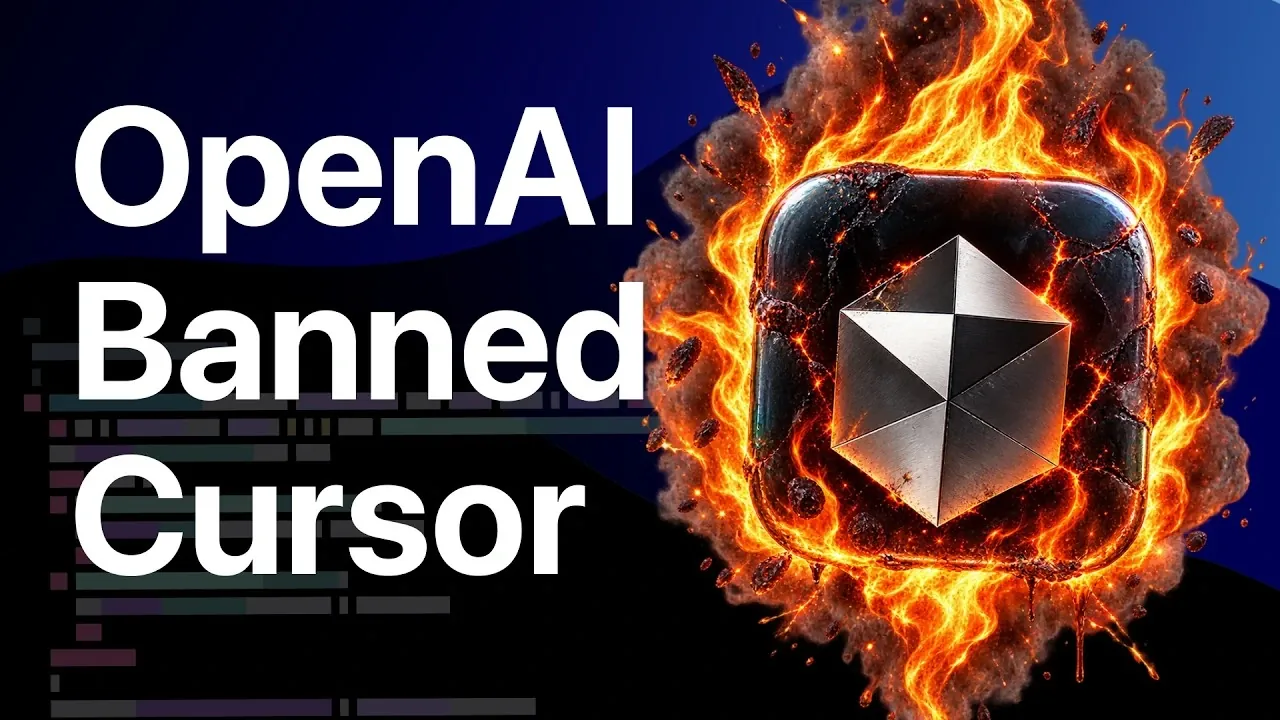
OpenAI’s recent decision to terminate its partnership with Cursor marks a significant shift in the AI landscape, particularly for developers who rely on third-party platforms. As announced, the partnership will officially end by mid-November 2026, cutting off access to OpenAI’s models on Cursor. This move stems from allegations of data misuse involving SpaceX and XAI, two entities linked to Cursor’s ecosystem. Solo Swift Crafter explores how this decision, combined with OpenAI’s confirmation that its upcoming model, GPT Astra, will not be made available on Cursor, signals a broader strategy to centralize control over its AI offerings.
Understand how these changes will impact developers and reshape the industry. Explore the risks of relying on third-party platforms, the challenges of losing access to OpenAI’s latest advancements and the growing trend toward exclusive ecosystems in AI. Gain insight into strategies for maintaining flexibility, building resilience and navigating a landscape increasingly defined by corporate control and shifting partnerships.
Why OpenAI Cut Ties with Cursor
TL;DR Key Takeaways :
- OpenAI has ended its partnership with Cursor, effective mid-November 2026, due to concerns over alleged data misuse by SpaceX and XAI, entities linked to Cursor.
- Developers using Cursor will lose access to OpenAI’s models, including the upcoming GPT Astra, forcing them to find alternative solutions.
- This decision reflects OpenAI’s strategy to create a more exclusive ecosystem, prioritizing direct control over its tools and limiting third-party integrations.
- The termination highlights broader industry trends toward exclusivity, raising challenges for independent developers and smaller teams reliant on proprietary platforms.
- To adapt, developers are encouraged to adopt flexible workflows, diversify their tools and stay informed about industry changes to mitigate risks and maintain resilience.
The decision to sever ties with Cursor highlights growing tensions within the AI industry, particularly around issues of data security and corporate control. OpenAI has cited concerns over the misuse of its data by SpaceX and XAI as the primary reason for this move. By mid-November, developers using Cursor will lose access to OpenAI’s models, forcing them to find alternative solutions or face operational disruptions. This situation underscores the risks associated with relying heavily on third-party platforms, where sudden changes in partnerships can have far-reaching consequences.
For OpenAI, this decision appears to be part of a broader strategy to assert greater control over its models and their usage. By limiting access to its tools, OpenAI is signaling a shift toward a more exclusive ecosystem, potentially prioritizing direct relationships with users over third-party integrations.
How This Impacts Developers
If you are a developer who depends on Cursor to integrate OpenAI’s tools, this announcement likely presents a significant challenge. The abrupt termination of the partnership means that OpenAI’s models will no longer be available on Cursor, leaving you to navigate the transition without any migration support or compensation from OpenAI. This lack of support places the burden squarely on developers to identify and implement alternative solutions.
The exclusion of GPT Astra, OpenAI’s upcoming model, from Cursor further compounds the issue. Without access to the latest advancements, you may find yourself at a disadvantage compared to competitors who can use innovative tools. This situation serves as a stark reminder of the vulnerabilities inherent in relying on specific platforms, especially when partnerships can dissolve with little warning.

Learn more about OpenAI with other articles and guides we have written below.
- Meet Soul, Terra and Luna: the GPT-5.6 Models Restricted to Trusted Organizations
- Meet the Codex Micro: OpenAI’s Physical Keyboard for Coders $230
- OpenAI Introduces GPT-5.7 Astra and Ambitious ChatGPT 6 Doug
- OpenAI Astra ChatGPT 6 Reportedly Uses Multi-Agent Task Delegation
- OpenAI ChatGPT 6 Astra Reportedly Packs 10 Trillion Parameters
- OpenAI Astra Solves 10 Unresolved Quantum Complexity Problems
- OpenAI’s GPT-5.6 Release is Triggering an AI Price War
- GPT-5.6 Pro Leaks Expose a Massive Jump in AI Reasoning Power
- OpenAI Astra Solves 10 Unsolved Math and Computing Problems
- OpenAI Astra Solves 10 Math Problems with Logical Accuracy
Shifting Dynamics in the AI Industry
The fallout between OpenAI and Cursor reflects broader trends in the AI industry, where corporate rivalries and the push for proprietary ecosystems are becoming increasingly prominent. Companies are moving away from open, neutral platforms in favor of exclusivity, which allows them to maintain tighter control over their tools and data. While this approach may benefit large corporations with the resources to negotiate custom agreements, it raises concerns for independent developers and smaller teams.
For developers, these shifting dynamics create an environment of uncertainty. The growing emphasis on exclusivity means fewer options and greater reliance on proprietary platforms, which can lead to disruptions when partnerships or access agreements change. As AI labs continue to tighten control over their models, the industry may see a growing divide between those who can afford to adapt and those who cannot.
Strategies to Adapt and Stay Resilient
To navigate the challenges posed by sudden changes in the AI landscape, it’s essential to adopt strategies that prioritize flexibility and resilience. Here are some practical steps you can take to minimize risks and maintain operational stability:
- Choose monthly subscription plans over annual commitments to avoid being locked into a single platform for extended periods.
- Store critical files, configurations and workflows in portable formats, such as plain markdown, to ensure compatibility across different tools and platforms.
- Develop a diverse toolkit of alternative platforms and solutions to reduce downtime if your primary tools become unavailable.
- Stay informed about industry trends and potential changes in partnerships to anticipate disruptions and plan accordingly.
By implementing these strategies, you can safeguard your projects against the uncertainties of the evolving AI tool landscape and maintain a competitive edge.
The Future of AI Tools: Exclusivity vs Innovation
The increasing control exerted by AI labs over their models suggests a future where exclusivity becomes the norm. This trend may benefit large corporations that can negotiate custom contracts, but it poses significant challenges for independent developers and smaller teams. As access to AI tools becomes more restricted, the industry risks stifling innovation by limiting opportunities for collaboration and experimentation.
However, this shift also creates opportunities for new players to emerge. Independent developers and collaborative platforms, such as Crafter’s Lab, could play a pivotal role in offering tools and resources outside the constraints of corporate ecosystems. These platforms may prioritize openness and accessibility, providing alternatives for developers seeking to avoid the limitations of proprietary systems.
What You Can Do to Stay Ahead
As the AI industry continues to evolve, it’s crucial to focus on building workflows that are both resilient and adaptable. Reducing your dependency on any single tool or platform is a key step toward mitigating risks. Explore collaborative spaces where resources and expertise can be shared and stay proactive in identifying emerging tools and technologies that align with your needs.
By taking these steps, you can position yourself to thrive in an industry that is increasingly defined by exclusivity and rapid change. With the right approach, you can continue to innovate effectively, regardless of shifts in the availability of AI tools and platforms.
Media Credit: Solo Swift Crafter
Disclosure: Some of our articles include affiliate links. If you buy something through one of these links, Geeky Gadgets may earn an affiliate commission. Learn about our Disclosure Policy.
