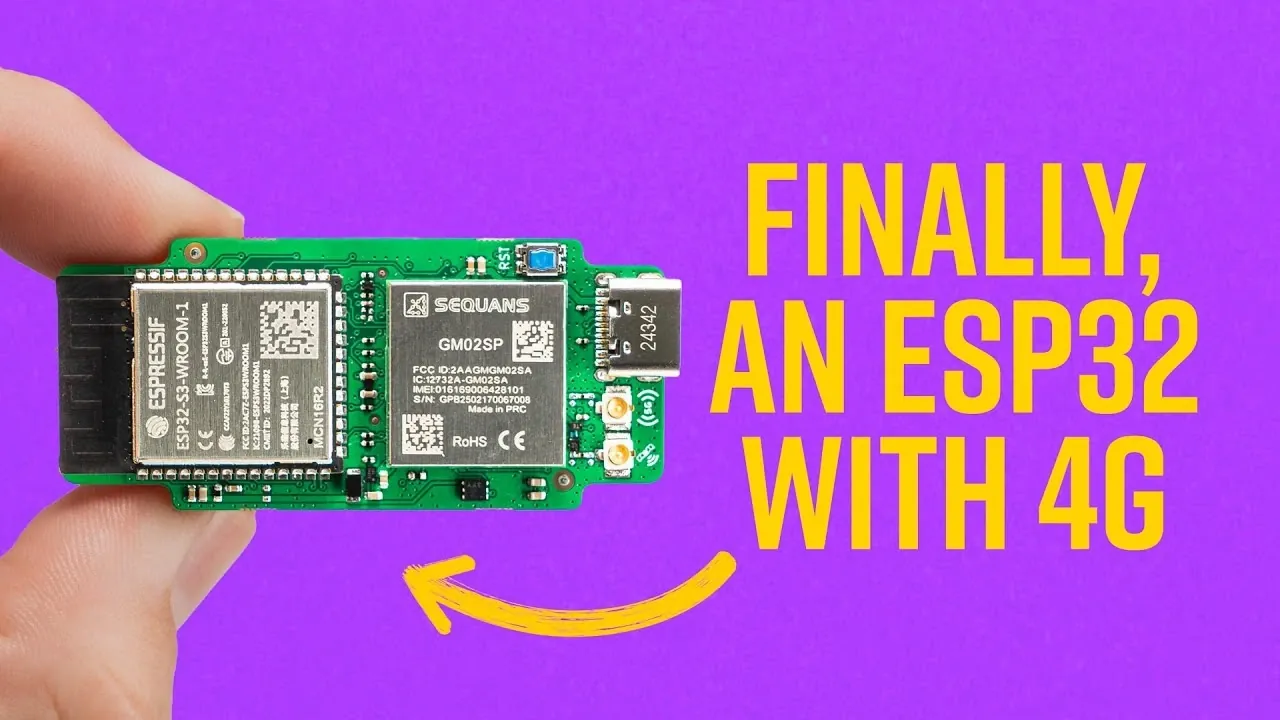
What if the future of IoT didn’t depend on Wi-Fi? Imagine deploying a fleet of sensors in the remotest corners of the world, tracking wildlife, monitoring environmental changes, or managing logistics, without ever worrying about connectivity. Bold claims? Not with the ESP32-based “Walter” board, a device that redefines what’s possible in cellular IoT development. Combining the trusted ESP32-S3 microcontroller with 4G LTE-M, NB-IoT, and GPS functionality, this board isn’t just another IoT tool; it’s a fantastic option for developers who demand reliability, precision, and scalability. But does it truly deliver on its promise to get cellular right?
Below Core Electronics explain how the “Walter” board transforms IoT projects with its advanced cellular connectivity, global reach, and robust design. From its seamless integration with 4G networks to its open source flexibility, the board offers a glimpse into the future of IoT development. Whether you’re a seasoned professional or an ambitious maker, you’ll discover how this device tackles the challenges of remote deployments, real-time tracking, and low-power operations. As we unpack its features and applications, one question lingers: is this the ultimate tool for the next wave of IoT innovation?
Advanced IoT Development Board
TL;DR Key Takeaways :
- The “Walter” development board combines the ESP32-S3 microcontroller with advanced cellular connectivity, including 4G LTE-M, NB-IoT, and GPS, making it ideal for demanding IoT applications.
- Key features include Bluetooth 5 LE, Wi-Fi, and integrated GNSS (GPS and Galileo) for precise location tracking and versatile wireless communication.
- It supports global IoT deployments with compatibility for 4G and emerging 5G networks, along with MQTT protocol for efficient remote device management.
- The board is open source, extensively documented, and certified for commercial use, catering to both hobbyists and industrial developers.
- While offering advanced capabilities, it requires external antennas and is best suited for intermediate to advanced IoT developers due to its complexity and setup requirements.
- With CE, FCC, IC, RCM and UKCA certifications (2BDGUWALTER), Walter is ready to help businesses and developers build connected devices with ease.
Core Features That Define the “Walter” Board

At the heart of the “Walter” board lies the ESP32-S3 microcontroller, equipped with 2MB of RAM and 16MB of flash memory. These specifications provide ample resources for handling complex IoT tasks. Several key features set the “Walter” apart from other development boards:
- Advanced Cellular Connectivity: The board supports 4G LTE-M and NB-IoT, making sure reliable communication in areas where Wi-Fi is unavailable or impractical.
- Integrated GNSS Receiver: With support for GPS and Galileo, the board enables precise location tracking, making it ideal for navigation and asset monitoring applications.
- Wireless Communication: Bluetooth 5 Low Energy (LE) and Wi-Fi capabilities deliver speeds of up to 150 Mbps, enhancing the board’s versatility for various IoT scenarios.
These features make the “Walter” an excellent choice for IoT projects requiring dependable connectivity, precise location tracking, and robust performance.
Global Connectivity for IoT Deployments
The “Walter” board is engineered to operate seamlessly on 4G networks and is compatible with emerging 5G infrastructure, making sure its relevance for years to come. Its support for IoT SIM cards provides global coverage, making it particularly well-suited for projects deployed across multiple regions. The inclusion of an MQTT protocol library simplifies data transmission through brokers like Adafruit IO, allowing efficient remote device management. Whether you need real-time monitoring or data logging, the “Walter” ensures reliable communication and control for your IoT devices.
An ESP32 Gets Cellular Right!

Dive deeper into ESP32 with other articles and guides we have written below.
- Adafruit ESP32 Feather V2 development board launches
- ESP32-S2-WROVER module with 4 MB flash and 2 MB PSRAM
- T-Display AMOLED Touch ESP32 board binary converter project
- ESP32-WROVER-B module with PSRAM module $9.95
- Arduino Nano ESP32 handheld console with round color display
- New Arduino Nano ESP32 IoT microcontroller launches €18
- RP2040/ESP32 Display Board for Embedded Systems & Hobbyists
- MorphESP 240 ultimate ESP32-S2 dev board
- PICO DSP ESP32-based Arduino audio input shield
- Arduino Nano ESP32 board support added to Arduino Cloud
Practical Applications of the “Walter” Board
The “Walter” board is designed to excel in IoT projects that demand reliable internet access without relying on Wi-Fi. Its advanced features and low-power capabilities make it suitable for a wide range of applications, including:
- GPS Tracking: Real-time location updates for vehicles, assets, or personnel, making sure accurate and timely data.
- Environmental Monitoring: Battery-powered sensors in remote areas can use the board’s low-power deep sleep modes for extended operation.
- Data Logging: Collect and store sensor data for later analysis, making it ideal for industrial, agricultural, or research-based applications.
Its ability to combine cellular connectivity with GPS functionality makes it a powerful tool for developers working on innovative IoT solutions.
Comprehensive Documentation and Open source Flexibility
One of the standout aspects of the “Walter” board is its extensive documentation, which supports both C++ and MicroPython libraries. These resources simplify the integration of cellular and GPS functionalities, even for complex projects. The board’s open source design ensures long-term availability and adaptability, allowing developers to customize it for specific use cases. Whether you are an experienced developer or working on commercial IoT applications, the “Walter” provides the tools and flexibility needed to bring your projects to life.
Who Will Benefit Most from the “Walter” Board?
The “Walter” board is best suited for intermediate to advanced users with a solid understanding of IoT development. Its support for asynchronous programming and advanced error handling makes it particularly appealing for:
- Makers and hobbyists with prior experience in IoT projects who are looking to expand their capabilities.
- Commercial developers aiming to build scalable, reliable IoT solutions for industrial or consumer applications.
- Industrial developers requiring robust connectivity and precise location tracking for mission-critical applications.
While the board offers significant advantages, beginners may find its complexity challenging, particularly when working with advanced libraries and low-power modes.
Key Considerations Before Using the “Walter”
To maximize the potential of the “Walter” board, there are several important factors to keep in mind:
- External Antennas: The board requires separate GPS and LTE antennas, which are not included and must be purchased separately.
- Proper Handling: Always ensure antennas are connected before powering the device to prevent hardware damage.
- Certifications: Manufactured in the EU, the “Walter” meets certifications for major economic regions, making it suitable for global deployments and commercial applications.
While these considerations may add to the initial setup time, they are essential for making sure optimal performance and reliability.
Limitations to Be Aware Of
Despite its many strengths, the “Walter” board does have some limitations that developers should consider:
- Not Beginner-Friendly: The complexity of coding, library usage, and hardware setup may pose challenges for those new to IoT development.
- Setup Requirements: The need for external antennas and careful handling can increase the time and effort required to get started.
For experienced developers, these challenges are outweighed by the board’s advanced features and capabilities, making it a worthwhile investment for professional-grade projects.
A Valuable Tool for Advanced IoT Development
The “Walter” development board stands out as a powerful and versatile solution for IoT developers seeking reliable cellular and GPS integration. Its advanced features, global connectivity, and open source design make it a valuable asset for a wide range of applications, from GPS tracking to environmental monitoring. While it may not be the ideal choice for beginners, its robust performance and extensive documentation ensure that professionals and advanced users can use its capabilities to create innovative and reliable IoT solutions.
Media Credit: Core Electronics
Disclosure: Some of our articles include affiliate links. If you buy something through one of these links, Geeky Gadgets may earn an affiliate commission. Learn about our Disclosure Policy.
