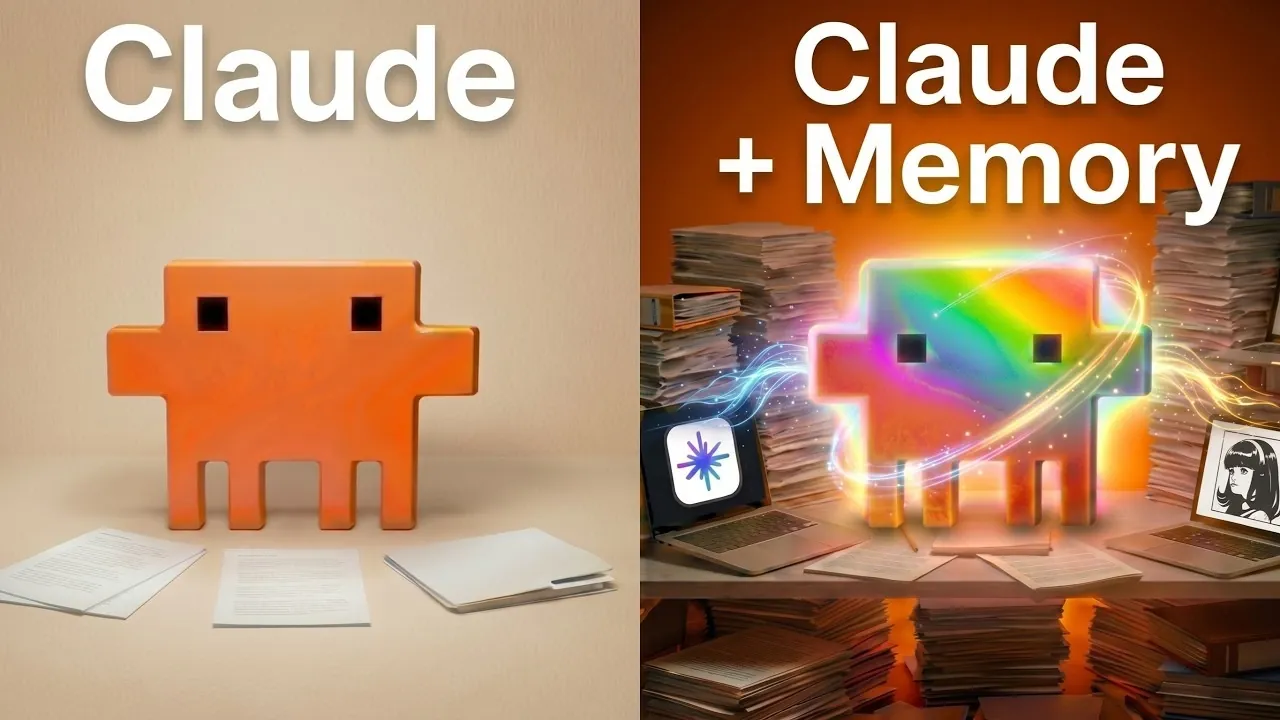
Memory optimization is essential for enhancing the performance of AI systems like Claude. Simon Scrapes examines three distinct memory management systems: Claude’s default setup, the Memarch system and the Hermes system. Claude’s default memory uses static files such as `claude.md` for context injection but can face challenges with incomplete recall in dynamic situations. Memarch emphasizes capturing comprehensive data through semantic search, while Hermes focuses on curated memory and efficient context injection. By analyzing these systems, Simon Scrapes highlights how their strengths can complement one another to overcome individual limitations.
Discover how Memarch’s broad data handling can be combined with Hermes’ precise injection strategies for a more balanced approach. Learn to design a recall system that integrates both short-term and long-term memory solutions. Gain practical knowledge on using curated files like `memory.md` and `user.md` to improve Claude’s ability to manage and retrieve context effectively.
Claude’s Default Memory System
TL;DR Key Takeaways :
- Claude’s default memory system provides foundational capabilities but struggles with storage capacity, recall precision and dynamic context integration, limiting its effectiveness for advanced applications.
- The Memarch system enhances memory management with comprehensive data capture, semantic search and a three-tier retrieval structure but lacks seamless real-time context injection.
- The Hermes system focuses on curated memory and efficient context injection, using structured files and keyword-based recall, but its manual curation limits scalability for larger datasets.
- A proposed hybrid approach combines Memarch’s robust storage and search capabilities with Hermes’ curated context injection to create a versatile and scalable memory system.
- Implementing the hybrid system involves integrating automemory, stop hooks, curated context files and prioritizing recent context for efficient and adaptable AI memory optimization.
A Foundation with Limitations
Claude’s built-in memory system offers foundational capabilities, making it a suitable starting point for basic tasks. It uses automemory files to store selective information, but this approach often results in incomplete or inconsistent recall. The system relies on static files, such as `claude.md`, for context injection, which limits its flexibility during dynamic or complex interactions. Additionally, its recall mechanisms are relatively simplistic, frequently failing to retrieve the most relevant data in nuanced scenarios. While this system is sufficient for straightforward use cases, it struggles to meet the demands of advanced applications that require more sophisticated memory handling.
Memarch System: Comprehensive Storage and Semantic Search
The Memarch system addresses many of the shortcomings of Claude’s default memory setup by focusing on comprehensive data capture and advanced retrieval mechanisms. It employs a stop hook to record all conversation data, storing it in a local vector database. This enables semantic search, allowing you to retrieve information based on meaning rather than relying solely on exact keywords. The system’s three-tier retrieval structure enhances its utility:
- Keyword and semantic search for quick and accurate access to relevant data.
- Expanded metadata to provide additional contextual insights.
- Raw dialogue recall for detailed reference and analysis.
Despite its strengths in storage and search capabilities, Memarch lacks a robust mechanism for injecting stored data into ongoing sessions. This limitation can hinder its ability to integrate memory seamlessly into real-time interactions, reducing its effectiveness in dynamic environments.

Learn more about Claude memory with other articles and guides we have written below.
- Claude AI Now Has Unlimited Memory Thanks to Autodream
- Meet AutoDream : Claude Code’s Clever New Trick for Memory Management
- 27 Claude Code Concepts Explained : Prompts, Permissions, Tools, Memory & More
- 12 Hidden Claude Settings Most Developers Are Completely Ignoring
- Claude AI Memory Rolls Out To Pro & Max Users to Help Simplify Complex Projects
- Claude Just Gained an “Infinite” Context Window : Here is What It Means for Your Workflows
- Combining Claude Code & Obsidian Notes for Faster Retrieval & AI Memory
- Claude Code : Advanced Tips & Tricks for Solo Developers 2026
- Claude Code’s Memory Problem Solved : Supercharge It Now!
- New Claude Sonnet 4.5 AI Memory Tool Remembers Everything
Hermes System: Curated Memory and Efficient Context Injection
The Hermes system takes a more streamlined and curated approach to memory management. It organizes key information into structured files, such as `memory.md` and `user.md`, making sure that only the most relevant data is retained. These files are used to create a frozen snapshot of session context, which is injected at the start of each interaction. Hermes also employs keyword-based recall, prioritizing recent and pertinent information to maintain efficiency. While this system is lightweight and effective for smaller datasets, its reliance on manual curation can be time-intensive and may limit scalability when dealing with larger or more complex datasets.
Proposed Hybrid Approach: Combining Strengths for Optimal Performance
To overcome the limitations of individual systems, a hybrid approach is recommended. By integrating Memarch’s comprehensive storage and semantic search capabilities with Hermes’ curated memory and context injection logic, you can create a memory system that is both versatile and robust. Key components of this hybrid model include:
- Storing raw conversation transcripts in a vector database to enable long-term recall and semantic search.
- Injecting curated context files (e.g., `memory.md`, `user.md`, `soul.md`) at the start of each session for efficient and relevant recall.
- Prioritizing recent context before conducting deeper searches in the database to optimize retrieval speed and relevance.
This hybrid approach ensures that your AI can handle both immediate and long-term memory needs effectively, striking a balance between precision, scalability and adaptability.
Implementation Steps for the Hybrid Memory System
To implement this hybrid memory system, follow these steps:
- Use Claude’s automemory for basic storage while integrating Memarch’s stop hook to capture detailed conversation transcripts.
- Adopt Hermes’ logic for injecting curated context files at the beginning of each session to maintain relevance and efficiency.
- Develop a recall system that prioritizes local context files before performing searches in the vector database, making sure faster access to critical information.
- Use open source tools to customize and refine the memory system, tailoring it to your specific requirements and use cases.
By following these steps, you can build a memory system that is both efficient and adaptable, capable of meeting the demands of advanced AI applications.
Maximizing Claude’s Potential Through Memory Optimization
Optimizing Claude’s memory system requires a thoughtful combination of the strengths found in the Memarch and Hermes systems. Memarch’s comprehensive storage and semantic search capabilities, when paired with Hermes’ curated memory and context injection logic, create a hybrid system that addresses the limitations of Claude’s default setup. This approach ensures efficient storage, precise recall, and seamless context integration, allowing your AI to operate at a higher level of performance. By using open source tools and tailoring the system to your unique needs, you can unlock Claude’s full potential, making it a powerful asset for both basic and advanced AI applications.
Media Credit: Simon Scrapes
Disclosure: Some of our articles include affiliate links. If you buy something through one of these links, Geeky Gadgets may earn an affiliate commission. Learn about our Disclosure Policy.
