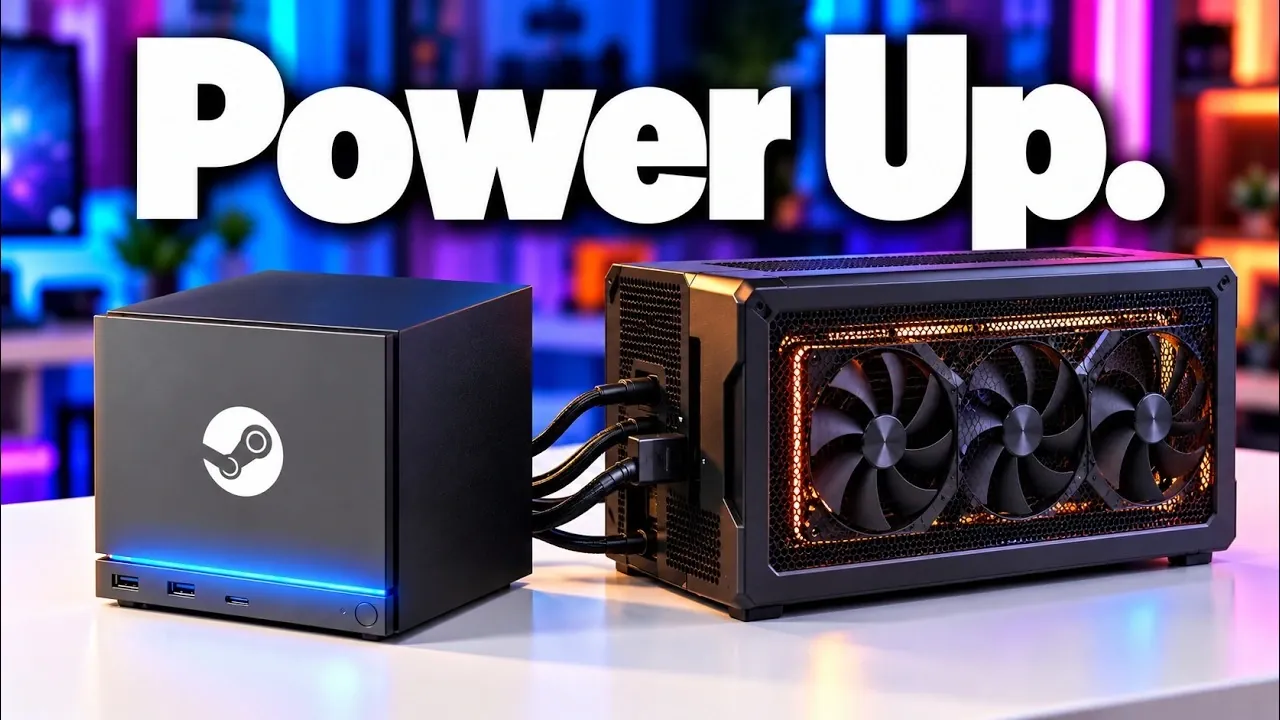
The Steam Machine is seeing notable advancements with the introduction of external GPU (eGPU) support and the adaptation of Steam OS for ARM-based handheld devices. Deck Ready highlights the impact of these changes, focusing on the integration of eGPUs like the 970 XT, which can significantly enhance graphical performance. These upgrades, however, come with technical considerations, such as the requirement for OCuLink adapters to connect eGPUs and the risk of CPU bottlenecks that could affect performance in certain scenarios. Understanding these factors is crucial for users aiming to maximize the benefits of these enhancements.
Explore the steps involved in implementing eGPU support, including adapter installation and optimizing compatibility with Steam OS’s Mesa drivers. Gain insight into the role of Steam OS on ARM-based devices and its implications for gaming accessibility. This overview provides actionable details to help you evaluate the trade-offs and opportunities of upgrading your Steam Machine.
Enhancing the Steam Machine with eGPU Support
TL;DR Key Takeaways :
- The Steam Machine is experiencing a revival with support for external GPUs (eGPUs), significantly enhancing its gaming performance and allowing it to handle demanding titles.
- Upgrading a Steam Machine with an eGPU involves steps like replacing the SSD with an OCuLink adapter, relocating storage via USB-C and using Steam OS’s Mesa drivers for compatibility.
- Challenges in eGPU integration include high costs, technical complexity and potential CPU bottlenecks, making the upgrade less practical for some users.
- Steam OS is expanding to ARM-based handheld devices, broadening its usability and allowing portable gaming, though current support faces issues like graphical glitches and inconsistent performance.
- These advancements promote gaming accessibility and sustainability by extending hardware lifespans and catering to diverse devices, aligning with environmentally conscious gaming trends.
Adding eGPU support to your Steam Machine can significantly boost its graphical capabilities, making it a viable option for modern gaming. High-performance GPUs, such as the 970 XT, can potentially double or even triple the device’s performance, allowing smoother gameplay and higher graphical settings. The upgrade process involves several key steps:
- Replacing the SSD: Install an OCuLink adapter to connect the eGPU to the Steam Machine.
- Relocating storage: Use a USB-C adapter to reposition the SSD, making sure continued storage functionality.
- Using Mesa driver support: Use Steam OS’s built-in Mesa drivers to simplify software compatibility without requiring additional installations.
While these upgrades can breathe new life into your Steam Machine, they are not without complications. One of the primary challenges is the potential for CPU bottlenecks, which can limit the performance gains in CPU-intensive games. Additionally, the compact design of the Steam Machine may require physical modifications, such as leaving the case open or altering its structure, to accommodate the eGPU setup. For many users, the cost of an eGPU, including the GPU itself, an enclosure and necessary adapters, can rival or even exceed the price of building a custom gaming PC, making it a less practical option for some.
Challenges in eGPU Integration
Integrating an eGPU into the Steam Machine presents several obstacles that must be addressed to ensure a successful upgrade. These challenges include:
- Absence of a dedicated eGPU port: Without a native port, users must rely on workarounds like OCuLink adapters, which can complicate the installation process.
- High costs: The combined expense of the GPU, enclosure and adapters can make this upgrade financially prohibitive for many gamers.
- Technical complexity: Although Steam OS’s Mesa driver support simplifies software compatibility, the overall setup process can be daunting for those without technical expertise.
Looking ahead, future iterations of the Steam Machine could address these limitations by incorporating native eGPU compatibility. Such a redesign would streamline the upgrade process, making it more accessible and appealing to a broader audience. Until then, users must weigh the benefits of enhanced performance against the financial and technical challenges of the upgrade.
Uncover more insights about Steam Machine in previous articles we have written.
- High End Emulation on the Steam Machine Tested
- Compact Steam Machine Alternative : Built for 1440p Gaming
- Steam Machine Guide: How to Get Maximum Performance Out of the 6-Inch Cube
- Valve Hits 760,000 Yearly Steam Machine Sales Amid RAM Shortage
- Steam Machine Makes Couch Co-Op Feel Fresh Again : Proton, Lepton & FEX Support
- Upgrading Valve’s Steam Machine to 64GB RAM and 4TB Storage
- Steam Machine Exceeds Expectations: SteamOS, Solid Gaming Performance, Compact Design
- Steam Machine Hands on : New Console Struggles with Native 4K Gaming
- How to Upgrade Steam Machine SSD Storage with a 1TB Samsung 9100 Pro
- First Steam Machine Accessories Arrive : From Glow Skins to Native ‘GeForce NOW’ App on Ubuntu
Steam OS Expands to ARM Handheld Devices
Steam OS is evolving to support ARM-based handheld devices, such as the AYN Odin 2 Pocket Edition, marking a significant step in its development. By extending its compatibility beyond x86 platforms like the Steam Deck, Steam OS is allowing ARM handheld users to access an extensive library of Steam games. This development has the potential to transform ARM-based devices into portable gaming systems capable of delivering a rich gaming experience.
However, the adaptation of Steam OS for ARM platforms is still in its early stages and several challenges remain. Current support is limited to a small number of ARM devices and performance can vary widely depending on the hardware and the game being played. Common issues include:
- Graphical glitches: Visual artifacts and stuttering can disrupt gameplay on certain titles.
- Compatibility problems: Some games may not run properly or at all on ARM devices.
- Inconsistent performance: Variability in hardware capabilities across ARM devices can lead to uneven gaming experiences.
Despite these hurdles, the ongoing development of Steam OS for ARM platforms suggests that broader support and improved performance are on the horizon. As the software matures, ARM handhelds could become a more viable option for gamers seeking portable and versatile gaming solutions.
Implications for Gaming Accessibility and Sustainability
The advancements in Steam OS and eGPU support carry significant implications for the gaming industry, particularly in terms of accessibility and sustainability. By expanding Steam OS to include ARM-based devices, Valve is making gaming more accessible to users with diverse hardware configurations, including older or budget-friendly devices. This adaptability aligns with the growing demand for gaming solutions that cater to a wide range of needs and preferences.
Additionally, the integration of eGPUs into the Steam Machine underscores the potential for upgrading existing hardware rather than replacing it. This approach appeals to environmentally conscious gamers who prioritize sustainability and wish to extend the lifespan of their devices. By focusing on upgrades and adaptability, Valve is fostering a gaming ecosystem that is both inclusive and environmentally responsible.
These developments also highlight the importance of innovation in gaming technology. As Steam OS continues to evolve and eGPU support becomes more refined, gamers can look forward to a future where performance and accessibility are no longer mutually exclusive. Whether you’re upgrading a Steam Machine or exploring the possibilities of an ARM-based handheld device, these advancements are paving the way for a more versatile and sustainable gaming experience.
Media Credit: Deck Ready
Disclosure: Some of our articles include affiliate links. If you buy something through one of these links, Geeky Gadgets may earn an affiliate commission. Learn about our Disclosure Policy.
