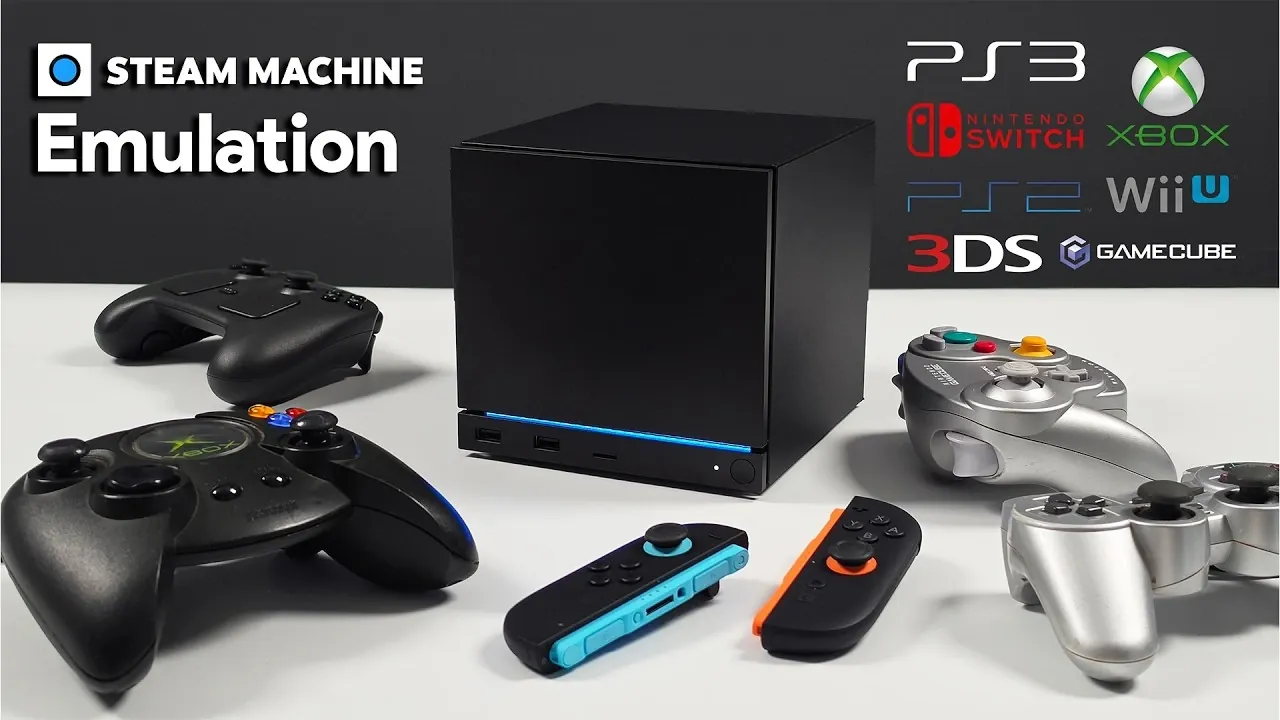
High-end emulation on the Steam Machine showcases the potential of compact gaming PCs to handle a wide range of systems. Equipped with a six-core, 12-thread CPU and an AMD GPU, this setup supports smooth gameplay for platforms like the GameCube, PS2, Wii U and 3DS. According to ETA Prime, frameworks such as EMU Deck simplify the process of configuring emulators and organizing game libraries. Despite its strengths, the Steam Machine faces challenges with more demanding tasks, such as PS3 emulation and certain Xbox compatibility issues.
Explore how the Steam Machine performs at 4K resolution for retro games, balances energy efficiency with performance and handles intensive scenarios like PS3 emulation. Gain insight into its ability to maintain 60fps for most Wii and GameCube titles, as well as the impact of its 35-watt CPU when pushed to its limits. This deep dive provides a detailed look at the machine’s capabilities and constraints for those interested in its potential as a gaming solution.
Steam Machine Emulation
TL;DR Key Takeaways :
- The Steam Machine, powered by Steam OS, excels in high-end emulation, supporting systems like GameCube, Wii, PS2, PS3, Xbox and 3DS, with many titles achieving 4K resolution.
- Equipped with a six-core, 12-thread CPU and AMD GPU, it balances performance and efficiency, making it ideal for extended gaming sessions with minimal heat and noise.
- Performance across emulators is impressive, with smooth gameplay for most systems, though demanding titles and Xbox emulation face occasional challenges with compatibility and resolution.
- User-friendly tools like EMU Deck and Emulation Station simplify emulator setup and customization, making it accessible for both beginners and advanced users.
- Despite its strengths, the Steam Machine struggles with highly demanding games and emulator-specific limitations, highlighting the need for ongoing software updates to optimize performance further.
Hardware Highlights
The Steam Machine is designed to balance efficiency and performance, making it a practical choice for home gaming setups. At its core lies a six-core, 12-thread CPU with a 35-watt TDP, making sure quiet operation and reduced energy consumption. This makes it ideal for extended gaming sessions without excessive heat or noise. However, the CPU does encounter limitations when handling the most demanding emulation tasks, particularly at higher resolutions.
Paired with an AMD GPU, the Steam Machine delivers smooth frame rates and sharp visuals, even for retro titles rendered at 4K resolution. This combination of processing power and graphical capability ensures a seamless gaming experience for most systems. Its compact design further enhances its appeal, fitting neatly into living room setups while offering the performance of a high-end gaming PC.
Performance Across Emulators
The Steam Machine demonstrates impressive versatility, excelling across a wide range of emulators. Its hardware capabilities allow it to handle both older and more modern systems with relative ease. Below is an overview of its performance across popular platforms:
- GameCube and Wii (Dolphin Emulator): The Steam Machine handles these systems effortlessly, with most games running at 4K resolution and 60fps. This ensures a smooth and visually stunning experience for fans of Nintendo classics.
- PS2 (PCSX2): Many titles perform well at 4K resolution, though graphically intensive games may require a slight resolution drop to maintain consistent frame rates.
- PS3 (RPCS3): The Steam Machine outperforms the Steam Deck in PS3 emulation, but highly demanding titles like The Last of Us and God of War may need to be played at lower resolutions for optimal performance.
- Xbox (XEMU): Performance is mixed, with some games running smoothly at 2x resolution. However, compatibility issues remain a significant challenge, limiting the overall experience for Xbox emulation.
- 3DS: Games run reliably at 4x resolution (1600×960), offering crisp visuals and a highly enjoyable experience for handheld gaming enthusiasts.
- Wii U: Most titles perform smoothly at 1080p/60fps, with some capable of reaching up to 1440p for enhanced visual fidelity.
This level of performance makes the Steam Machine a versatile option for gamers seeking to explore a wide variety of retro and semi-modern gaming libraries.

Here is a selection of other guides from our extensive library of content you may find of interest on Steam Machine.
- Why Valve is Releasing 4 Different Steam Machine Variants
- Inside Valve’s Unusual Rollout Plan for the Steam Machine
- Why Valve’s New Steam Machine Could Outperform the PS5 in Your Living Room
- Why the Upcoming Valve Steam Machine Might Be Sold at a Loss
- Valve Confirms Summer 2026 Release Window for Steam Machine and Steam Frame
- What Valve’s Leaked June 2026 Steam Machine Details Mean for Your Living Room
- Leaked Geekbench Scores Reveal the True Power of the $750 Steam Machine
- Valve Explains Why We Got a New Steam Controller but No Steam Machine
- What Valve’s Latest Hardware Leaks Reveal About the Modular Steam Machine
- Why Valve’s Latest SteamOS Update Changes Everything for Your Steam Machine
Simplified Software Setup
Setting up emulators on the Steam Machine is remarkably straightforward, thanks to intuitive tools like EMU Deck and Emulation Station. These programs simplify the installation and configuration process, allowing users to quickly organize their game libraries and begin playing. EMU Deck, in particular, automates much of the setup, reducing the need for manual adjustments and troubleshooting.
The Steam Machine also offers flexibility for customization, allowing users to fine-tune settings based on their preferences. Whether prioritizing performance, graphical quality, or ease of use, the system provides the tools necessary to tailor the experience. This accessibility makes it suitable for both beginners and experienced users, making sure that anyone can enjoy its capabilities without a steep learning curve.
Challenges and Limitations
Despite its impressive performance, the Steam Machine is not without its limitations. The CPU’s 35-watt TDP, while efficient, struggles with highly demanding games, particularly those requiring intensive processing power at higher resolutions. This is most evident in PS3 emulation, where certain titles push the hardware to its limits, resulting in occasional frame rate drops or the need for reduced graphical settings.
Compatibility issues also persist with some emulators, most notably for Xbox games. While the Steam Machine can handle a variety of titles, certain games may not run smoothly or at optimal settings due to emulator-specific limitations. These challenges highlight the importance of ongoing software updates and improvements to fully unlock the hardware’s potential.
Versatility in Retro Gaming
The Steam Machine offers a compelling solution for retro gaming enthusiasts, combining powerful hardware with user-friendly software to deliver a seamless emulation experience. Its six-core, 12-thread CPU and AMD GPU provide the performance needed for 4K gaming, while tools like EMU Deck and Emulation Station simplify the setup process. This makes it an accessible and efficient option for users of all skill levels.
While it does face challenges with demanding games and emulator compatibility, the Steam Machine remains a versatile and reliable choice for exploring a wide range of gaming systems. Whether revisiting GameCube classics, diving into the PS2 library, or enjoying Wii U titles at enhanced resolutions, this device is a valuable addition to any living room gaming setup. Its combination of power, efficiency and ease of use ensures that it will continue to be a popular choice for retro gaming enthusiasts in the years to come.
Media Credit: ETA PRIME
Disclosure: Some of our articles include affiliate links. If you buy something through one of these links, Geeky Gadgets may earn an affiliate commission. Learn about our Disclosure Policy.
