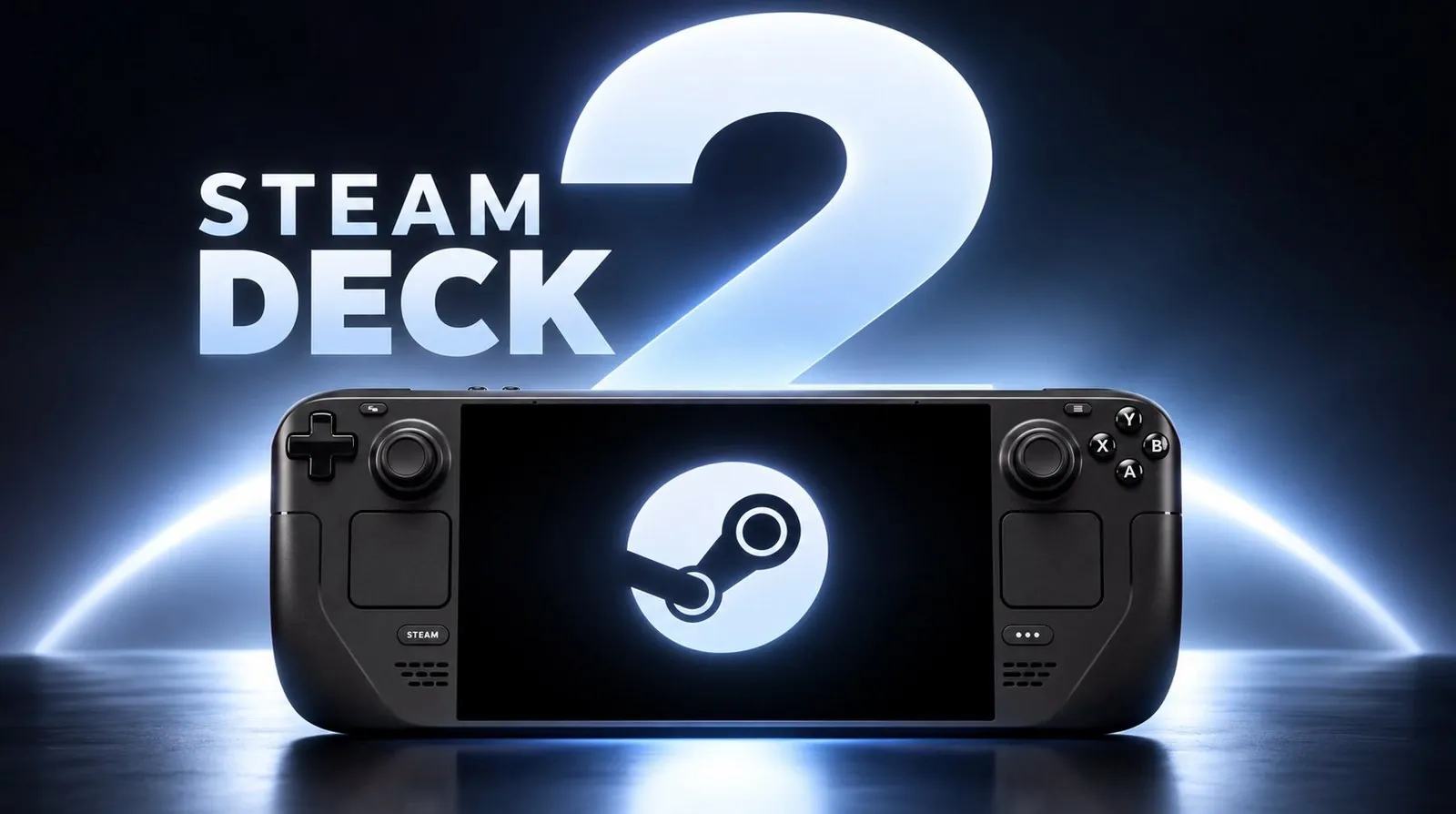
A newly surfaced AMD chip codenamed “Gainsborough” has sparked fresh speculation about Valve’s next-generation Steam Deck. References to the unannounced processor have appeared in AMD-related material, while shipping records reportedly point to test hardware being used for validation. Its name is particularly notable because the original Steam Deck’s AMD APU is widely known as “Aerith” — and Aerith Gainsborough is the character’s full name in Final Fantasy VII. However, neither Valve nor AMD has confirmed that Gainsborough is intended for the Steam Deck 2.
Leaks surrounding Gainsborough suggest that the semi-custom processor could use AMD’s Zen 6 CPU architecture alongside next-generation graphics commonly referred to in leak coverage as RDNA 5. Reports have also linked the chip to an efficient power envelope suitable for a handheld gaming PC. These specifications remain unconfirmed, but they align with Valve’s previously stated goal of waiting for a substantial generational improvement in performance and efficiency before introducing a true Steam Deck successor.
Valve could also introduce improvements to areas such as the display, battery life and ergonomics, although specific design changes have not been announced. Meanwhile, competition in handheld gaming continues to increase, making Valve’s established Steam ecosystem and extensive PC game library important advantages for any eventual successor.
AMD Gainsborough: A Possible Powerhouse for the Steam Deck 2
TL;DR Key Takeaways :
- An unannounced AMD chip codenamed “Gainsborough” has surfaced in AMD-related material and is being linked by leakers to a possible Steam Deck successor, although neither Valve nor AMD has confirmed that connection.
- Leaks claim Gainsborough could combine Zen 6 CPU technology with next-generation AMD graphics commonly referred to as RDNA 5, potentially providing substantial performance and efficiency improvements. These specifications remain unconfirmed.
- Valve has previously said that a true Steam Deck successor requires a significant generational improvement in performance without sacrificing battery life, making an efficient next-generation AMD chip particularly relevant.
- Potential improvements to the display, ergonomics, materials and battery life remain possibilities rather than confirmed Steam Deck 2 specifications.
- Valve’s established ecosystem, including SteamOS development and access to a huge PC game library, would remain an important advantage for a future Steam Deck.
The AMD “Gainsborough” chip has emerged as a possible candidate for a future Steam Deck processor rather than a confirmed component of the Steam Deck 2. The codename has reportedly appeared in AMD driver-related material and international shipping information associated with test hardware. The naming has attracted particular attention because the original Steam Deck APU is commonly known as “Aerith”, while Aerith Gainsborough is the character’s full name in Final Fantasy VII.
That connection is intriguing, but it is circumstantial. Neither Valve nor AMD has announced Gainsborough as the processor for a new Steam Deck.
Separate hardware leaks claim Gainsborough is a semi-custom AMD design that could combine Zen 6 CPU architecture with next-generation AMD graphics technology commonly described in leak coverage as RDNA 5. Reports have also associated the processor with characteristics suitable for a power-efficient handheld device. However, these architectural details and the chip’s intended customer have not been officially confirmed. If the reports ultimately prove accurate, potential advantages could include:
- Improved performance in demanding modern PC games compared with the current Steam Deck hardware.
- Greater longevity as increasingly demanding games place additional pressure on the original Steam Deck’s Zen 2 CPU and RDNA 2 GPU.
- Improved power efficiency, potentially allowing Valve to increase performance without dramatically increasing power consumption or reducing battery life.
This last point is particularly important because Valve has repeatedly indicated that it does not want to release a Steam Deck successor simply to provide an incremental performance upgrade. The company has instead talked about waiting for a generational improvement in computing performance while retaining appropriate battery life and power efficiency.
Gainsborough is therefore interesting because the rumored technology appears consistent with the type of advancement Valve has said it is waiting for. That does not, however, establish that the processor is being developed specifically for Valve.
Performance and Game Compatibility
A future Steam Deck will need to address some of the performance limitations increasingly faced by the original hardware as PC games become more demanding. The existing Steam Deck combines a Zen 2 CPU with RDNA 2 graphics, and although Valve and game developers have achieved impressive results from the platform, newer games can push the hardware beyond its practical limits.
If a future Steam Deck adopted a significantly newer AMD architecture, it could potentially deliver more stable frame rates, improved graphical settings and better performance in CPU-intensive games. However, no official Steam Deck 2 performance targets or benchmarks have been announced.
Maintaining an x86-based AMD architecture would also provide continuity with the existing Steam Deck software environment. The current Steam Deck already supports a large portion of the Steam catalogue through SteamOS and Valve’s Proton compatibility technology.
It is important to note that this does not mean every Steam game is guaranteed to work. Compatibility can vary because of anti-cheat systems, middleware, operating-system requirements and individual game configurations. Nevertheless, Valve’s existing work on SteamOS and Proton provides a strong software foundation for any eventual successor.

Take a look at other insightful guides from our broad collection that might capture your interest in Steam Deck.
- Valve Confirms Steam Deck 2 with Unreal Engine 5 Support
- Android Handhelds Become Viable Budget Steam Deck Alternatives
- Heroic Game Launcher Enables Xbox Game Pass Titles on SteamOS
- Valve Sees 82% Drop in Steam Deck Sales Amid Price Hikes
- Steam Deck Alternative: Legion Go S Packs Ryzen Z2 Go for $550 on Used Market
- Install Lossless Scaling 2.0 on Steam Deck via Decky Loader
- Steam Deck Updates : PS3 Emulation Upgrades Gains & New Releases
- Decky Nexus Plugin Brings Nexus Mods Store to Steam Deck
- Valve Brings Steam Deck Style Verification to Steam Machine Games Consoles
- Asobi Remote Play Brings PlayStation 5 Streaming to Steam Deck
Design Enhancements and User Experience
Valve has not announced the industrial design or detailed hardware specifications of a Steam Deck 2, so reports of specific improvements to the display, materials and ergonomics should currently be treated as expectations rather than confirmed features.
Possible areas for improvement include:
- A higher-quality display, potentially improving resolution, refresh rate, efficiency or other characteristics over the current generation.
- Changes to materials and construction that could reduce weight or improve durability.
- Ergonomic refinements based on experience and user feedback gathered from the original Steam Deck and Steam Deck OLED.
Battery life is likely to remain an important consideration. Valve has previously emphasized that increased computing performance should not come at the expense of battery life, which helps explain why the company has resisted rapidly replacing the existing Steam Deck with incrementally faster hardware.
If the rumored Gainsborough processor eventually appears in a Steam Deck successor and delivers the efficiency improvements suggested by the leaks, Valve could potentially increase gaming performance while remaining within a handheld-friendly power envelope. Actual battery life would still depend on numerous factors, including battery capacity, display technology, processor configuration, game workload and Valve’s final power targets.
For now, these potential refinements provide an indication of where a next-generation Steam Deck could improve, rather than a confirmed feature list.
Challenges in a Crowded Market
A future Steam Deck 2 will enter a considerably more competitive handheld gaming market than the original Steam Deck encountered when it launched.
Numerous manufacturers now offer powerful Windows-based handheld gaming PCs, while Nintendo has already introduced the Switch 2. Reports and leaks have also suggested that Sony is exploring future portable gaming hardware associated with its next-generation PlayStation plans, although a PS6 handheld and its specifications have not been officially announced.
Component availability and memory pricing could also influence future handheld hardware. Changes in RAM, storage and semiconductor pricing can affect manufacturing costs across the industry, although there is currently no confirmed evidence establishing how these factors will specifically affect the price or production schedule of a Steam Deck 2.
Valve has also not announced a release date. Reports surrounding Gainsborough have raised speculation about a possible timeframe around 2027 or 2028, but these dates originate from leak coverage rather than an official Valve roadmap.
Valve’s challenge will therefore be balancing hardware capabilities, power efficiency, software integration and pricing. Those factors helped differentiate the original Steam Deck and are likely to remain important for any eventual successor.
Valve’s Ecosystem: A Key Advantage
One of Valve’s most significant strengths lies in its existing ecosystem, which already provides an integrated handheld PC gaming experience. A future Steam Deck is likely to benefit from:
- Continued development of SteamOS, with Valve regularly improving performance, compatibility and handheld-focused features.
- Access to the extensive Steam library, allowing many users to carry existing PC game collections onto new hardware without repurchasing those titles.
- Ongoing support and improvements, following the approach Valve has taken with the original Steam Deck and Steam Deck OLED.
Game compatibility should not be considered universal, since some PC titles remain incompatible or require additional configuration. Even so, Valve’s continued investment in SteamOS and Proton means much of the software infrastructure required for another Steam Deck generation already exists.
This combination of hardware, SteamOS, Proton and the established Steam storefront could remain one of Valve’s most important differentiators as competition within handheld PC gaming continues to increase.
The Future of Handheld Gaming
The emergence of AMD’s Gainsborough codename provides an intriguing new piece of evidence in the continuing discussion surrounding Steam Deck 2, but it does not yet amount to confirmation of Valve’s next handheld hardware.
What is currently known is that Gainsborough has appeared in AMD-related material and has been associated with test hardware. Its naming connection to the Steam Deck’s Aerith APU has understandably generated speculation that it could be connected to Valve. Separately, leaks claim the processor could feature Zen 6 and next-generation AMD graphics technologies and potentially arrive within a timeframe suitable for a future generation of handheld PCs.
What remains unknown is equally important. Valve has not confirmed Gainsborough as its next APU, AMD has not announced the leaked specifications as a Steam Deck product, and Valve has not announced a Steam Deck 2 release date.
Valve has, however, made its broader objective clear: a genuine successor needs to provide a substantial generational improvement in performance without sacrificing the efficiency and battery characteristics required by a portable gaming system. Whether Gainsborough turns out to be the processor that makes that possible remains one of the more interesting questions surrounding the future of the Steam Deck.
Media Credit: Deck Ready
Disclosure: Some of our articles include affiliate links. If you buy something through one of these links, Geeky Gadgets may earn an affiliate commission. Learn about our Disclosure Policy.
