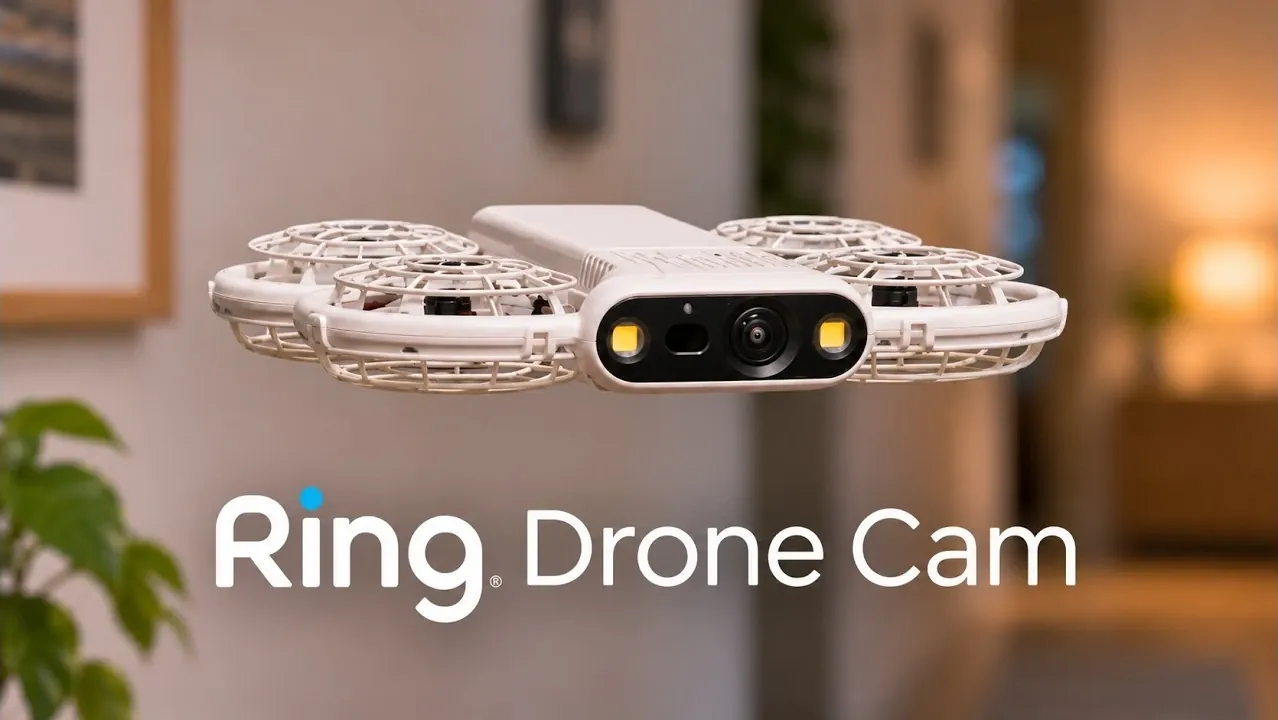
Amazon’s Ring Drone Cam introduces a mobile approach to indoor security, combining a lightweight design with advanced AI navigation. Weighing just 165 g, this autonomous device creates a detailed floor plan during setup, enabling it to patrol your home with precision. Equipped with a 2K camera and 148° field of view, it offers comprehensive coverage, though its 8-minute battery life may limit its use in larger spaces, according to TechAvid.
Discover how the Ring Drone Cam integrates with the broader Ring ecosystem, responding dynamically to linked devices like alarms and sensors. Learn how its AI Pilot technology adapts to changes in your home layout and explore the trade-offs, including its subscription-based features and privacy safeguards. This analysis provides a clear breakdown of what to expect from this unique approach to home surveillance.
TL;DR Key Takeaways :
- The Ring Drone Cam is an autonomous indoor security drone with a 2K camera, 148° field of view, and 360° rotation, designed to patrol homes and provide mobile surveillance.
- Amazon states the drone has a flight time of up to 8 minutes per charge, which may limit its suitability for larger properties; it automatically returns to its dock to recharge after patrols.
- Privacy concerns are addressed by ensuring the camera remains off while docked and using an LED indicator to signal active recording during flight, though some users may still find the concept intrusive.
- Advanced features like scheduled patrols and video search require a Ring Protect subscription, adding ongoing costs to the device’s $249.99 price tag.
- The drone integrates with other Ring devices and uses AI Pilot technology to navigate autonomously, adapt to changes, and respond dynamically to triggers from linked security systems.
A New Approach to Indoor Security
Amazon’s latest innovation in home security, the Ring Drone Cam, offers a novel solution for indoor surveillance. Weighing just 165 g, this autonomous drone is designed to patrol your home, providing a mobile perspective that stationary cameras cannot. When idle, it rests in a charging dock, ready to launch when triggered by user commands or other Ring devices.
Controlled through the Ring app, the drone allows you to schedule patrols or manually direct it to specific areas. During the initial setup, you carry the drone around your home to create a detailed floor plan. Using Amazon’s AI Pilot technology, the drone can then navigate autonomously, avoiding obstacles and following customized routes. You can also save specific viewpoints for the drone to monitor during its patrols.
Camera Features and Limitations
The Ring Drone Cam is equipped with a 2K camera that provides a 148° field of view and 360° rotation, ensuring comprehensive indoor coverage. Two LED spotlights enhance its performance in low-light conditions, making it suitable for nighttime use. However, the drone lacks a microphone and speaker, meaning it cannot support two-way communication. Its primary role is to capture video and deliver visual updates on potential security issues.
To address privacy concerns, the camera remains off while the drone is docked. An LED indicator signals when recording is active during flight, offering transparency for users wary of being monitored.

Here are more guides from our previous articles and guides related to drones that you may find helpful.
- DJI Mini 6 Pro Speculation Points to a September 2027 Debut
- 8+ Big drones capable of carrying large payloads and heavy equipment
- DJI Neo 3 vs Neo 2: Leaks Show a 64% Battery Increase
- DJI Neo auto-follow drone for effortless content creation $199
- DJI Neo 3 FlyMore Combo Unboxed: Includes 3 Drone Batteries
- Worlds First Flying Ball Drone Unveiled By Japan’s Ministry of Defence (video)
- Rumoured DJI Neo 3 Drone Targets a September 2026 Launch
- Leaked DJI Neo 3 May Feature a 1/1.3-Inch Sensor Upgrade
- DJI Neo 3 64% Larger Battery, 193g and 16-Minute Flight Time
- Why the RayNeo Air 4 Pro is the Perfect DJI Neo 2 Upgrade
Battery Life and Docking
One of the drone’s key limitations is its battery life. Amazon states that the Ring Drone Cam can fly for up to 8 minutes on a single charge. While this may be sufficient for smaller homes or quick inspections, it could be a drawback for larger properties requiring extended patrols. Once the battery is depleted or a patrol is completed, the drone automatically returns to its dock to recharge.
Privacy and Subscription Concerns
Privacy is a significant consideration for potential users. The drone is designed to record only while in flight, with an LED indicator clearly signaling when recording is active. While docked, the camera remains off. Despite these safeguards, the idea of an autonomous flying camera navigating private spaces may still raise concerns for some users.
Another factor to consider is the cost of advanced features. Functions like scheduled patrols and video search require a Ring Protect subscription, adding an ongoing expense to the device’s $249.99 price. This could deter budget-conscious buyers.
Integration with Ring Ecosystem
The Ring Drone Cam integrates seamlessly with other Ring security devices, enhancing its utility within a connected home security system. It can be triggered by linked cameras, doorbells, sensors, or alarms to investigate unusual activity. This dynamic response capability sets it apart from stationary cameras.
The drone’s AI Pilot technology further enhances its functionality. It creates detailed maps of your home during setup, enabling it to navigate efficiently and adapt to changes in furniture placement or other obstacles. This ensures reliable performance over time, making it a versatile addition to the Ring ecosystem.
Who is the Ring Drone Cam For?
The Ring Drone Cam represents a compelling step forward in home security, offering features that may appeal to tech-savvy users and those already invested in the Ring ecosystem. Its 2K camera, AI-driven navigation, and integration with other Ring devices provide a level of flexibility and coverage that stationary cameras cannot match. However, its 8-minute battery life, subscription requirements, and potential privacy concerns may limit its appeal to a broader audience.
For smaller homes or users comfortable with the concept of an autonomous flying camera, the Ring Drone Cam could be a valuable addition to their security setup. On the other hand, those with larger properties or heightened privacy concerns may find traditional security cameras a simpler and more cost-effective solution. With shipping scheduled to begin on January 27th, 2027, the market’s reception will ultimately determine whether this innovative concept gains widespread acceptance.
Media Credit: TechAvid
Disclosure: Some of our articles include affiliate links. If you buy something through one of these links, Geeky Gadgets may earn an affiliate commission. Learn about our Disclosure Policy.
