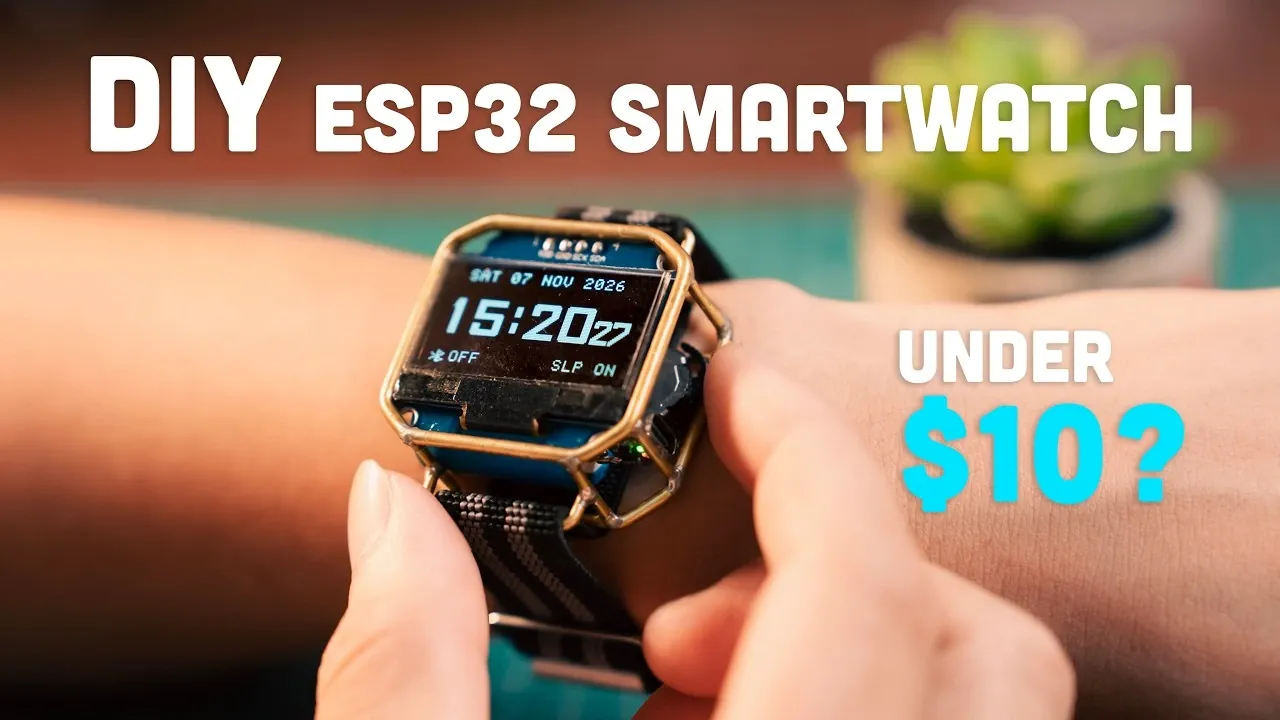
Building a smartwatch from scratch is no small feat, but this project demonstrates how it can be done with precision and creativity. Powered by an ESP32C3 microcontroller, the watch features a 1.3-inch OLED display, a brass frame for durability, and a 3.7 V battery integrated with a USB-C charging module. Its thoughtful design includes water-resistant coating and Bluetooth connectivity for syncing notifications and calls, as shown by HVT Lab.
Dive into this report to explore the intricate assembly process, from modifying the display’s PCB to soldering brass components for structural support. You’ll also gain insight into the practical features, such as the RTC module for timekeeping and a three-way toggle switch for navigation. Whether you’re curious about its water resistance or the craftsmanship behind its stylish brass frame, this breakdown offers a detailed look at the project’s highlights.
TL;DR Key Takeaways :
- The custom-built smartwatch is powered by the ESP32C3 microcontroller and features a 1.3-inch OLED display, a brass frame, and a 3.7 V battery, offering phone syncing for notifications and call alerts.
- The brass frame serves both as a structural component and as the negative connection point for all components, with a USB-C charging module simplifying assembly.
- The smartwatch includes an RTC module for accurate timekeeping, Bluetooth connectivity for syncing with a phone, and a three-way toggle switch for navigation, along with customizable watch faces.
- A water-resistant coating was tested and confirmed to protect the smartwatch against rain, sweat, and brief submersion, though it is not suitable for prolonged water exposure.
- The brass frame provides a distinctive and stylish appearance, and the device is fully operational, balancing functionality with aesthetic appeal, though its design may not suit all preferences.
A DIY Smartwatch Built from Scratch
The ESP32C3 microcontroller powers a custom-built smartwatch that blends functionality, durability, and style. Designed with a brass frame and carefully selected components, this device is fully operational, offering features like phone syncing for notifications and call alerts. A water-resistant coating enhances its practicality, making it suitable for everyday use.
Hardware and Design
At the core of the smartwatch is a 1.3-inch OLED display, which required modifications to its PCB corners to fit the design. The outer frame is constructed from 2 mm brass tubing, bent and soldered into shape, while a secondary brass frame, reinforced with 1.5 mm brass rods, provides additional structural support. Connections for the display are made using 1 mm brass wire, with the brass frame itself functioning as the negative connection point for all components.
The device is powered by a 3.7 V battery, with its negative terminal soldered directly to the brass frame. A USB-C battery charging module simplifies assembly by requiring only the positive terminal to be soldered. The module’s GND is connected to the USB-C shell, ensuring proper grounding. A slide switch toggles the device on and off by connecting the battery’s positive terminal to the ESP32’s 5 V pin.

Enhance your knowledge on ESP32 boards and projects by exploring a selection of articles and guides on the subject.
- $5 ESP32-S3 Super Mini Packs Wi-Fi and Bluetooth
- The $4 ESP32 S3 Super Mini Packs a 240 MHz Dual-Core Chip
- How an $8 ESP32 S3 Microcontroller Runs a 28.9M Parameter Local LLM
- 5 ESP32 Projects Worth Building in 2026: Such as an Apple HomeKit Controller
- $4 ESP32 Module Brings Wi-Fi and Bluetooth to IoT Projects
- Replacing Security Cameras with Three $10 ESP32S3 Wi-Fi Boards
- ESP32-S3 Super Mini Costs $5 and Packs Wi-Fi and Bluetooth
- Gemini 4 Argon Writes ESP Mosaico Firmware to Control RGB LEDs
- ESP32-S3 Super Mini Brings 240 MHz Dual-Core Power For $4
- ESP32 S31 Devkit Hands-on: 320 MHz RISC-V Chip Adds Wi-Fi 6
Core Features
The smartwatch incorporates an RTC module to maintain accurate time, even when powered off. The module’s C and D pins share the same I2C bus as the OLED display’s SDA and SCL pins, optimizing the use of available connections. A three-way toggle switch serves as the primary control mechanism, offering intuitive navigation.
Bluetooth connectivity enables the watch to sync with a phone, providing features such as automatic date and time updates, notifications, and incoming call alerts. Users can also customize the device with a variety of watch faces, adding a personal touch to its functionality.
Water Resistance
A water-resistant coating was applied to enhance the smartwatch’s durability. This coating is designed to protect against rain and sweat, making it practical for daily wear. Testing confirmed its effectiveness, as the watch continued to operate after being submerged in a glass of water. However, the water resistance is limited to rain, sweat, and brief submersion, and is not intended for prolonged exposure to water.
Style and Wearability
The brass frame gives the smartwatch a distinctive and stylish appearance. A strap was added to ensure it can be comfortably worn on the wrist, complementing its aesthetic appeal. While the design is subjective, the combination of brass and functionality creates a unique accessory that balances practicality with visual appeal.
Testing and Findings
The smartwatch underwent various tests to evaluate its performance and durability. Submersion in a glass of water demonstrated the effectiveness of the water-resistant coating, with the device remaining fully operational under the specified conditions. Additionally, the smartwatch successfully synced with a phone, enabling features like notifications and call alerts. However, its water resistance is limited to rain, sweat, and brief submersion, as previously noted.
This project illustrates that building a smartwatch from scratch is both feasible and rewarding. The resulting device is functional, stylish, and capable of basic smartwatch features. However, its water resistance is limited, and its aesthetic appeal may vary depending on individual preferences. On balance, the watch is a compelling example of what can be achieved with careful design and craftsmanship.
Media Credit: HVT Lab
Disclosure: Some of our articles include affiliate links. If you buy something through one of these links, Geeky Gadgets may earn an affiliate commission. Learn about our Disclosure Policy.
