What if the next leap in technology wasn’t happening in your pocket or on your desk, but in your workshop? Imagine a world where 3D printers no longer struggle with uneven layers, wasted materials, or clunky manual adjustments. Instead, they operate with surgical precision, seamlessly switching between materials and colors, and even self-correcting in real time. This isn’t science fiction, it’s the promise of the next generation of 3D printers. As these machines evolve, they’re not just improving; they’re redefining what’s possible, pushing boundaries in industries from healthcare to aerospace, and even reshaping the creative potential for hobbyists at home.
In this overview Need It Make It explain how innovative innovations like dynamic calibration and tool changer systems are transforming the 3D printing landscape. You’ll discover how these advancements are solving long-standing challenges like material waste and inconsistent quality, while also opening doors to more complex, multi-material designs. But it’s not all smooth sailing, issues like filament storage and specialty material calibration still pose hurdles. By the end, you’ll gain a clearer picture of how these breakthroughs are setting the stage for a future where 3D printing is faster, smarter, and more accessible than ever. The question is: how far can this technology go?
Advancements in 3D Printing
TL;DR Key Takeaways :
- Tool changer systems are transforming 3D printing by allowing seamless multi-material and multi-color transitions, improving efficiency and reducing material waste.
- Dynamic calibration technologies ensure real-time precision by adjusting extrusion parameters, enhancing print quality even during rapid speed changes.
- Inline filament measurement sensors dynamically monitor filament dimensions, improving print consistency and reducing material waste.
- Advanced filament storage solutions with humidity control are essential for preserving material integrity, especially for moisture-sensitive filaments like nylon and PVA.
- Automation and accessibility are driving the future of 3D printing, with innovations simplifying the process and expanding its usability for professionals and hobbyists.
Tool Changer Printers: Expanding Design Possibilities
Tool changer systems are reshaping the capabilities of 3D printers by allowing seamless transitions between multiple materials and colors. These systems automate the switching process, eliminating the need for manual intervention and significantly reducing downtime. For example, a tool changer printer can effortlessly alternate between rigid and flexible materials or incorporate soluble supports, allowing for the creation of complex, functional designs.
This automation not only boosts operational efficiency but also minimizes material waste by making sure precise transitions between tools. However, the effectiveness of tool changer systems depends heavily on accurate calibration and material compatibility. While these areas are still being refined, the increasing accessibility of this technology is setting new benchmarks for multi-material and multi-color printing, making it more practical for both professionals and hobbyists.
Dynamic Calibration: Real-Time Precision
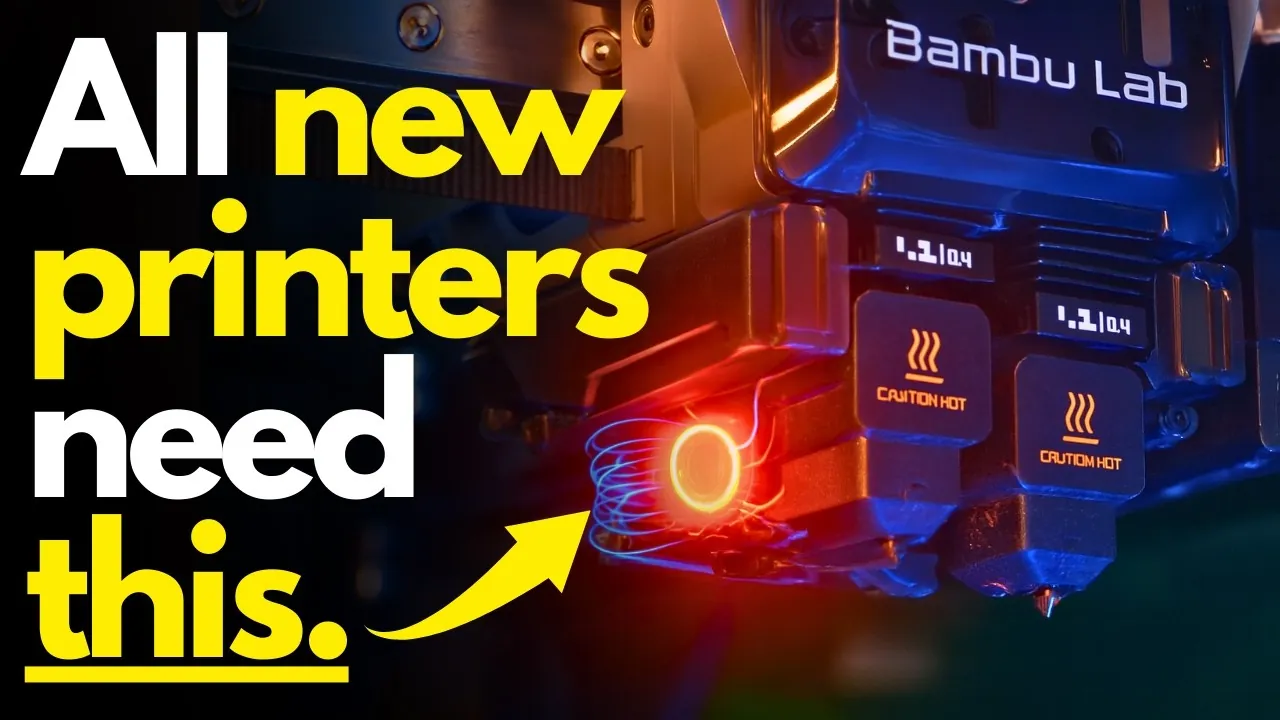
Achieving consistent material flow is one of the most critical challenges in 3D printing, particularly when print speeds fluctuate. Dynamic calibration technologies, such as pressure advance, address this issue by automatically adjusting extrusion parameters in real-time. This ensures a smooth and consistent material flow, even during rapid changes in speed or direction.
Advanced components like eddy current sensors and Permanent Magnet Synchronous Motor (PMSM) extruder motors further enhance precision by providing real-time feedback on nozzle pressure and extrusion rates. These innovations reduce the need for manual adjustments, streamlining the printing process. However, specialty filaments, such as those infused with wood fibers or metals, continue to pose unique calibration challenges. Specialized techniques and tools are required to optimize results when working with these materials, highlighting the need for ongoing innovation in this area.
Next Generation of 3D Printers

Here is a selection of other guides from our extensive library of content you may find of interest on 3D printers.
- Toybox 3D Printer Deluxe Bundle with 8 Printer Food Colors
- Rose Go FDM 3D printer hits Kickstarter from $299
- Lite3DP open source, Arduino MSLA / LCD-SLA resin micro 3D
- Longer FDM LK5 PRO open source 3D printer $329
- Plybot affordable smart 3D printer with unique arms
- PrintHero large 4K SLA 3D Printer hits Kickstarter from $999
- The Pbag Portable Battery Operated 3D Printer Hits Indiegogo
- Beam3D Prism desktop UV Resin 3D printer from $199
- NEVA Affordable Desktop 3D Printer Unveiled From $299 (video
- Mag ICreatum All-in-One 3D Printer, Engraver, CNC Machine
Inline Filament Measurement: Enhancing Print Quality
The quality of filament plays a crucial role in achieving high-precision 3D prints. Even premium filaments with tight tolerances can exhibit slight variations in diameter, which may compromise print quality. To address this, next-generation 3D printers are incorporating inline filament sensors that dynamically measure filament dimensions during the printing process.
These sensors adjust extrusion rates in real-time, making sure consistent material flow and reducing the risk of print failures. This innovation not only improves print quality but also helps to minimize material waste, contributing to more sustainable printing practices. As these sensors become more sophisticated, they are expected to become a standard feature in advanced 3D printers, further enhancing reliability and precision.
Filament Storage: Preserving Material Integrity
Proper storage of filament is essential for maintaining its integrity, particularly in environments with high humidity. Moisture absorption can degrade the properties of certain filaments, such as nylon or PVA, leading to poor print performance and increased failure rates. While some tool changer printers include basic storage compartments, these often lack the controlled environments necessary for long-term preservation.
Advanced storage solutions with integrated humidity control are becoming increasingly important for making sure the longevity and performance of moisture-sensitive materials. However, developing storage systems that are both cost-effective and space-efficient remains a significant challenge for the industry. Addressing this issue will be crucial for supporting the growing diversity of materials used in 3D printing.
Automation and Accessibility: Shaping the Future of 3D Printing
The future of 3D printing is being shaped by a strong emphasis on automation and accessibility. Innovations such as tool changer systems, dynamic calibration technologies, and inline filament sensors are expected to become standard features in next-generation printers. These advancements aim to simplify the printing process, making it more efficient and user-friendly for a broader audience.
Despite these strides, challenges such as effective filament storage and the calibration of specialty materials remain. Overcoming these obstacles will be key to unlocking the full potential of 3D printing technology. As these issues are addressed, the industry is poised to become more sustainable, reliable, and versatile, catering to the needs of both professionals and hobbyists alike.
Media Credit: NeedItMakeIt
Disclosure: Some of our articles include affiliate links. If you buy something through one of these links, Geeky Gadgets may earn an affiliate commission. Learn about our Disclosure Policy.
