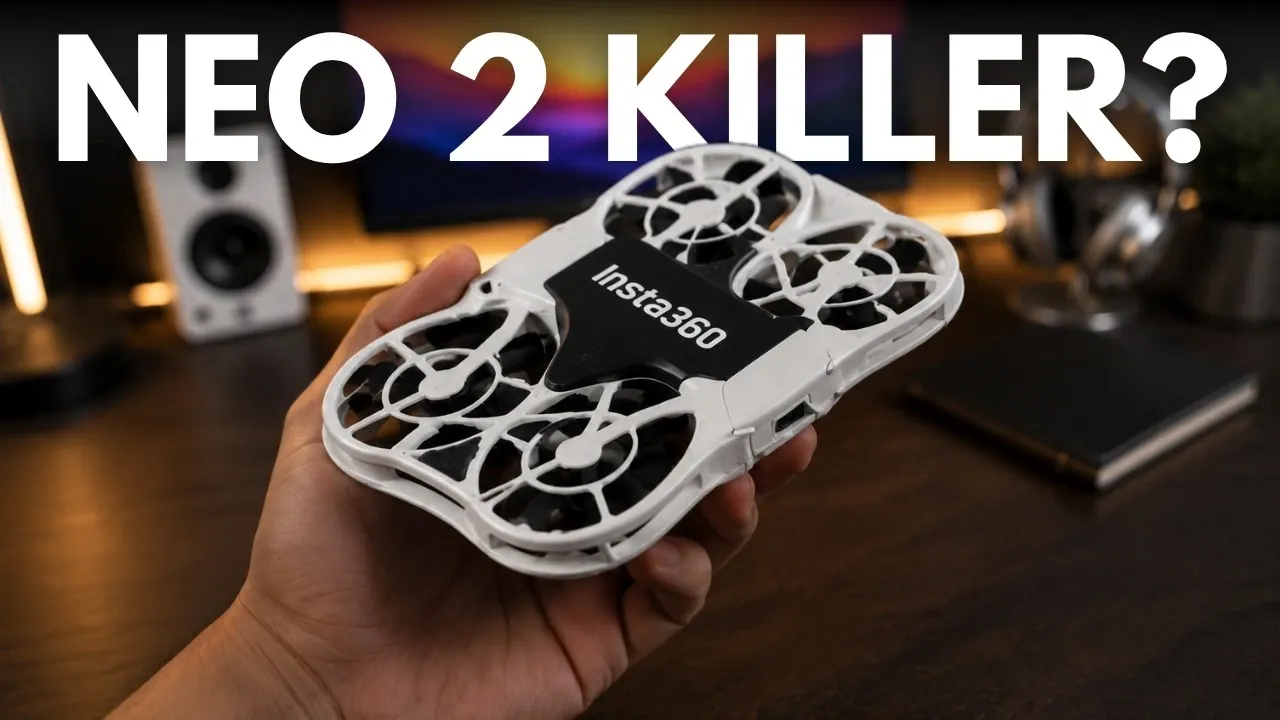
Insta360 is reportedly developing a compact drone that could rival DJI’s Neo 2, focusing on portability and creative functionality. According to Tech Court, early details suggest the drone may include integrated propeller guards and modular accessories, allowing users to customize their setup. This approach aligns with Insta360’s history of prioritizing adaptability and creator-friendly features, potentially offering a fresh option for those seeking flexibility in aerial videography.
Explore this breakdown to understand the design elements that could differentiate Insta360’s drone, including its modular components and user-focused features. Gain insight into how the company might integrate its 360-degree video expertise to enhance functionality. Additionally, examine the challenges Insta360 could face in balancing advanced features with accessibility for a broad range of users.
Is a Compact, User-Friendly Drone on the Horizon?
TL;DR Key Takeaways :
- Insta360 is rumored to be developing a compact, user-friendly drone to compete with DJI’s Neo2, focusing on simplicity and accessibility for a broader audience.
- Potential features include modular accessories, detachable controls and seamless integration with Insta360’s 360-degree video technology, enhancing customization and creative possibilities.
- Insta360’s competitive strategy emphasizes modularity, versatility and innovation, aiming to attract both casual hobbyists and professional creators.
- Key success factors for Insta360’s drone include battery life, wind resistance, range optimization, low-light performance and advanced tracking systems, alongside AI-powered workflows for creators.
- Geopolitical concerns surrounding DJI create an opportunity for Insta360 to position itself as a reliable alternative in the creator-focused drone market.
Rumors indicate that Insta360’s upcoming drone will feature a compact design with integrated propeller guards, reflecting a design ethos similar to DJI’s Neo2. This approach aligns with the growing demand for drones that prioritize ease of use and spontaneity, making them accessible to a broader audience. By focusing on portability and simplicity, Insta360 could attract users who value quick deployment and minimal setup.
Potential features of this rumored drone include:
- Modular accessories for enhanced customization
- Detachable controls to provide greater flexibility
- Seamless integration with Insta360’s 360-degree video technology
These features would not only enhance the drone’s functionality but also align with Insta360’s reputation for empowering creators with versatile tools. By offering a product that is both practical and innovative, the company could appeal to a wide range of users, from casual hobbyists to professional content creators.
Insta360’s Competitive Strategy
Insta360 has consistently challenged DJI across various product categories, including action cameras and microphones. Expanding into the drone market would further solidify its position as a comprehensive provider of creator-focused tools. This move would build on Insta360’s reputation for simplicity and innovation, appealing to creators who prioritize tools that streamline their workflow.
One potential differentiator for Insta360 could be its focus on modularity. By offering interchangeable accessories, the company could provide users with a level of customization that caters to diverse needs. This adaptability could set Insta360 apart in a market where versatility is increasingly valued. Additionally, Insta360’s expertise in 360-degree video technology could give its drone a unique edge, offering creators new ways to capture immersive content.

Gain further expertise in drones by checking out these recommendations.
- 8+ Big drones capable of carrying large payloads and heavy equipment
- Solar 42 cinematic ambient drone synthesizer
- DJI Neo auto-follow drone for effortless content creation $199
- How the Half-Priced DJI Lito X1 Drone Outperforms the Mini 5 Pro
- DJI Avata 360 vs Antigravity A1: Why the Cheaper Drone Could Actually Cost You More
- Why the DJI Osmo Pocket 4P is Launching Under a Completely Different Name in the U.S.
- DJI’s Sub-250G Lito X1 Drone is Edging Closer to a US Launch
- How to build a drone tracking radar from scratch
- DJI Avata 360 Camera Drone Hands-On Review : Specs, Battery Life & Video Quality
- Why DJI’s New Lito Series Is More Than Just Another Mini Drone
Lessons from DJI’s Neo2
DJI’s Neo2 transformed the drone market by shifting the focus from technical specifications to user experience. Its success was driven by features such as:
- Quick launch capabilities for immediate use
- Intuitive controls that simplified operation
- A design that encouraged spontaneous creativity
This user-centric approach redefined drones as tools for casual creativity rather than niche, specialized equipment. The Neo2’s ability to connect with users on a personal level made it a favorite among a broad demographic, from beginners to experienced drone enthusiasts.
For Insta360, replicating this emotional simplicity will be essential. The challenge lies in balancing innovation with usability to create a product that resonates with users while maintaining the brand’s identity. By focusing on accessibility and creative freedom, Insta360 could position its drone as a compelling alternative to the Neo2.
Challenges and Opportunities in the Drone Market
While Insta360 has the potential to disrupt the drone market, it faces several challenges. Overloading the drone with advanced features could compromise its usability, alienating the very audience it aims to attract. Instead, the company must focus on delivering an intuitive and seamless user experience that aligns with its brand values.
Geopolitical factors also play a significant role in shaping the drone market. With increasing regulatory and trade concerns surrounding DJI, there is a growing demand for alternative drone manufacturers. Insta360 could capitalize on this trend by positioning itself as a reliable competitor. By emphasizing user-centric design and addressing these concerns, the company could gain traction in the creator-focused drone segment.
Key Features for Success
To compete effectively in the drone market, Insta360’s product will need to excel in several critical areas:
- Battery life to support extended use
- Wind resistance for stability in challenging conditions
- Range optimization to enhance operational flexibility
- Low-light performance for diverse shooting environments
- Advanced tracking systems for dynamic content creation
Additionally, integrating AI-powered workflows could streamline editing and post-production, further appealing to content creators. By combining innovative technology with a user-friendly design, Insta360 could deliver a product that meets the needs of both casual users and professionals.
The current market landscape presents a unique opportunity for Insta360. As geopolitical uncertainties drive demand for alternatives to DJI, the company is well-positioned to step in. A drone that prioritizes simplicity, spontaneity and creative freedom could establish Insta360 as a leader in the creator-focused drone market.
Media Credit: Tech Court
Disclosure: Some of our articles include affiliate links. If you buy something through one of these links, Geeky Gadgets may earn an affiliate commission. Learn about our Disclosure Policy.
