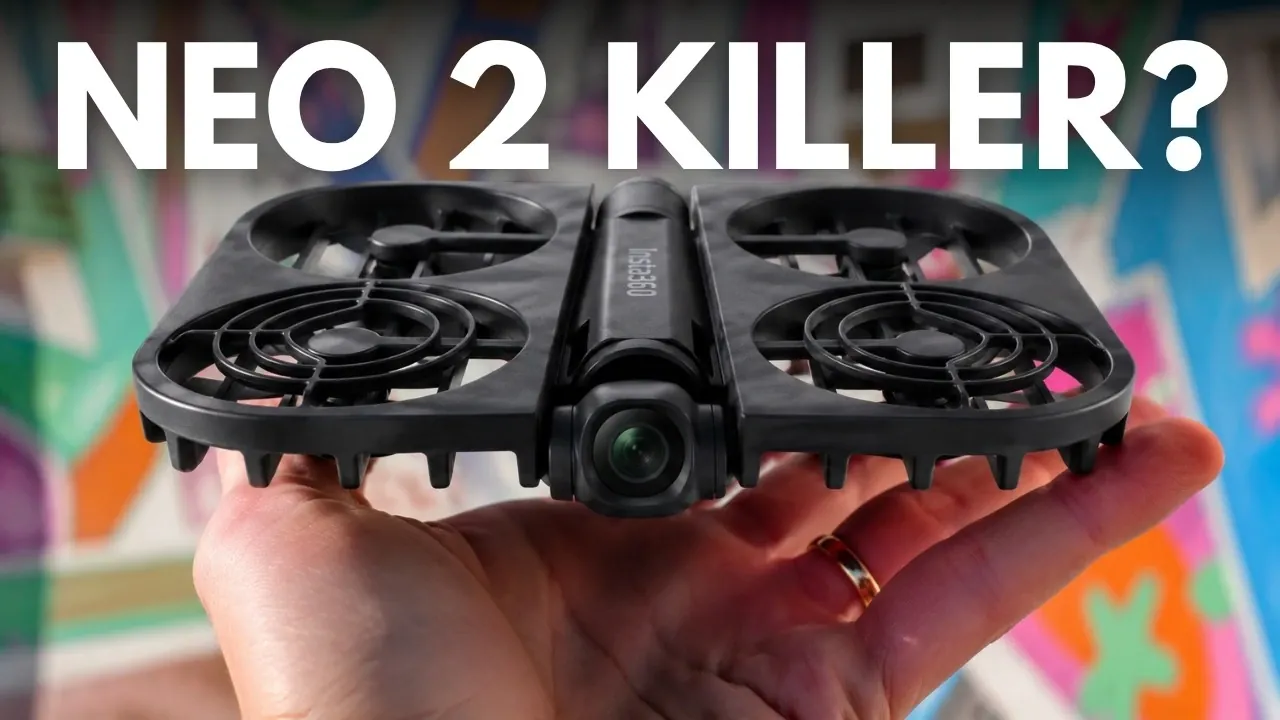
Insta360 is reportedly developing a compact drone that could address key shortcomings of DJI’s Neo 2. As highlighted by Tech Court, recent patent filings suggest a foldable design with enclosed propellers, prioritizing both portability and safety. This design could appeal to creators who find the Neo 2’s rigid frame and larger size less convenient for on-the-go use, offering a more adaptable option for everyday aerial photography.
Dive into the specifics of how this design could impact usability and performance. Gain insight into features like the foldable structure for easier transport and the enclosed propellers aimed at reducing risks during operation. Additionally, explore the potential inclusion of a 360° camera, which could expand creative possibilities for capturing immersive aerial footage.
Insta360’s Leap into Pocket Drones
TL;DR Key Takeaways :
- Insta360 is reportedly developing its first compact, foldable drone with enclosed propellers, targeting portability, ease of use and improved user experience.
- The foldable design emphasizes convenience and mobility, making it more travel-friendly compared to DJI’s Neo 2, which has a rigid frame.
- Enclosed propellers enhance safety and durability, aiming to make the drone more accessible for casual and first-time users.
- Rumored features include a potential 360° camera for creative flexibility, alongside a focus on reliable battery life, wind resistance and quieter operation.
- Insta360’s entry into the drone market reflects a strategic move to expand its ecosystem for creators, challenging DJI’s dominance in the casual drone segment.
You may soon have a new option for capturing aerial footage with a compact, portable drone. Patent illustrations from Insta360 reveal a foldable design that prioritizes convenience and mobility. Unlike DJI’s Neo 2, which features a rigid frame, Insta360’s design appears to focus on compactness, making it easier to carry in a bag or even a pocket. This approach aligns with the growing demand for lightweight, easy-to-deploy drones, particularly among casual users and creators who value simplicity and portability.
The enclosed propeller design is another standout feature, emphasizing safety and durability. By shielding the propellers, the drone could withstand minor collisions, a common concern for first-time or casual users. This design choice reflects Insta360’s broader goal of making drones more accessible to a wider audience, including those who may feel intimidated by traditional drone designs. If executed well, this could lower the barrier to entry for new users while enhancing the overall flying experience.
Challenging the Neo Series
Insta360 appears to be directly targeting the same audience as DJI’s Neo series: casual drone users who prioritize simplicity and ease of use over advanced technical specifications. The Neo series has gained popularity for its effortless flying experience, allowing users to focus on capturing moments rather than managing complex controls. Insta360 seems poised to build on this foundation, aiming to resolve some of the pain points that have frustrated Neo users.
For instance, the foldable design could address the Neo’s lack of portability, making it easier to carry and deploy on the go. Additionally, the potential inclusion of a 360° camera might offer greater creative flexibility during post-production, allowing users to reframe shots and explore unique perspectives. These enhancements could make Insta360’s drone a compelling alternative for those seeking a seamless way to capture and share high-quality aerial footage without sacrificing convenience.

Deep dive into the latest in drones by exploring our other resources and articles.
- 8+ Big drones capable of carrying large payloads and heavy equipment
- DJI Neo auto-follow drone for effortless content creation $199
- The Drone Dog Walker is the ideal accessory for your Pet
- How the Half-Priced DJI Lito X1 Drone Outperforms the Mini 5 Pro
- DJI Avata 360 vs Antigravity A1: Why the Cheaper Drone Could Actually Cost You More
- How to build a drone tracking radar from scratch
- Why the DJI Osmo Pocket 4P is Launching Under a Completely Different Name in the U.S.
- DJI Air 4 Leads 2026 Lineup with Upgraded Low-Light Camera
- Spherical Flying Drone Inspired By The Movies
- DJI Neo 2 vs Lito Series: the Best Sub-$500 Drone Guide
Potential Features and Innovations
If you’re in the market for a drone that combines portability with innovative features, Insta360’s upcoming model could be worth your attention. The foldable design is likely to make it more compact and travel-friendly than the Neo 2, catering to creators who prioritize mobility. Furthermore, the rumored inclusion of a 360° camera could set it apart, allowing users to capture immersive footage and experiment with creative angles during editing.
However, portability and innovation must be balanced with practical performance. Casual users often prioritize features such as:
- Reliable battery life for extended flight sessions.
- Wind resistance to ensure stable performance in various conditions.
- Quieter operation for use in noise-sensitive environments.
Insta360 will need to ensure its drone performs reliably in these areas to compete effectively with the Neo 2. Additionally, advanced tracking technology and a user-friendly interface could further enhance its appeal, especially for creators who prefer focusing on storytelling rather than technical complexities.
Challenges and Considerations
While Insta360’s potential entry into the drone market is exciting, it comes with challenges. Overloading the drone with features could complicate its usability, detracting from the effortless experience casual users expect. Striking the right balance between innovation and simplicity will be critical for its success.
Battery life and wind resistance remain key considerations. You need a drone that can perform reliably in various conditions without frequent recharging or struggling against moderate winds. Additionally, quieter operation could make the drone more appealing for urban environments or situations where noise sensitivity is a concern. Insta360 will also need to ensure that its pricing strategy aligns with the expectations of its target audience, offering a competitive alternative to the Neo series without compromising on quality.
Strategic Implications
Insta360’s move into the drone market reflects a broader strategy to expand its ecosystem for creators. By introducing a pocket drone, the company could challenge DJI not only in the drone category but also across multiple product lines catering to content creators. This aligns with Insta360’s history of developing innovative cameras and accessories that integrate seamlessly into a creator’s workflow, offering a cohesive suite of tools for capturing and sharing stories.
The potential release timeline, likely between late 2026 and early 2027, gives Insta360 ample time to refine its design and address any shortcomings. If executed well, this drone could become a cornerstone of Insta360’s ecosystem, providing creators with a portable, reliable and innovative tool that complements their existing gear. This strategic move could also position Insta360 as a formidable competitor in the casual drone market, challenging DJI’s dominance while carving out its own niche.
The Key Question for Success
Ultimately, Insta360’s success in the compact drone market will depend on its ability to replicate the Neo’s effortless user experience while addressing its limitations. Can Insta360 deliver a drone that is not only portable and easy to use but also durable, reliable, and innovative? If the company can strike this balance, it may finally solve the biggest drawback of DJI’s Neo 2 and establish itself as a serious contender in the casual drone market. The answer to this question will determine whether Insta360 can redefine the expectations of everyday drone users and secure its place in this competitive industry.
Media Credit: Tech Court
Disclosure: Some of our articles include affiliate links. If you buy something through one of these links, Geeky Gadgets may earn an affiliate commission. Learn about our Disclosure Policy.
