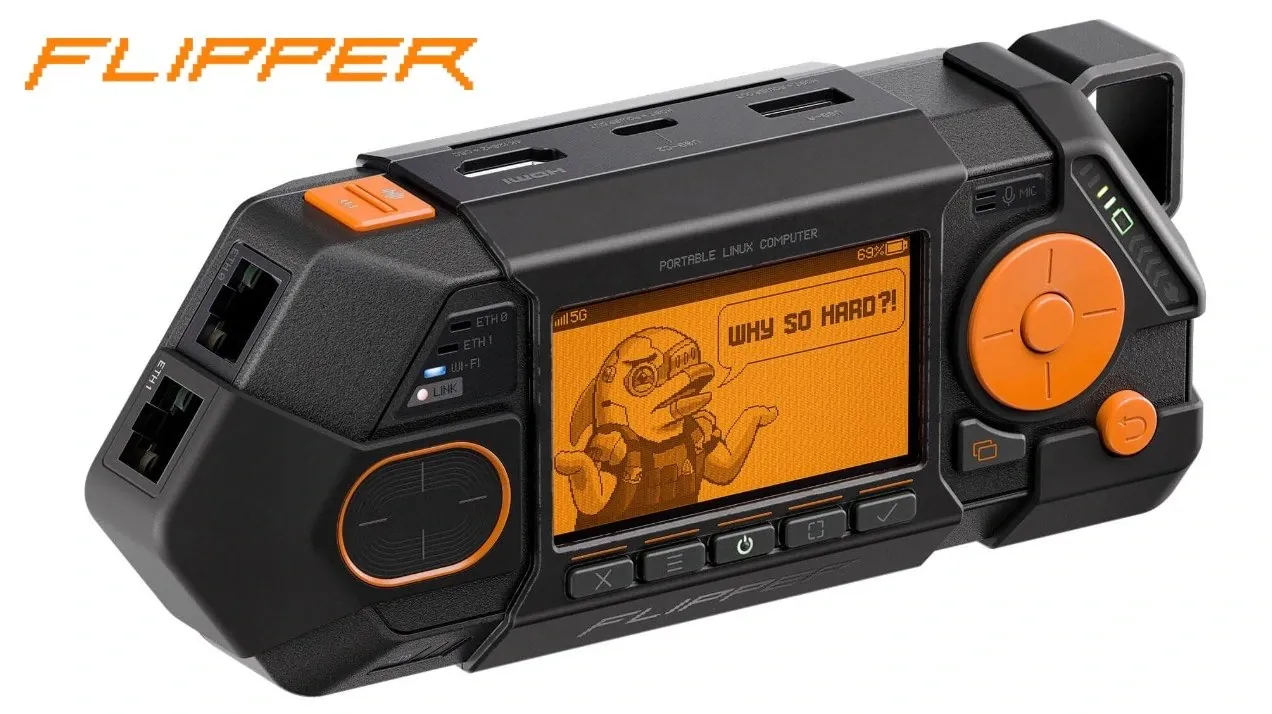
The Flipper One, a successor to the Flipper Zero, has redefined its purpose by shifting from a hobbyist-friendly device to a Linux-powered development platform with professional-grade functionality. Talking Sasquach explores how this evolution is more than just a hardware upgrade, highlighting features like its dual-processor architecture, an 8-core Rockchip RK3576 for Linux operations and a Raspberry Pi 2350 for real-time tasks. This combination enables the device to handle complex workloads while maintaining precision, making it a standout choice for developers and researchers. However, the post provide more insights into a less-discussed aspect: the tension between Flipper Devices and its creator community, which has raised concerns about the company’s evolving priorities.
Dive into this overview to understand how the Flipper One’s advanced capabilities, such as its PCIe M.2 slot for add-ons and built-in neural processing unit for offline AI tasks, are shaping its appeal to professionals. You’ll also gain insight into the challenges of balancing innovation with community engagement, as the company navigates its rebranding efforts to distance itself from the controversies surrounding the Flipper Zero. By examining these dynamics, this breakdown sheds light on the broader implications for the device’s future and its ability to maintain relevance in both professional and enthusiast spaces.
Flipper One: A Technological Leap Forward
TL;DR Key Takeaways :
- The Flipper One is a significant upgrade from the Flipper Zero, transitioning from a controversial hacking tool to a Linux-powered development platform with professional-grade functionality.
- Key hardware advancements include a dual-processor architecture (8-core Rockchip RK3576 and Raspberry Pi 2350), an internal PCIe M.2 slot, Wi-Fi 6E, dual gigabit Ethernet and a built-in neural processing unit (NPU) for offline AI tasks.
- Flipper Devices has rebranded the Flipper One as a legitimate tool for innovation and research, emphasizing open source collaboration and distancing itself from the controversies of the Flipper Zero.
- Tensions have arisen between the company and its creator community, with some users feeling alienated by the shift toward a more corporate, professional focus.
- The Flipper One’s advanced features open opportunities in security research, AI development and signal intelligence, but balancing innovation with accessibility and ethical concerns remains a critical challenge for its success.
The Flipper One marks a clear departure from the compact, hobbyist-friendly design of the Flipper Zero. It introduces a larger, more advanced platform tailored for professional-grade functionality. At its core, the device features a dual-processor architecture that significantly enhances its capabilities:
- An 8-core Rockchip RK3576 for Linux-based operations, allowing robust multitasking and seamless performance for complex applications.
- A Raspberry Pi 2350 dedicated to real-time tasks, making sure precision and reliability in time-sensitive operations.
This dual-processor setup allows the Flipper One to handle demanding workloads efficiently, making it an attractive tool for developers, researchers and professionals in various technical fields.
Several hardware enhancements further distinguish the Flipper One:
- An internal PCIe M.2 slot for expanded functionality, supporting add-ons like software-defined radio (SDR) modules and NVMe SSDs for increased storage and versatility.
- Upgraded connectivity, including Wi-Fi 6E, a cellular satellite NTN modem and dual gigabit Ethernet ports, making sure seamless communication and data transfer in diverse environments.
- A built-in neural processing unit (NPU) for offline machine learning tasks, allowing advanced security research and AI-driven applications without relying on cloud-based solutions.
These features position the Flipper One as a innovative tool capable of meeting the demands of professionals in fields such as cybersecurity, artificial intelligence and signal intelligence.
Rebranding and Strategic Challenges
Flipper Devices, the company behind the Flipper One, has made a concerted effort to distance its new product from the controversies that surrounded the Flipper Zero. The earlier model faced criticism as a hacking tool, leading to customs seizures, bans and heightened government scrutiny. In response, the company has rebranded the Flipper One as a legitimate development platform, emphasizing its potential for innovation, research and professional use.
Central to this rebranding effort is the company’s embrace of open source collaboration. By launching a public developer portal and partnering with organizations like Collabora, Flipper Devices aims to foster a community-driven approach to software development. These initiatives are designed to reassure regulators and the public while encouraging developers to contribute to the platform’s growth and functionality.
However, this strategic pivot has not been without its challenges. The company’s corporate messaging has occasionally clashed with the expectations of the creator community that played a pivotal role in the Flipper Zero’s success. Some creators feel that the company’s efforts to shed the “hacking tool” label have sidelined the community’s contributions, creating a sense of alienation among loyal users.

Advance your skills in Flipper by reading more of our detailed content.
- Build a DIY Open-Source Flipper Zero Using a ESP32-DIV
- BFFB for Flipper Zero : The Ultimate Upgrade to Supercharge Your Flipper
- Flipper One Gets a BIG Update : Flipper One vs Flipper Zero
- Google Photo Magic Editor artificial intelligent image editor
- Backflipper Review – Over And Over
The Creator Community: A Strained Relationship
The creator community was instrumental in the Flipper Zero’s rise to prominence. Through custom firmware, shared use cases and a dedicated user base, these enthusiasts helped establish the device’s reputation as a versatile and accessible tool. However, with the launch of the Flipper One, some creators feel that the company has shifted its focus toward a more corporate, less community-oriented approach.
Critics argue that Flipper Devices has not adequately acknowledged the community’s contributions, instead prioritizing its professional image. This perceived disconnect has raised concerns about the company’s long-term strategy. While the Flipper One’s advanced features appeal to developers and researchers, there is a risk that the device could lose the accessibility and charm that made its predecessor so popular. Striking a balance between professional functionality and community engagement will be critical to the Flipper One’s success.
Opportunities and Controversies
The Flipper One’s advanced capabilities open up a wide range of applications, including:
- Security research, where its enhanced connectivity and processing power can be leveraged for penetration testing and vulnerability assessments.
- AI development, with its built-in NPU allowing offline machine learning tasks and experimentation with artificial intelligence models.
- Signal intelligence, supported by its SDR compatibility and robust networking features.
While these features make the Flipper One a powerful tool for professionals, they also raise concerns about potential misuse. The controversies that surrounded the Flipper Zero serve as a reminder of the delicate balance between innovation and ethical responsibility. The Flipper One’s increased complexity and professional focus may also alienate casual enthusiasts who were drawn to the simplicity and accessibility of its predecessor.
This tension underscores a broader challenge for Flipper Devices: maintaining the spirit of innovation and accessibility that defined the Flipper Zero while embracing the Flipper One’s new identity as a professional-grade development platform. Whether the company can successfully navigate this balance will play a significant role in determining the Flipper One’s legacy.
The Road Ahead
The Flipper One represents a bold step forward in technology, blending advanced hardware with a professional focus. Its dual-processor architecture, enhanced connectivity options and machine learning capabilities make it a standout tool for developers, researchers and professionals. However, the device’s evolution has also introduced challenges, particularly in its relationship with the creator community that was so integral to the success of the Flipper Zero.
As the Flipper One continues to make its mark, its success will depend on its ability to address these challenges while staying true to its roots. For developers and researchers, the Flipper One offers exciting possibilities, but its journey is far from over. Balancing innovation with accessibility and fostering a strong connection with its user base will be essential to making sure that the Flipper One achieves its full potential.
Media Credit: Talking Sasquach
Disclosure: Some of our articles include affiliate links. If you buy something through one of these links, Geeky Gadgets may earn an affiliate commission. Learn about our Disclosure Policy.
