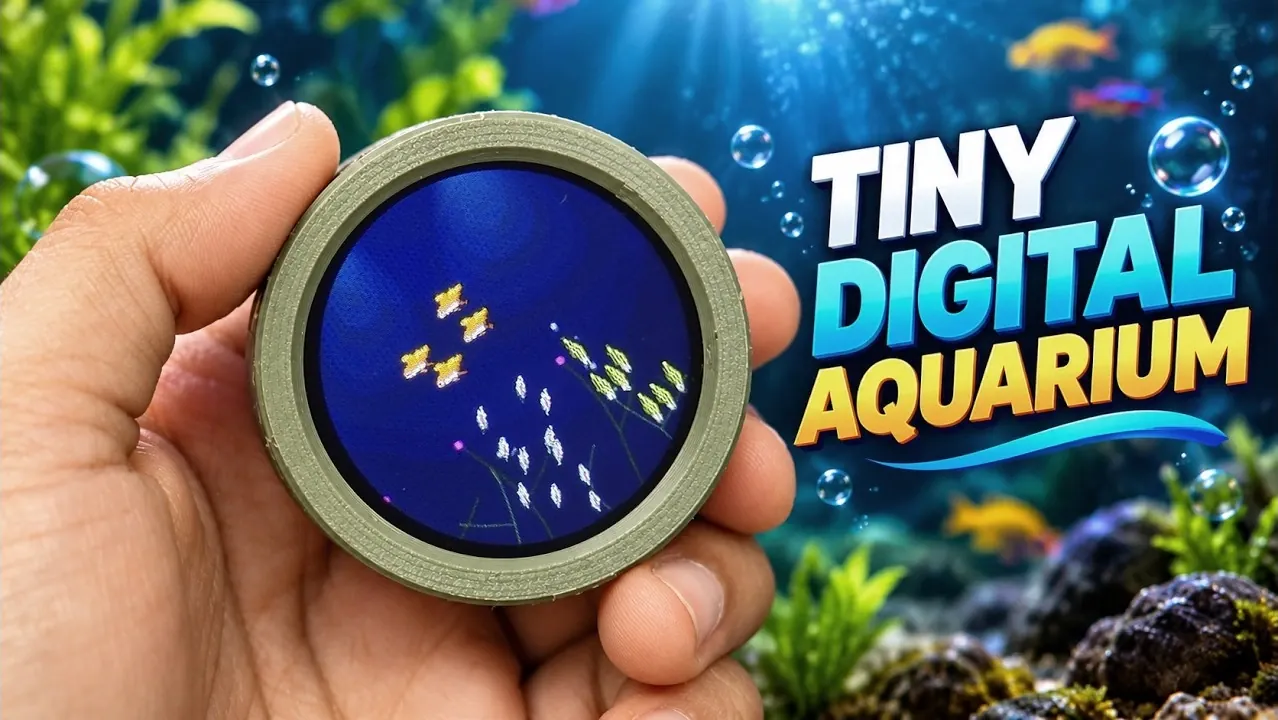
Turning a Xiao ESP32 S3 microcontroller into a compact digital aquarium is a fascinating blend of creativity and technical precision. Tech Talkies demonstrates how this microcontroller, paired with a round display and a custom 3D-printed stand, can simulate a vibrant underwater environment. The project relies on the ESP IDF framework to create lifelike fish animations, complete with AI-assisted behaviors that mimic real aquatic life. Interactive features, such as touchscreen functionality, allow users to engage with the aquarium by “feeding” the fish or observing their responses, making it more than just a static display.
In this overview, you’ll gain insight into the key components that bring the digital aquarium to life, from the microcontroller’s robust processing capabilities to the role of custom enclosures in enhancing stability and aesthetics. Explore how firmware development enables smooth animations and dynamic interactions and discover opportunities for future enhancements, such as expanded enclosures or gamified features. This guide offers a detailed look at how technology and design converge to create an engaging and customizable desk accessory.
ESP32 S3 Digital Aquarium
TL;DR Key Takeaways :
- The project utilizes the Xiao ESP32 S3 microcontroller and a round display to create a compact, interactive digital aquarium with lifelike fish animations.
- Firmware developed using the ESP IDF framework powers AI-assisted algorithms, allowing realistic fish behaviors and interactions.
- Touchscreen functionality allows users to engage with the aquarium by “feeding” fish or observing their reactions, enhancing the immersive experience.
- A custom 3D-printed stand complements the design, making sure stability and portability, with potential for future enhancements like larger enclosures and battery compartments.
- Opportunities for future updates include more detailed animations, gamified features, sound effects and customizable themes to enrich the user experience.
At the heart of this project lies the Xiao ESP32 S3 microcontroller, a compact yet powerful board specifically designed for IoT applications. Its robust processing capabilities make it ideal for running the simulated aquarium, while a round display tailored for Xiao boards serves as the vibrant visual centerpiece. Together, these components form the foundation of the digital aquarium, making sure smooth performance and captivating visuals.
To house the hardware, a default enclosure from Seeed Studio provides a functional starting point. However, a custom 3D-printed stand improves the design, enhancing both stability and aesthetics. This combination of hardware and design ensures the aquarium is compact, portable and visually striking, making it a perfect addition to your desk or shelf.
Bringing the Aquarium to Life: Firmware Development
The true magic of this project lies in its firmware, developed using the ESP IDF framework. This powerful platform enables the creation of smooth, lifelike fish animations that mimic the natural movements of underwater creatures. AI-assisted algorithms add depth and complexity to the simulation, allowing the fish to vary in size, exhibit unique swimming patterns and even interact with one another in a realistic manner.
One of the standout features of this project is its touchscreen functionality, which allows users to interact directly with the aquarium. By tapping the screen, you can prompt the fish to respond in real-time, creating a dynamic and engaging user experience. Whether you’re “feeding” the fish or simply observing their reactions, these interactive elements make the digital aquarium more than just a decorative piece, it becomes an immersive and entertaining experience.

Below are more guides on ESP32 from our extensive range of articles.
- $5 ESP32-S3 Super Mini Packs Wi-Fi and Bluetooth
- The $4 ESP32 S3 Super Mini Packs a 240 MHz Dual-Core Chip
- How an $8 ESP32 S3 Microcontroller Runs a 28.9M Parameter Local LLM
- 5 ESP32 Projects Worth Building in 2026: Such as an Apple HomeKit Controller
- $4 ESP32 Module Brings Wi-Fi and Bluetooth to IoT Projects
- Replacing Security Cameras with Three $10 ESP32S3 Wi-Fi Boards
- ESP32-S3 Super Mini Costs $5 and Packs Wi-Fi and Bluetooth
- Gemini 4 Argon Writes ESP Mosaico Firmware to Control RGB LEDs
- ESP32-S3 Super Mini Brings 240 MHz Dual-Core Power For $4
- ESP32 S31 Devkit Hands-on: 320 MHz RISC-V Chip Adds Wi-Fi 6
Designing the Enclosure: 3D Printing and Customization
The enclosure plays a crucial role in the usability and overall appearance of the digital aquarium. While the default Seeed Studio enclosure is functional, a custom 3D-printed stand takes the design to the next level. This stand not only complements the compact nature of the project but also ensures stability on any flat surface, making it both practical and visually appealing.
Looking ahead, there is potential for further customization. For instance, future iterations could feature larger enclosures with built-in battery compartments, allowing the aquarium to operate independently of a power source. This would make the project even more versatile, allowing it to function as a portable decorative piece. Such enhancements would expand the possibilities for personalization and usability, making the aquarium an even more attractive addition to any space.
Interactive Features and Simulated Fish Behavior
The digital aquarium’s most captivating aspect is its ability to simulate a lifelike underwater environment. The fish animations are designed to be smooth and visually engaging, with behaviors that closely mimic real aquatic life. AI-assisted algorithms ensure that the fish interact with one another and respond to user inputs, creating a dynamic and immersive experience.
The inclusion of touchscreen functionality adds an extra layer of engagement. For example, you can “feed” the fish by tapping specific areas of the screen or observe how they react to your touch. These interactive features foster a sense of connection to the simulated environment, making the aquarium more than just a static display. It becomes a living, responsive creation that invites users to engage with it in meaningful ways.
Opportunities for Future Enhancements
While the current version of the digital aquarium is both functional and engaging, there is significant potential for further development. Here are some ideas for future updates that could enhance the project:
- More detailed fish animations, including additional underwater elements like plants, coral, or bubbles to enrich the visual experience.
- A dedicated “feeding mode” that introduces a gamified element, encouraging users to interact with the aquarium more frequently.
- Expanded enclosures featuring larger displays or integrated battery compartments for standalone operation, increasing portability and versatility.
- Integration of sound effects, such as gentle water sounds or bubbling noises, to enhance the immersive experience.
- Customizable themes, allowing users to change the aquarium’s appearance or add new types of fish and underwater scenery.
By incorporating feedback from the DIY community, these enhancements could make the digital aquarium even more appealing and versatile. Collaborative input from other enthusiasts could inspire new features and design improvements, making sure the project continues to evolve and resonate with a broader audience.
Why This Project Matters
This digital aquarium project showcases the creative potential of compact IoT devices like the Xiao ESP32 S3 microcontroller. By combining hardware, firmware and 3D printing, it demonstrates how modern technology can be harnessed to create a unique desk accessory that is both functional and enjoyable. The project is designed to be approachable, making it an excellent starting point for DIY enthusiasts interested in exploring the capabilities of microcontrollers and interactive design.
Whether used as a decorative piece, a conversation starter, or a way to experiment with interactive technology, this project highlights the endless possibilities of IoT. It serves as a testament to the power of combining creativity with technical expertise, offering a rewarding and engaging experience for anyone who takes on the challenge of building their own digital aquarium.
Media Credit: Tech Talkies
Disclosure: Some of our articles include affiliate links. If you buy something through one of these links, Geeky Gadgets may earn an affiliate commission. Learn about our Disclosure Policy.
