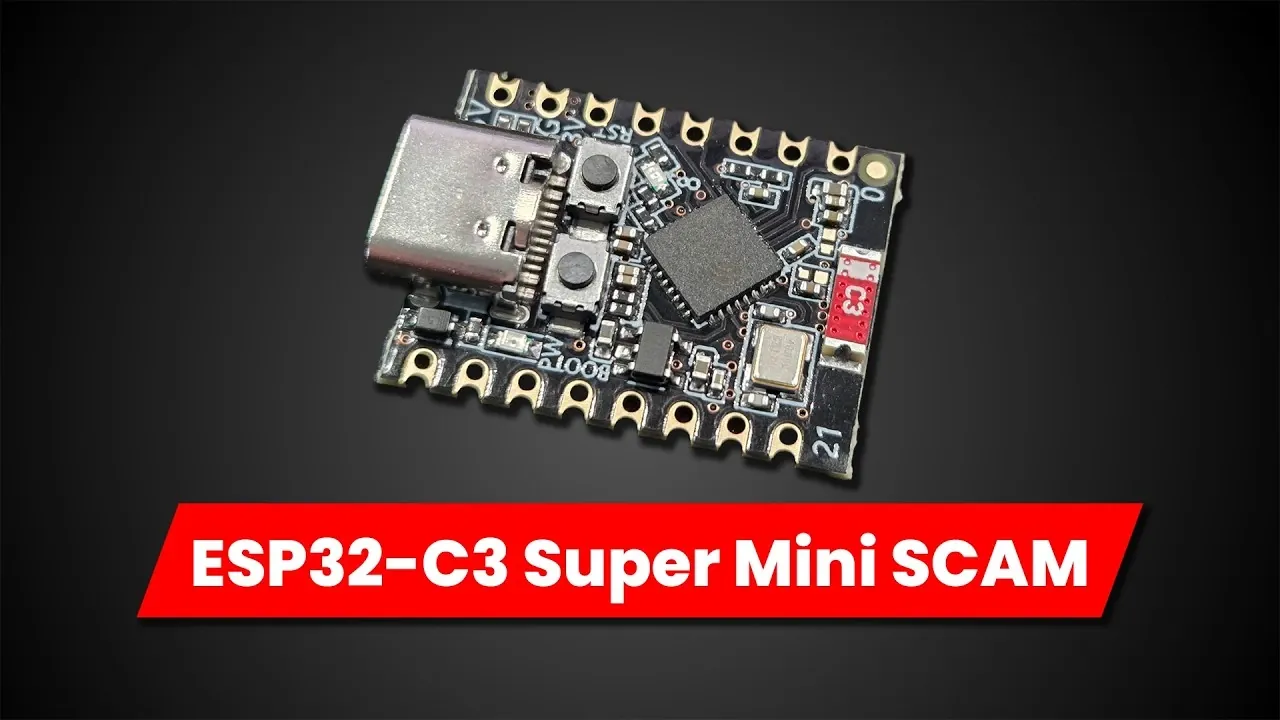
When purchasing an ESP32-C3 Super Mini for your IoT or embedded systems project, it’s essential to confirm whether the variant includes built-in flash memory. Models like the FN4 and FH4 come equipped with 4 megabits of onboard flash memory, making them ready for immediate use. However, other variants, such as the ESP32C3, lack this critical feature and require additional components or modifications to function. As Hacker University explains, these differences can significantly impact usability and should be carefully considered before making a purchase.
In this guide, you’ll explore practical steps to identify the right ESP32-C3 Super Mini variant for your needs. Learn how to decode product descriptions, avoid listings with obscured chipset markings and verify specifications through reliable documentation or seller communication. By understanding these key factors, you can ensure a smoother development experience and avoid the challenges associated with flashless versions, such as manual soldering or external memory configuration.
Key Variants of the ESP32-C3 Super Mini
TL;DR Key Takeaways :
- The ESP32-C3 Super Mini is popular for IoT projects due to its compact size, affordability and features like Wi-Fi, Bluetooth and GPIO pins, but not all variants include built-in flash memory.
- Variants with “F” in their names, such as FN4 and FH4, include 4 megabits of onboard flash memory, making them ready for immediate use, while others like ESP32C3 lack this feature and require additional components.
- Identifying the right variant can be challenging due to incomplete product descriptions, obscured chipset markings and inconsistent documentation, leading to potential confusion during purchase.
- Flashless versions require external flash memory, manual soldering and advanced configuration, which can be time-consuming and impractical for beginners or tight deadlines.
- To ensure a smooth experience, prioritize variants with built-in flash memory (e.g., FN4 or FH4), verify specifications and purchase from reliable sellers with clear product descriptions.
The ESP32-C3 Super Mini comes in several variants, including ESP32C3, FN4, FH4, FH4A, and FH4X. The primary distinction between these models lies in the presence or absence of onboard flash memory, which directly impacts usability.
- Variants without an “F” in their name, such as the ESP32C3, lack built-in flash memory. These boards require additional components or modifications to function properly.
- Models like FN4 and FH4 include 4 megabits of onboard flash memory, making them ready for immediate use in most applications.
Understanding these differences is crucial. Boards without flash memory may not support your project requirements without significant additional effort.
Why Identifying the Right Variant Can Be Tricky
Determining whether a specific ESP32-C3 Super Mini variant includes flash memory can be challenging. Boards with and without flash memory often appear visually identical, making physical inspection unreliable. This difficulty is further compounded by several factors:
- Incomplete product descriptions: Many listings fail to specify whether the board includes flash memory.
- Obscured chipset markings: Sellers may blur or hide critical details in product images, leaving buyers uncertain about the board’s specifications.
- Inconsistent documentation: Some variants lack clear or comprehensive documentation, making it harder to verify their capabilities.
These issues can lead to confusion and increase the risk of purchasing a board that does not meet your needs.

Here are additional guides from our expansive article library that you may find useful on ESP32.
- $5 ESP32-S3 Super Mini Packs Wi-Fi and Bluetooth
- How an $8 ESP32 S3 Microcontroller Runs a 28.9M Parameter Local LLM
- $4 ESP32 Module Brings Wi-Fi and Bluetooth to IoT Projects
- ESP32 S31 Devkit Hands-on: 320 MHz RISC-V Chip Adds Wi-Fi 6
- $4 ESP32-S3 Super Mini Packs a 0.96-Inch IPS TFT Screen
- Build a DIY Open-Source Flipper Zero Using a ESP32-DIV
- $9 CYD ESP32 Module Includes a 2.88-Inch LCD Screen
- ESP32-S3 Automation System Packs 16 Relays for Smart Homes
- $5 ESP32 S3 Board Packs a 240 MHz Dual-Core Chip
- $20 ESP32 Paired with Claude Code to Automate Programming, Tasks and Projects
Steps to Avoid Buying the Wrong Variant
To ensure you select the right ESP32-C3 Super Mini for your project, follow these precautions:
- Examine product descriptions carefully: Look for explicit mentions of flash memory, such as “FN4” or “FH4,” in the listing.
- Avoid unclear listings: Steer clear of products with blurred or incomplete chipset markings, as these may indicate an attempt to obscure important details.
- Check reviews and documentation: Look for reliable reviews or official documentation that confirm the board’s specifications.
- Contact the seller: If the listing lacks clarity, reach out to the seller for additional information before making a purchase.
Taking these steps can help you avoid unnecessary complications and ensure the board you purchase is suitable for your project.
Challenges with Flashless Versions
If you mistakenly purchase a flashless ESP32-C3 Super Mini, you may face several challenges in making it functional. These include:
- Adding external flash memory: This requires connecting an external flash chip via the SPI bus, which increases costs and complexity.
- Manual soldering: Installing an external flash chip involves precise soldering, which can be difficult for beginners or those without specialized tools.
- Configuration hurdles: Once external flash memory is added, configuring the board to recognize it may require advanced technical knowledge.
These additional steps can be time-consuming and impractical, particularly for users new to embedded systems or those working under tight deadlines.
Best Practices for Choosing the Right Variant
To avoid unnecessary effort and ensure a smooth development experience, prioritize ESP32-C3 Super Mini variants that include built-in flash memory. Specifically, look for models labeled as FN4 or FH4, which come with 4 megabits of onboard flash memory. These variants eliminate the need for external modifications, allowing you to focus on your project rather than troubleshooting hardware issues.
Additionally, consider the following best practices:
- Choose reliable sellers: Opt for vendors with a reputation for transparency and accurate product descriptions.
- Verify specifications: Double-check product details against official documentation or trusted reviews to confirm compatibility with your project.
- Avoid vague listings: Stay away from listings that lack clear specifications or feature obscured images of the board.
By following these guidelines, you can save time, reduce costs and ensure your development board is ready to support your project goals.
Making sure a Smooth Development Experience
The ESP32-C3 Super Mini is a versatile and cost-effective option for IoT and embedded system projects. However, the absence of built-in flash memory in some variants can create significant challenges, particularly for users with limited technical expertise or time constraints.
By carefully verifying product details and opting for variants with onboard flash memory, such as FN4 or FH4, you can avoid unnecessary complications. These precautions ensure that your development board is ready to support your projects, allowing you to focus on innovation and achieving your objectives.
Media Credit: Hacker University
Disclosure: Some of our articles include affiliate links. If you buy something through one of these links, Geeky Gadgets may earn an affiliate commission. Learn about our Disclosure Policy.
