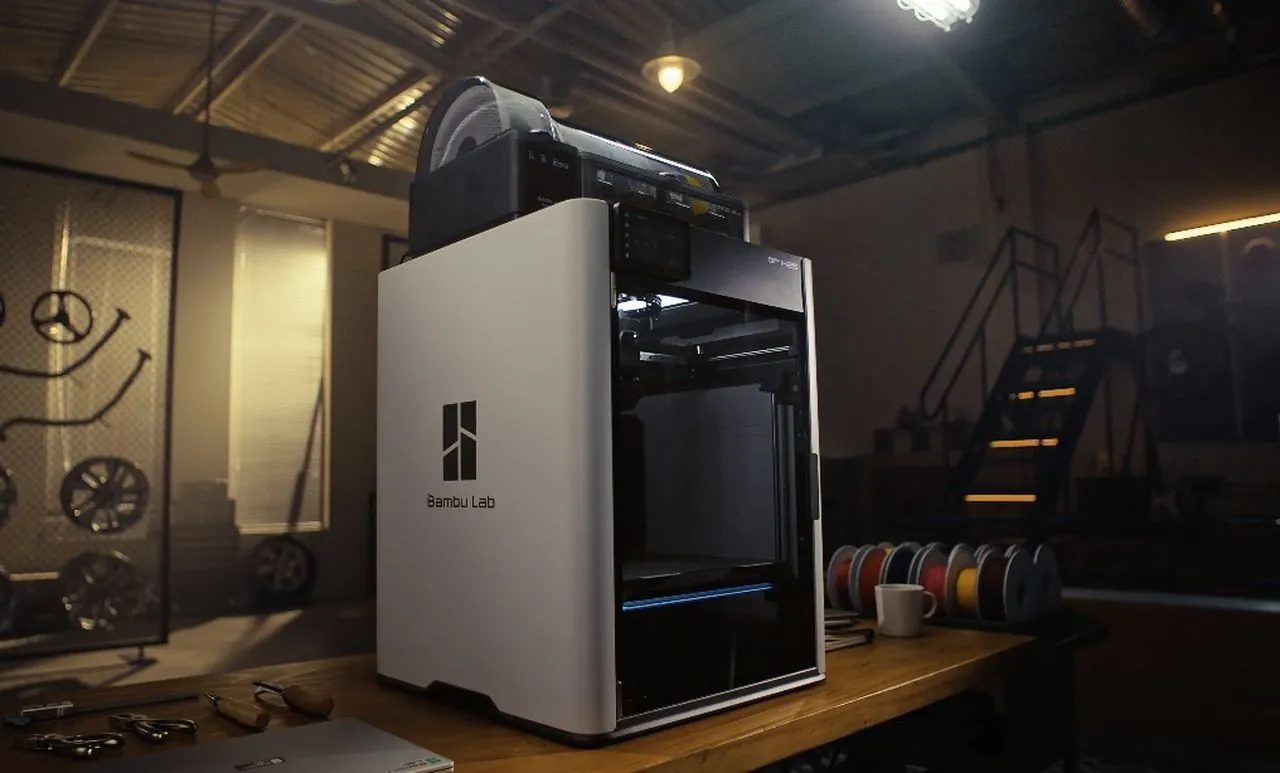
What makes a 3D printer truly stand out? Is it innovative features, reliability under pressure, or the ability to deliver professional-grade results without breaking the bank? The Bambu Lab H2S claims to check all these boxes, positioning itself as a cost-effective yet highly capable option for both hobbyists and professionals. After 300 hours of rigorous testing, this machine has proven its mettle, handling complex projects with precision and consistency. But does it live up to the hype, or are there trade-offs lurking beneath its sleek exterior? In this detailed rundown, we’ll unpack the performance, features, and limitations of the H2S to help you decide if it’s the right fit for your needs.
Below Clough42 explains what makes the H2S a reliable workhorse in the competitive world of 3D printing. From its high-temperature hotend and heated chamber to its intuitive touchscreen interface, the printer is packed with features designed to simplify the user experience while delivering exceptional results. Yet, it’s not without its quirks, like the challenges posed by third-party filaments or the single-nozzle design’s impact on material efficiency. Whether you’re a seasoned pro or just stepping into the world of 3D printing, Clough42’s in-depth review offers insights that go beyond the surface, leaving you with a clearer picture of what this machine can (and can’t) do. After all, the best tools are the ones that align with your goals, not just your wishlist.
Affordable High-Performance 3D Printer
TL;DR Key Takeaways :
- The Bambu Lab H2S is a cost-effective and reliable 3D printer designed for both hobbyists and professionals, offering advanced features like a high-temperature hotend (350°C) and a heated chamber for handling diverse materials, including carbon fiber composites.
- Its single-nozzle design maximizes the 340×320 mm print area and reduces costs, while the durable COXY frame and modular tools (e.g., CNC blade cutter, pen tool, 10W laser module) enhance versatility.
- Performance is highly dependable, with over 300 hours of testing showing no failed prints, quiet operation, and features like advanced first-layer adhesion and active cooling for consistent results.
- Software integration, including the Bambu Studio slicing software and Bambu Handy mobile app, enables real-time monitoring, remote management, and cloud services for streamlined workflows.
- While the H2S lacks the dual-nozzle system and 40W laser module of its predecessor (H2D), it offers a larger print area and is priced at approximately 60% of the H2D’s cost, making it a practical and affordable choice for users prioritizing simplicity and reliability.
Key Features and Design
The Bambu Lab H2S is carefully engineered to balance practicality and performance. Its single-nozzle design not only reduces costs but also maximizes the usable print area, which measures an impressive 340×320 mm. Encased in a durable COXY frame, the printer is equipped with features that cater to a variety of materials and applications, making sure versatility and reliability.
- High-temperature hotend: Capable of reaching 350°C, it supports advanced materials like carbon fiber composites and high-performance polymers.
- Heated bed and chamber: The 120°C heated bed and 65°C heated chamber minimize warping and layer separation, making sure consistent results even with challenging materials.
- Active cooling and filtration: An integrated carbon air filtration system and active cooling mechanisms enhance safety and usability in indoor environments.
- Intuitive touchscreen interface: A responsive 5-inch touchscreen simplifies navigation and operation, making it accessible for users of all experience levels.
The H2S also supports modular tools, including a CNC blade cutter, pen tool, and a 10W laser module, expanding its functionality beyond 3D printing. However, it does not support the 40W laser module available with the H2D, which may limit its appeal for users requiring higher-powered laser capabilities.
Performance: Reliable and Consistent
The Bambu Lab H2S delivers exceptional performance right out of the box, making it a reliable choice for both beginners and seasoned professionals. During extensive testing, the printer completed over 300 hours of operation without a single failed print, showcasing its dependability. Its quiet operation, enabled by the simplified single extruder design, makes it suitable for home and office environments alike.
- First-layer adhesion: Advanced calibration routines ensure consistent first-layer adhesion, which is critical for high-quality prints.
- Temperature control: The heated chamber and bed provide optimal conditions for high-temperature materials, reducing the risk of print failures.
- Active cooling: Prevents overheating during extended print jobs, maintaining consistent performance over time.
These features collectively create a seamless printing experience, even for users with limited technical expertise. The H2S is designed to minimize the learning curve while maximizing output quality, making it a practical choice for a wide range of applications.
Bambu Lab H2S Review

Check out more relevant guides from our extensive collection on 3D printing that you might find useful.
- Autodesk Ember 3D Printer Now Available For $5995
- Longer FDM LK5 PRO open source 3D printer $329
- 3Doodler Pro+ 3D printing pen launches from $250
- Co Print Bowden 3D printer multi-filament module
- BambooFill Wood 3D Printing Filament Demonstrated (video)
- Lite3DP open source, Arduino MSLA / LCD-SLA resin micro 3D
- FLUX All-in-One System Offers 3D Printing, 3D Scanning, Laser
- Rose Go FDM 3D printer hits Kickstarter from $299
- EasyThreed mini 3D printer hits Kickstarter
- Affordable Cetus2 multi-material and color 3D printer
Material Compatibility
One of the standout features of the Bambu Lab H2S is its ability to handle a diverse range of materials. Whether working with standard PLA, durable ABS, flexible TPU, or advanced carbon fiber composites, the printer consistently delivers reliable results. This versatility makes it suitable for a variety of projects, from prototyping to functional parts.
The H2S integrates seamlessly with Bambu Lab’s Automatic Material System (AMS), allowing multi-material printing with minimal manual intervention. For added convenience, Bambu Lab filaments come equipped with RFID tags, allowing the printer to automatically adjust settings and monitor filament usage. While the H2S supports third-party filaments, users may need to make manual adjustments, particularly for materials with uneven winding or high moisture content. Proper filament drying and storage are essential for achieving optimal results, especially with moisture-sensitive materials.
Software Integration and Remote Management
The Bambu Studio slicing software is a cornerstone of the H2S ecosystem, offering a streamlined workflow for preparing and managing print jobs. Its user-friendly interface and robust features enhance the overall printing experience, making it easier to achieve precise results.
- Real-time monitoring: Users can make precise adjustments during printing, making sure optimal outcomes.
- Mobile app integration: The Bambu Handy mobile app allows for remote management, providing flexibility and convenience.
- Cloud services: Remote printing and file storage capabilities are ideal for managing multiple projects, especially in professional settings.
These tools simplify the printing process, allowing users to focus on creativity and productivity rather than troubleshooting and manual adjustments.
Limitations to Consider
While the Bambu Lab H2S offers numerous advantages, it is not without its limitations. Understanding these challenges can help users make informed decisions and optimize their printing experience.
- Single-nozzle design: While cost-effective, this design increases purge waste during multi-material prints, which may impact material efficiency.
- Third-party filament challenges: Uneven winding or high moisture content in third-party filaments can lead to jams or inconsistent results.
- Bed preparation: Proper bed leveling and filament drying are essential for achieving high-quality prints, particularly with moisture-sensitive materials.
These limitations are manageable with proper maintenance and attention to detail, but they may require additional effort from users, particularly those new to 3D printing.
Comparison to the H2D
When compared to its predecessor, the H2D, the Bambu Lab H2S offers a more affordable option without compromising core functionality. While it lacks some premium features, it compensates with practical advantages that cater to cost-conscious users.
- Dual-nozzle setup: The H2S does not include the dual-nozzle system found in the H2D, which may limit its appeal for advanced multi-material projects.
- Larger print area: The H2S provides a larger usable print area, making it ideal for single-material tasks and larger projects.
- Cost efficiency: At approximately 60% of the H2D’s price, the H2S delivers excellent value for users prioritizing affordability and simplicity.
These trade-offs make the H2S an attractive choice for users who prioritize cost-effective solutions without sacrificing reliability or performance.
User Experience: Designed for Simplicity
The Bambu Lab H2S is designed with user convenience in mind, making it an excellent option for both beginners and experienced users. Its intuitive touchscreen interface, integrated cloud services, and minimal setup requirements ensure a hassle-free workflow. Whether you’re a hobbyist exploring creative projects or a professional managing demanding tasks, the H2S delivers consistent results with minimal tweaking.
The printer’s robust design and reliable performance make it a versatile tool for a wide range of applications, from prototyping to functional part production. Its focus on simplicity and efficiency ensures that users can achieve high-quality results without extensive technical knowledge or experience.
Media Credit: Clough42
Disclosure: Some of our articles include affiliate links. If you buy something through one of these links, Geeky Gadgets may earn an affiliate commission. Learn about our Disclosure Policy.
