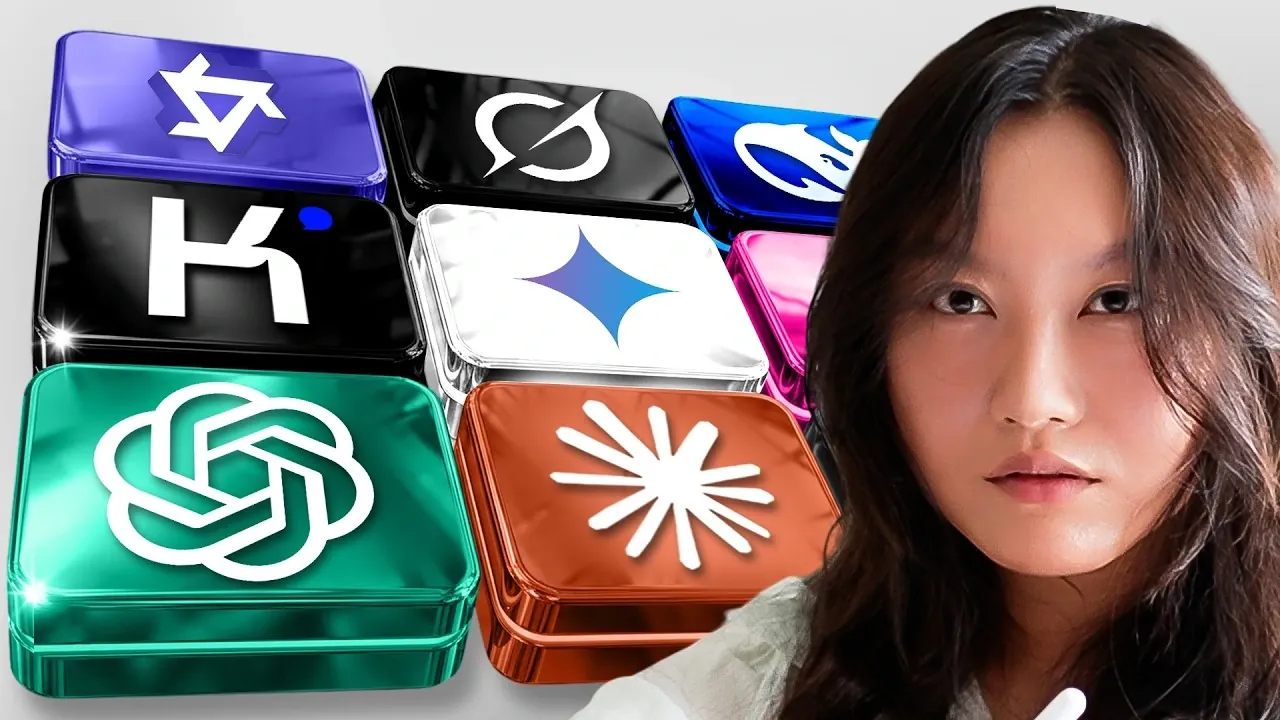
Artificial Intelligence in 2026 spans a diverse array of models, each tailored to specific tasks and levels of complexity. Tina Huang categorizes these models into flagship, mid-tier, light and specialized groups, highlighting their distinct roles in various applications. For example, flagship models such as Claude Fable 5 and GPT 5.6 Sol excel in advanced tasks like strategic planning and multimodal integration, often serving as benchmarks for the industry. These classifications emphasize the need to match model capabilities with specific objectives, whether addressing enterprise-scale challenges or supporting creative projects.
Explore how mid-tier models like Claude Sonnet 5 balance cost and performance for routine applications. Learn about light models such as Haiku 4.5, optimized for efficiency in high-volume workflows and examine specialized models designed for tasks like coding or video generation. This overview also provide more insights into the growing adoption of customizable and self-hosted solutions, shedding light on their advantages for privacy-conscious users and niche use cases.
Flagship AI Models: Pioneering Innovation and Performance
TL;DR Key Takeaways :
- AI models in 2026 are categorized into flagship, mid-tier, light and specialized models, each tailored for specific use cases and industries.
- Flagship models like Claude Fable 5 and GPT 5.6 Sol excel in complex tasks such as multimodal integration, strategic planning and advanced coding, but require significant computational resources.
- Mid-tier models balance performance and affordability, making them ideal for general-purpose tasks and budget-conscious users, with options like Claude Sonnet 5 and GPT 5.6 Terra.
- Specialized models focus on niche applications such as coding, image generation, video creation and audio processing, offering precision for industries like media and software development.
- Local and self-hosted AI models, such as Quen 3.635B and GBT OSS Family, prioritize privacy and control, allowing deployment on consumer hardware without reliance on cloud services.
Flagship AI models represent the pinnacle of AI technology, designed to tackle the most complex and resource-intensive tasks. These models excel in areas such as multimodal integration, strategic planning and advanced coding, often setting new benchmarks for the industry.
- Claude Fable 5: Renowned for its expertise in intricate planning and reasoning, making it a top choice for strategic applications.
- GPT 5.6 Sol: A leader in multimodal applications, offering advanced coding capabilities and seamless integration across various formats.
- Gemini 3.1 Pro: Known for its exceptional multimodal integration, allowing smooth transitions between text, image and audio processing.
- Kimi K3: An open source flagship model that combines competitive features with accessibility.
These models are ideal for enterprises and researchers requiring innovative solutions, though their high computational demands necessitate significant resources. Their ability to handle complex tasks makes them indispensable for pushing technological boundaries.
Mid-Tier AI Models: Balancing Performance and Affordability
Mid-tier AI models strike a balance between performance and cost, offering robust capabilities for general-purpose tasks. They are versatile and accessible, making them a popular choice for businesses and individual users alike.
- Claude Sonnet 5: A reliable model for everyday tasks, delivering consistent performance across a range of applications.
- GPT 5.6 Terra: Offers strong performance at a fraction of the cost of flagship models, making it a practical option for budget-conscious users.
- Gemini 3.6 Flash: Known for its speed and efficiency, particularly in time-sensitive applications.
- GLM 5.2: A leading open source model in this category, providing flexibility and adaptability.
- Deepseek V4 Pro: Optimized for coding tasks, offering a cost-effective solution for developers.
These models are particularly appealing for organizations seeking to balance affordability with reliable performance, making them suitable for a wide range of industries.

Unlock more potential in AI models by reading previous articles we have written.
- China May Lock Down Open-Source AI Models: Qwen, GLM 5.2 & DeepSeek?
- What the Leaked ChatGPT 5.6 Model Reveals About OpenAI’s Next Move
- Which Claude 3 AI model is best? All three compared and tested
- How DeepSeek Fits a 284B Parameter AI Model on a Single Laptop
- Why Apple’s iOS 27 AI Roadmap is Shocking the Tech World
- Why 80% of U.S. Startups Are Quietly Switching to Chinese AI Models
- How to Use Fable 5 for Complex Tasks Before July 7th
- Google Delays Gemini 3.5 Pro to July 17 to Upgrade Math
- What to Expect from OpenAI’s GPT-5.6 Release in June 2026
- OpenAI Launches GPT Live Voice Models for Natural Human-AI Interaction
Light AI Models: Speed and Efficiency for High-Volume Tasks
Light AI models are designed for speed and cost-effectiveness, making them ideal for high-volume workflows, automation and bulk data processing. Their streamlined architecture ensures rapid performance without compromising reliability.
- Haiku 4.5: A lightweight model optimized for rapid data processing and automation tasks.
- GPT 5.6 Luna: Combines affordability with dependable performance, making it a go-to choice for businesses with tight budgets.
- Gemini 3.5 Flashlight: Tailored for automation, excelling in repetitive and high-volume operations.
- Deepseek V4 Flash: A fast and efficient model designed for coding and technical workflows.
- Mimo V2.5: Specializes in handling large-scale operations with remarkable efficiency.
These models are particularly suited for industries requiring quick turnaround times and cost-effective solutions, such as logistics, customer service and data analysis.
Specialized AI Models: Precision for Niche Applications
Specialized AI models are tailored for specific domains, offering unparalleled precision and functionality in areas such as coding, image generation, video creation and audio processing. Their focused capabilities make them essential for technical and creative industries.
- Coding: Models like Kimi K 2.7 Code, Core 3 Coder Next and Mistral Devastrol lead in software development and debugging.
- Image Generation: Popular models include GPT Image 2, Nano Banana and the open source Flux 2, known for creating high-quality visuals.
- Video Generation: Top performers like Video 3.1 by Google, Runway Gen 4.5 and Seance excel in producing dynamic video content.
- Audio Processing: Models such as Sunuo (vocals), Udo (instrumentals), and 11 Labs (voice cloning) dominate this space, offering advanced audio editing and synthesis capabilities.
These models are indispensable for industries like media production, advertising and software development, where precision and customization are critical.
Customization and Fine-Tuning: Tailoring AI to Your Needs
Customization and fine-tuning have become essential for organizations looking to adapt AI models to their specific requirements. These processes enable the creation of bespoke solutions that address unique challenges and objectives.
- Inkling: A versatile model offering extensive customization options for diverse applications.
- Nvidia Neimotron 3: Known for its advanced fine-tuning capabilities, allowing for highly specialized implementations.
- Quen Family: Available in various sizes and languages, providing flexibility to meet a wide range of needs.
By tailoring AI models to specific use cases, businesses can enhance efficiency, improve outcomes and gain a competitive edge in their respective fields.
Enterprise and Retrieval Models: Built for Business Applications
Enterprise AI models are designed to handle large-scale business operations, including search, retrieval and data analysis. These models are optimized for processing vast datasets efficiently and delivering actionable insights.
- Nvidia Neotron 3: A leader in enterprise AI, offering robust solutions for large-scale operations.
- Coher: Renowned for its advanced retrieval capabilities, making it ideal for data-intensive industries.
- Amazon Nova 2: Optimized for large-scale search and retrieval tasks, making sure accuracy and speed.
- Perplexity Sonar: Excels in data analysis and retrieval, providing valuable insights for decision-making.
These models are essential for organizations managing extensive information systems, allowing them to streamline operations and improve efficiency.
Local and Self-Hosted Models: Privacy and Control
Local and self-hosted AI models offer a secure and flexible alternative for users prioritizing privacy and control. These models can be deployed on consumer hardware, providing independence from external servers.
- Quen 3.635B: A powerful model designed for local deployment, offering robust performance without reliance on cloud services.
- GBT OSS Family: Open source models optimized for self-hosting, making sure accessibility and adaptability.
- Step 3.7 Flash: Specifically designed for Apple devices and consumer hardware, providing seamless integration and usability.
These models are particularly valuable for individuals and organizations seeking to maintain control over their data and operations, making sure security and autonomy in their AI applications.
Media Credit: Tina Huang
Disclosure: Some of our articles include affiliate links. If you buy something through one of these links, Geeky Gadgets may earn an affiliate commission. Learn about our Disclosure Policy.
