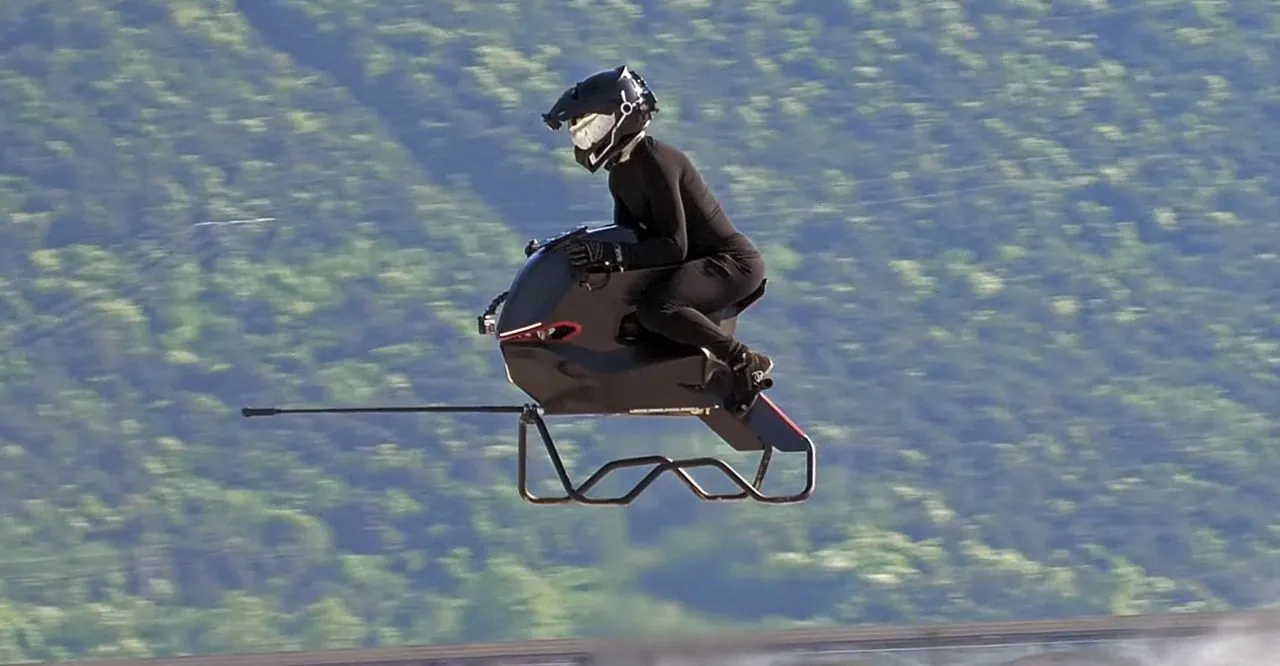
What if your daily commute didn’t involve congested highways or crowded trains, but instead, the open skies? The Volonaut Airbike, a new single-seat hoverbike, is turning this once-futuristic vision into a tangible reality. Developed by Polish inventor Tomasz Patan, this ultralight aircraft combines innovative aviation technology with a sleek, sci-fi-inspired design. Imagine soaring through the air at speeds of up to 124 mph, with nothing but the hum of micro jet turbines propelling you forward. While its price tag and limited flight duration may tether it to a niche market for now, the Airbike represents a bold leap toward a world where personal aerial mobility is as common as driving a car.
Explore how the Volonaut Airbike is reshaping the boundaries of transportation. From its carbon fiber construction to its thrust-vectoring propulsion system, the Airbike is a marvel of modern engineering. You’ll discover how its lightweight design enhances maneuverability, why its stabilization system ensures a smooth flying experience, and what challenges lie ahead for this ambitious innovation. Whether you’re a tech enthusiast, an aviation aficionado, or simply curious about the future of mobility, the Airbike offers a glimpse into a world where personal flight is no longer science fiction but an exhilarating, and perhaps inevitable, reality.
Volonaut Airbike Overview
TL;DR Key Takeaways :
- The Volonaut Airbike is a single-seat hoverbike designed by Polish inventor Tomasz Patan, combining advanced aviation technology with a lightweight, futuristic design for personal aerial mobility.
- Constructed from carbon fiber and 3D-printed aerospace-grade materials, the Airbike weighs only 30-40 kilograms, making sure compliance with ultralight aviation regulations and enhancing maneuverability.
- Powered by four micro jet turbines with thrust-vectoring technology and an onboard stabilization system, the Airbike offers precise control, agility, and a smooth flying experience.
- Performance highlights include speeds of up to 124 mph for advanced models, but flight duration is limited to approximately 10 minutes per fuel load, with quick refueling capabilities.
- Priced at around USD 880,000, the Airbike targets luxury buyers, with regulatory compliance and pilot training requirements varying by model, paving the way for future innovations in personal aerial transportation.
Design and Construction: A Lightweight Marvel
The Volonaut Airbike’s design is a testament to the seamless integration of functionality and aesthetics. Inspired by science fiction, its open, minimalist frame enhances visibility, providing pilots with an unobstructed view of their surroundings. This design prioritizes both safety and the immersive experience of flight. Constructed from carbon fiber and 3D-printed aerospace-grade materials, the Airbike weighs between 30 and 40 kilograms, making it significantly lighter than a conventional motorcycle. This lightweight construction not only enhances maneuverability but also ensures compliance with ultralight aviation regulations, broadening its accessibility to a wider audience.
The use of advanced materials underscores the Airbike’s innovative approach to engineering. Carbon fiber provides exceptional strength-to-weight ratio, while 3D printing allows for precise customization of components, reducing waste and optimizing performance. These features collectively position the Airbike as a innovative example of modern aviation design.
Propulsion and Stabilization: Precision Engineering
The Airbike’s propulsion system is powered by four micro jet turbines, each equipped with thrust-vectoring technology. This advanced system allows for precise control and exceptional maneuverability, allowing pilots to navigate with confidence even in challenging conditions. The thrust-vectoring capability ensures that the Airbike responds swiftly to directional changes, enhancing its overall agility during flight.
An onboard stabilization system, supported by sophisticated flight computers, ensures automatic hovering and stability. This system is designed to compensate for environmental factors such as wind, providing a smooth and controlled flying experience. For pilots, the intuitive control system, combining handlebars with body posture adjustments, simplifies operation. This user-friendly interface makes the Airbike accessible to trained operators, reducing the learning curve typically associated with personal aerial vehicles.
Volonaut Airbike Flying Speeder Bike in Action

Here are additional guides from our expansive article library that you may find useful on personal aerial vehicles.
- 124mph Volonaut Airbike : The Future of Personal Flying Machines
- EHang 184 Personal Drone Gets Permission For US Test Flights
- SIFMOUSE Intelligent Ring Air Mouse $39 For Intuitive Control
- Metaura Pro wearable personal air-conditioner
- Honda’s EV Revolution: 0 Saloon, 0 SUV & ASIMO OS Debut
- Halfbike II Next Generation Personal Transport Launches On
- NASA Designs Single Person Stealth Plane
- Affordable MacBook 2026: Price, Features, and Why It’s Perfect
- Notevibes Text to Speech Personal Pack: Lifetime Subscription
- Sony HMZ-T3W Personal 3D Viewer Arrives In Sony Stores For $999
Performance: Speed and Limitations
The Volonaut Airbike delivers impressive performance, with two distinct models catering to different user needs. The ultralight-compliant version achieves speeds of up to 63 mph (102 km/h), while the advanced prototype can reach a top speed of 124 mph (200 km/h). These speeds place the Airbike among the fastest personal aerial vehicles currently available, offering a thrilling experience for pilots.
However, the Airbike’s flight endurance remains a notable limitation. Each fuel load provides approximately 10 minutes of flight time, which, while sufficient for short-distance travel or recreational use, restricts its practicality for longer journeys. Refueling, however, is remarkably efficient, taking less than a minute to complete. This quick turnaround time partially mitigates the impact of limited flight duration, though it highlights the ongoing technological challenges in energy storage and efficiency for personal aerial vehicles.
Market Availability and Development
The Volonaut Airbike has successfully completed prototype testing, marking a significant milestone in its development. Pre-orders are now open, with deliveries anticipated in the mid-2020s. The initial model adheres to ultralight aviation regulations, potentially exempting it from licensing requirements in certain regions. This regulatory compliance enhances its appeal to a broader audience, particularly those seeking a simplified entry into personal aerial mobility.
For more advanced models, pilot training and certification will be required, reflecting the increased complexity and performance capabilities of these versions. Priced at approximately USD 880,000, the Airbike is positioned as a luxury product, targeting technology enthusiasts and affluent buyers who value exclusivity and innovation. Its high price point underscores its status as a premium offering in the emerging market of personal aerial vehicles.
Regulatory Compliance and Pilot Training
Adherence to aviation regulations is a cornerstone of the Airbike’s design and development. The ultralight-compliant model is tailored to meet the requirements of jurisdictions where licensing is not mandatory, simplifying access for potential users. This regulatory alignment ensures that the Airbike can be operated legally and safely in a variety of regions.
For higher-speed models, pilot certification will be essential. This requirement emphasizes the importance of proper training to handle the complexities of personal aerial vehicles. By prioritizing safety and regulatory compliance, the Airbike sets a standard for responsible innovation in the field of aerial mobility, fostering trust and confidence among users and regulators alike.
Challenges and Future Potential
Despite its new technology, the Volonaut Airbike faces several challenges that could impact its broader adoption. The high price tag limits its accessibility to a niche market of ultra-luxury consumers, while the short flight duration restricts its practicality for everyday use. These barriers highlight the need for continued advancements in cost efficiency and energy storage technologies.
However, the Airbike’s development represents a significant step forward in the pursuit of personal aerial mobility. By demonstrating the feasibility of compact, high-performance flying vehicles, it paves the way for future innovations that could address current limitations. As technology evolves, the potential for more affordable and practical solutions becomes increasingly tangible, bringing the vision of widespread personal flight closer to reality.
A Vision of the Future
The Volonaut Airbike is more than just a personal aerial vehicle, it is a symbol of human ingenuity and the relentless pursuit of innovation. By integrating advanced technologies such as jet turbine propulsion, thrust-vectoring, and lightweight materials, it showcases the fantastic potential of aerial mobility. While challenges remain, the Airbike offers a glimpse into a future where personal flight is no longer confined to the realm of science fiction. Its development invites us to imagine new possibilities for transportation, reshaping how we navigate the world and redefining the boundaries of mobility.
Media Credit: Volonaut
Disclosure: Some of our articles include affiliate links. If you buy something through one of these links, Geeky Gadgets may earn an affiliate commission. Learn about our Disclosure Policy.
