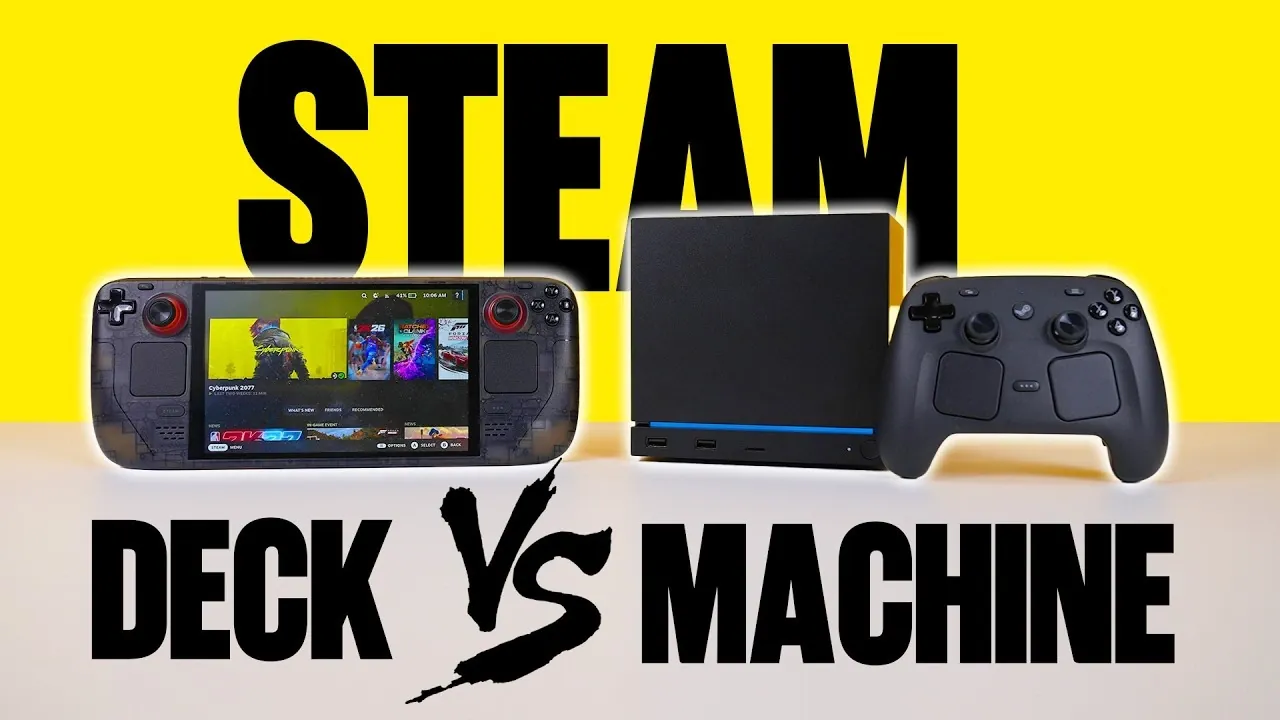
Valve’s Steam Deck and Steam Machine represent two distinct approaches to gaming, each catering to different needs and preferences. The Steam Deck is a portable handheld gaming PC designed for gamers who prioritize mobility, featuring a 7.4-inch OLED display and a lightweight build for on-the-go play. In contrast, the Steam Machine is a compact, console-style gaming PC built for high-performance gaming in a living room setup, offering significantly more power with its AMD Zen 2 CPU and RDNA 3 GPU. As Tech Fowler explores, choosing between these devices involves weighing factors like portability, performance and compatibility with your gaming library.
Dive into this overview to understand how the Steam Deck’s portability compares to the Steam Machine’s raw power and TV-focused design. You’ll gain insight into their hardware capabilities, including the Steam Deck’s haptic feedback trackpads and the Steam Machine’s support for higher resolutions. Additionally, discover how SteamOS impacts game compatibility and why pricing plays a critical role in determining which device offers better value for your gaming needs.
Steam Machine vs Steam Deck
TL;DR Key Takeaways :
- The Steam Deck is a portable handheld gaming PC with a 7.4-inch OLED display, offering mobility and convenience but limited raw power compared to newer handheld PCs.
- The Steam Machine is a compact, console-style gaming PC designed for TV setups, boasting superior hardware for high-resolution gaming but limited by its Linux-based SteamOS compatibility.
- Both devices are premium-priced, with the Steam Deck starting at $789 and the Steam Machine at $1,049, making them less accessible to budget-conscious gamers.
- The Steam Deck excels in portability and casual gaming, while the Steam Machine is ideal for gamers seeking high performance and immersive experiences in a living room setup.
- SteamOS limits compatibility with Windows-only games, particularly those requiring anti-cheat software, which may restrict game library options for both devices.
What is the Steam Deck?
The Steam Deck is a portable handheld gaming PC tailored for gamers who prioritize mobility and convenience. It features a 7.4-inch OLED display with a resolution ranging from 720p to 800p, delivering vibrant visuals ideal for gaming on the go. Powered by a custom AMD Zen 2 APU with integrated RDNA 2 graphics, the Steam Deck provides solid performance for its size, though it falls short of newer handheld PCs in terms of raw power.
Weighing under 700 grams, the Steam Deck is lightweight and ergonomically designed for extended gaming sessions. Its battery life varies between 3 to 10 hours, depending on the demands of the game being played. However, recent price increases, starting at $789 for the base model and reaching $949 for the 1TB version—have made it less competitive in the growing handheld PC market. Despite these challenges, the Steam Deck excels at delivering a console-like experience for gamers who value portability and ease of use.
What is the Steam Machine?
The Steam Machine, on the other hand, is a compact, console-style gaming PC designed for use with a TV or entertainment center. Equipped with a 6-core AMD Zen 2 CPU and RDNA 3 GPU, it offers significantly more power than the Steam Deck. This hardware enables smooth gaming at 1080p and 1440p resolutions, with support for some 4K titles. Valve claims the Steam Machine is 5-6 times more powerful than the Steam Deck, making it a better choice for AAA games and future-proof performance.
Starting at $1,049, with high-end models priced at $1,428, the Steam Machine is a premium device aimed at gamers seeking a powerful, TV-connected gaming experience. Its sleek design integrates seamlessly into entertainment centers, making it an attractive option for living room setups. However, its reliance on SteamOS, a Linux-based operating system, limits compatibility with certain Windows-only games, particularly those requiring anti-cheat software. This limitation may deter gamers with diverse libraries or those who rely heavily on Windows-exclusive titles.

Unlock more potential in Steam Deck by reading previous articles we have written.
- 15 Games That Play Surprisingly Perfectly on the Steam Deck
- Valve Confirms Steam Deck 2 Development with a 2028 Release Target
- Don’t Wait for Valve: Build Your Own Steam Machine in 2026
- Why Gamers Are Abandoning the Steam Deck OLED After Its Massive Price Hike
- Why Valve’s New Steam OS Update Completely Changes How You Use Your Deck
- Why Gamers Are Skipping the Steam Deck OLED for This $450 Handheld
- Why Valve’s Latest SteamOS Update Changes Everything for Your Steam Machine
- Steam Deck Alternative: Legion Go S Packs Ryzen Z2 Go for $550 on Used Market
- Valve Delays Steam Machine and Raises Steam Deck Prices
- Forza Horizon 6 on SteamOS : Steam Deck vs Z2 Go vs Z1 Extreme Tested
Performance and Compatibility
Both the Steam Deck and Steam Machine are optimized for SteamOS, making sure smooth performance for compatible games. However, the Linux-based operating system has inherent limitations when it comes to supporting Windows-only titles, especially those with strict anti-cheat requirements. This can be a significant drawback for gamers who enjoy a wide variety of games across different platforms.
Steam Deck: The Steam Deck prioritizes portability but offers lower resolution and performance compared to the Steam Machine. It is best suited for casual or indie gaming on the go, where convenience and mobility are more important than graphical fidelity.
Steam Machine: The Steam Machine’s superior hardware makes it ideal for high-resolution gaming and demanding AAA titles. Its raw power and future-proof design cater to gamers who prioritize performance and immersive experiences.
Ultimately, the Steam Machine’s enhanced capabilities make it a better choice for gamers seeking high performance, while the Steam Deck is ideal for those who value mobility and convenience over graphical power.
Value and Market Considerations
When evaluating the value of these devices, it’s essential to consider their respective markets and target audiences. Both the Steam Deck and Steam Machine face challenges in terms of pricing and accessibility, which may influence their appeal to different types of gamers.
Steam Deck: The Steam Deck’s recent price increases have reduced its competitiveness, particularly when compared to other handheld PCs entering the market. While it remains a strong option for portable gaming, budget-conscious buyers may find better alternatives that offer similar features at a lower cost.
Steam Machine: The Steam Machine provides better price-to-performance for gamers seeking a compact, high-powered gaming PC. However, its high starting price and niche appeal limit its accessibility to a broader audience. It is primarily targeted at gamers with disposable income or those looking for a secondary device for their living room.
Each device caters to a specific audience. The Steam Deck is perfect for gamers who prioritize convenience and portability, while the Steam Machine is better suited for those seeking a powerful, TV-connected gaming experience. For many users, exploring alternative options in the handheld and gaming PC markets may provide better value or performance.
Build Quality and Features
Both the Steam Deck and Steam Machine are constructed with high-quality materials, making sure durability and reliable performance during extended gaming sessions. However, their features and designs differ significantly, catering to distinct use cases.
Steam Deck: The Steam Deck includes innovative features such as haptic feedback trackpads, which enhance usability and precision and a vibrant OLED screen that improves visual appeal. These features make it a compelling choice for gamers who value portability and intuitive controls.
Steam Machine: The Steam Machine features a sleek, minimalist design that fits seamlessly into any entertainment center. It offers multiple ports for connectivity, making it a versatile addition to a living room setup. However, it lacks sufficient USB-C connectivity, which may be a limitation for users with modern peripherals or accessories.
Limitations to Consider
Despite their strengths, both devices come with notable limitations that may affect their appeal to certain gamers:
- High Prices: Both the Steam Deck and Steam Machine are premium devices, making them less accessible to budget-conscious gamers.
- SteamOS Compatibility: The Linux-based operating system limits support for Windows-only games, particularly those with anti-cheat requirements, which may restrict game library options.
- Niche Appeal: The Steam Machine targets a specific audience, primarily PC gamers seeking a secondary device or adults with disposable income. Meanwhile, the Steam Deck’s limited power and increased cost reduce its competitiveness in the handheld gaming market.
Which Device Should You Choose?
Your decision between the Steam Deck and Steam Machine ultimately depends on your gaming preferences, priorities and budget:
- Choose the Steam Deck if you value portability and enjoy gaming on the go. It’s an excellent option for casual or indie gamers who prioritize convenience over raw power.
- Opt for the Steam Machine if you want a powerful, compact gaming PC for your TV. Its superior performance and sleek design make it ideal for high-resolution gaming in a living room setup.
Both devices come with high price tags and their value depends heavily on your specific use case. For many gamers, exploring alternative options in the handheld and gaming PC markets may provide better performance, affordability, or compatibility with a wider range of games.
Media Credit: Tech Fowler
Disclosure: Some of our articles include affiliate links. If you buy something through one of these links, Geeky Gadgets may earn an affiliate commission. Learn about our Disclosure Policy.
