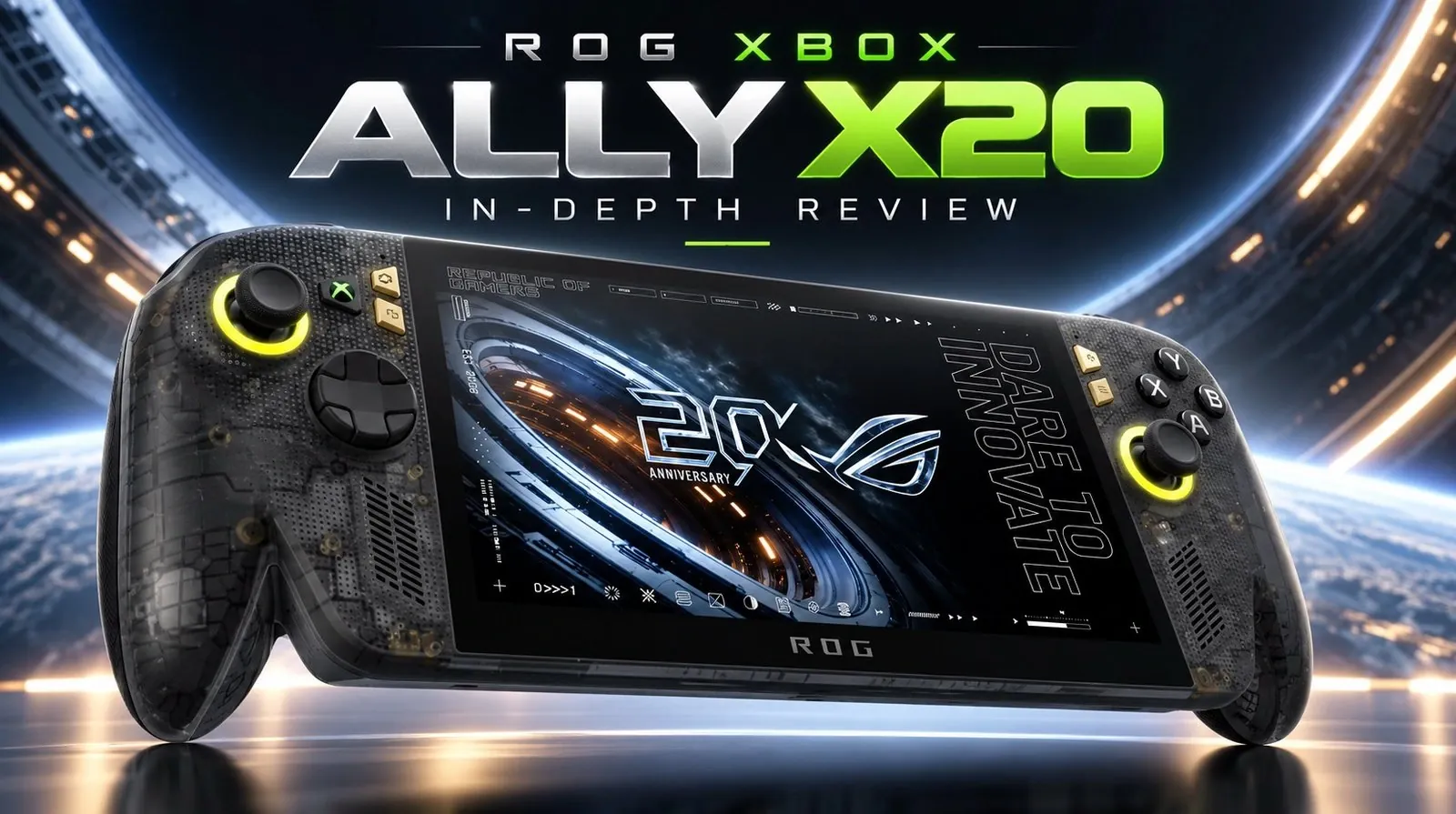
The ROG Xbox Ally X20 represents a thoughtful mid-cycle update to the Ally X, blending familiar hardware with targeted refinements. Retro Game Corps explores how this device builds on its predecessor by maintaining the AMD Ryzen Z2 Extreme chipset while introducing upgrades like a 7.4-inch OLED display with 1080p resolution and 120Hz refresh rate. The addition of a rubberized back texture and TMR analog sticks enhances comfort and precision, making it more appealing for extended gaming sessions. However, with a $1,300 price tag—$300 more than the Ally X, its value hinges on whether these incremental improvements meet the needs of both new buyers and existing users.
Dive into this assessment to uncover key insights about the X20’s performance and usability. Learn how its battery life and cooling system fare under different gaming scenarios and explore the trade-offs between its refined design and aging chipset. You’ll also gain clarity on how the X20 stacks up against competitors like the MSI Claw and whether its premium pricing aligns with its feature set. This breakdown offers a clear-eyed look at whether the X20 is a balanced upgrade or a missed opportunity in the handheld gaming market.
ROG Xbox Ally X20
TL;DR Key Takeaways :
- The ROG Xbox Ally X20 features a 7.4-inch OLED display with 1080p resolution, 120Hz refresh rate, 100% DCI-P3 color accuracy and improved durability with Gorilla Glass Victus and anti-reflective coating.
- Design refinements include a rubberized back for better grip, transparent shell with gold accents, upgraded TMR analog sticks and a redesigned D-pad for enhanced ergonomics and control precision.
- Performance is powered by the AMD Ryzen Z2 Extreme chipset, but it shows its age compared to newer competitors, with marginal gains from increased TDP and limited battery life for demanding games.
- Software improvements, such as Xbox mode and Armory Crate customization, are incremental, with usability issues and underwhelming HDR handling remaining concerns.
- Priced at $1,300, the X20 offers premium features but faces stiff competition and may not justify the cost for existing Ally X users due to its incremental upgrades.
Display: A Visual Upgrade
The X20’s 7.4-inch OLED display is one of its standout features, offering a 1080p resolution paired with a smooth 120Hz refresh rate. With brightness levels of 600 nits for SDR and 400 nits for HDR, the screen delivers vibrant visuals even in well-lit environments. Its 100% DCI-P3 color accuracy ensures vivid and precise colors, making it an excellent choice for gamers who value visual fidelity.
Additional enhancements, such as an anti-reflective coating and Gorilla Glass Victus, improve usability and durability. These features reduce glare and protect the screen from scratches, making sure a more immersive gaming experience. The thinner bezels further enhance the display’s appeal, drawing you deeper into the action. While the OLED panel is a significant improvement, it doesn’t represent a innovative leap compared to other OLED-equipped handhelds on the market.
Design and Hardware: Refinements Over Familiarity
The X20 retains the core hardware of its predecessor, featuring the AMD Ryzen Z2 Extreme CPU, Radeon 890MG GPU, 24GB of LPDDR5X RAM, and 1TB of storage. While these specifications remain unchanged, the device introduces thoughtful design updates that enhance its overall appeal.
A rubberized back texture improves grip, making the device more comfortable to hold during extended gaming sessions. The transparent shell with gold accents adds a premium aesthetic, giving the X20 a distinctive look. At 756 grams, it is slightly heavier than the Ally X but remains lightweight for its category.
The controls have also been upgraded, with TMR analog sticks featuring higher tension for improved precision and a redesigned D-pad that enhances responsiveness. These refinements elevate the gaming experience, making the X20 feel more polished. However, the updates stop short of delivering a generational leap in design or functionality.

Become an expert in ROG Xbox Ally with the help of our in-depth articles and helpful guides.
- Preorder the $1,299 ROG Xbox Ally X20 Before October 15th 2026
- ROG Xbox Ally X20 Ditches the Original IPS for a 120Hz OLED
- New ROG Xbox Ally X20 Hands-on: Upgrades to OLED, Retains APU
- Native 1080P Fails Halo Campaign Evolved on ROG Xbox Ally X
- ROG Ally X Mod Uses a 1080P 120Hz Screen for Nintendo DS
- ROG Xbox Ally & Ally X: Microsoft’s Handheld Play is HERE!
- ASUS Releases Ally X Driver 26.6.1 for Forza Horizon 6
- ROG XBOX Ally Windows Handheld : ASUS and Xbox Team Up
- Windows 11 vs SteamOS : Which Wins on the Ally X?
- Xbox ROG Ally X vs ROG Xbox Ally Compared : Affordable or Premium?
Performance and Battery Life: Consistency with Limits
The X20 delivers reliable performance, supported by a quiet and efficient cooling system. On battery power, the device maintains a maximum temperature of 67°C, while plugged-in usage peaks at 77°C, making sure comfortable operation. Battery life varies depending on usage, offering over two hours for demanding AAA titles and up to eight hours for less intensive games.
The device allows users to increase the TDP (Thermal Design Power) from 25W to 35W, but the performance gains are marginal, making 25W the practical limit for most scenarios. While the Z2 Extreme chipset continues to perform well, it is beginning to show its age, especially when compared to newer competitors like the Intel G3 Extreme, which offers significantly better performance.
Software and Usability: Incremental Improvements
The X20 runs on Windows 11, with an Xbox mode designed to simplify navigation for gaming. While the concept is promising, the interface feels somewhat clunky and HDR handling shows only minor improvements over its predecessor. The inclusion of Armory Crate software allows users to customize controls and settings, offering flexibility for different gaming scenarios. However, the overall software experience feels iterative rather than fantastic, leaving room for further refinement in future iterations.
Pricing and Value: A Premium Proposition
With a price tag of $1,300, the X20 is positioned as a premium option in the handheld PC market, costing $300 more than the Ally X. While it offers competitive pricing compared to other Z2 Extreme devices like the $2,000 Legion Go 2, the incremental improvements may not justify the cost for existing Ally X users. For those considering an upgrade, the trade-in value of their current device could play a significant role in the decision-making process.
Strengths
- Refined ergonomics and premium design.
- Improved display with vibrant colors and thinner bezels.
- Quiet operation and efficient cooling system.
Weaknesses
- Minimal performance gains over the Ally X.
- Xbox mode and software feel underdeveloped.
- High price relative to the incremental improvements.
Competition: How Does It Stack Up?
The X20 faces stiff competition from devices like the MSI Claw, which features the Intel G3 Extreme chipset. The Claw delivers a 54.5% performance boost over the Z2 Extreme but comes with a higher price tag of $1,800. While the X20’s OLED display is a strong selling point, it doesn’t outshine other OLED-equipped handhelds. For gamers prioritizing raw performance, newer devices may offer better value despite their higher cost.
Final Thoughts: A Solid, Yet Unspectacular Upgrade
The ROG Xbox Ally X20 is a well-rounded handheld PC that offers meaningful upgrades in display quality, controls, and design. It is an excellent choice for first-time buyers entering the handheld gaming market, providing a balanced mix of performance and usability. However, for existing Ally X owners, the incremental improvements and higher price may not justify an upgrade.
While the X20 excels in ergonomics and display technology, its aging chipset and steep cost could deter those seeking innovative performance. Ultimately, the X20 is a solid option but falls short of being a new entry in an increasingly competitive market.
Media Credit: Retro Game Corps
Disclosure: Some of our articles include affiliate links. If you buy something through one of these links, Geeky Gadgets may earn an affiliate commission. Learn about our Disclosure Policy.
