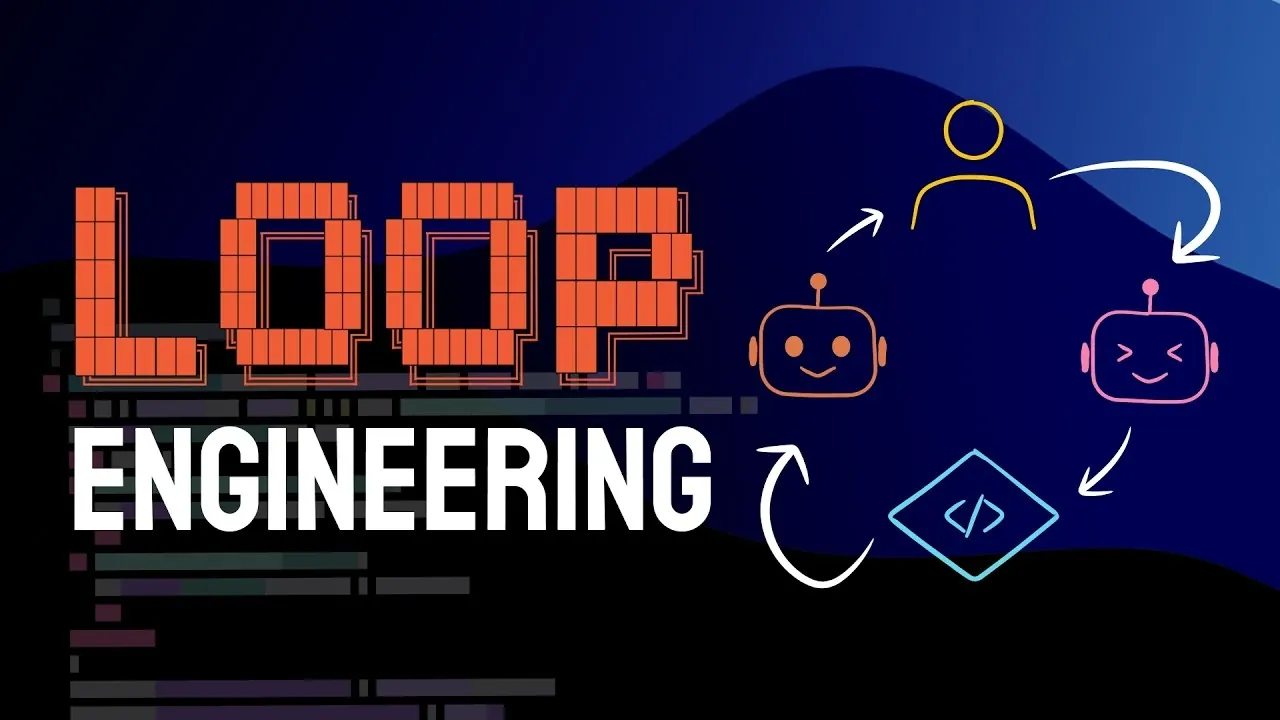
The concept of “loop engineering” has become a focal point in discussions about AI coding, but as Solo Swift Crafter explains, it often leads to oversimplified and inefficient workflows. This approach, which emphasizes retry loops as a central mechanism, risks reducing AI development to repetitive, isolated tasks while neglecting broader considerations like scalability and collaboration. For instance, retry loops may address surface-level errors but fail to resolve deeper, systemic issues, resulting in wasted computational resources and increased debugging complexity. A more effective strategy involves integrating human expertise, reliable code and AI agents into cohesive workflows that prioritize adaptability and long-term success.
In this deep dive, you’ll explore why retry loops alone cannot sustain efficient AI workflows and how to move toward a more balanced, scalable approach. Discover how human engineers play a critical role in strategic oversight, why reliable code serves as the backbone of any workflow and how AI agents can complement these elements by handling repetitive or narrowly defined tasks. By understanding these dynamics, you can design systems that not only address immediate challenges but also remain resilient in the face of evolving requirements.
What’s Wrong with “Loop Engineering”?
TL;DR Key Takeaways :
- “Loop engineering” is a limited approach that oversimplifies AI workflows by focusing on retry loops, neglecting broader strategic planning, collaboration and scalability.
- Effective AI workflows require the integration of three core components: human expertise for oversight, reliable code for consistency and AI agents for automation of specific tasks.
- Code serves as the backbone of AI systems, offering predictability and scalability, while minimizing errors and allowing efficient collaboration between humans and AI agents.
- Agentic engineering emphasizes role specialization and collaboration, combining human oversight with AI automation to ensure both speed and accuracy in workflows.
- Scalable workflows balance automation with human oversight, using tools like knowledge management systems and version control to create adaptable, efficient and future-proof systems.
“Loop engineering” emphasizes retry loops as a central mechanism in AI coding. While retry loops can be helpful for error handling or refining outputs, they fall short as a holistic solution. This approach risks reducing AI development to repetitive, isolated tasks, neglecting the broader context in which AI agents, human engineers and code interact. By framing AI coding around loops, you may overlook essential elements such as strategic planning, collaboration and scalability, factors that are indispensable for long-term success.
Focusing too narrowly on retry loops can also lead to inefficiencies. For example, retry loops often address symptoms of deeper issues rather than solving the root cause. This can result in wasted computational resources and increased complexity in debugging. A broader perspective that considers the interplay between humans, code and AI agents is necessary to overcome these limitations.
Rethinking AI Developer Workflows
To move beyond the constraints of “loop engineering,” you should focus on designing workflows that integrate three core components: human expertise, reliable code and AI agents. Each component plays a distinct and complementary role in creating a cohesive system:
- Humans: Provide strategic oversight, making sure that the system aligns with project goals, adapts to new challenges and maintains ethical standards.
- Code: Serves as the backbone of the system, offering consistency, predictability and a foundation for scalable and reliable workflows.
- AI Agents: Execute specific, bounded tasks that benefit from automation, such as generating drafts, processing repetitive tasks, or analyzing large datasets.
When these elements are effectively integrated, they create a workflow that is greater than the sum of its parts. This approach not only enhances efficiency but also ensures that the system remains adaptable to evolving requirements.
Find more information on AI workflows by browsing our extensive range of articles, guides and tutorials.
- Launch Claude Code Development Tasks via the Logitech MX Keypad
- AI Workflow Automation with n8n : A Beginner-Friendly Guide
- Google Workspace Gemini Flows : Makes Creating AI Agents Easy Using a Single Prompt
- Build AI Automation Agents in Minutes Without Coding Using n8n & Claude
- 6 Google Workspace Studio Automations : Transform Gmail, Docs & Forms into a Hands-Free Helper
- AI Coding : Master Multi-Agent Workflows to Ship Faster in 2026
- Easily create AI automated workflows using Leap AI no-code drag-and-drop UI
- Use no-code AI automation on workflows and tasks with VectorShift
- 7 AI Prompt Libraries to Supercharge Your Workflows
- Building AI-First Automations with Trigger.dev, Modal, and Supabase
The Critical Role of Code
Code is the most reliable and consistent element in any AI workflow. Unlike AI agents, which can produce variable results depending on their training data and input, code operates within clearly defined parameters. This predictability makes code an essential foundation for building stable and scalable systems.
By using code effectively, you can minimize errors and create workflows that are both robust and efficient. For instance, well-structured code can automate routine tasks, freeing up human engineers to focus on higher-level responsibilities. Additionally, code can serve as a bridge between human expertise and AI agents, making sure that all components of the workflow operate in harmony.
What is Agentic Engineering?
Agentic engineering offers a strategic framework for integrating humans, code and AI agents into cohesive workflows. This approach emphasizes collaboration and role specialization, making sure that each component contributes to the system’s overall success. In this model:
- Humans: Handle high-level tasks such as planning, reviewing and refining workflows to ensure alignment with project objectives.
- AI Agents: Perform repetitive or narrowly defined tasks, allowing human engineers to focus on more complex and creative responsibilities.
For example, an AI agent might generate an initial draft of code or analyze a dataset, which a human engineer then reviews and refines. This collaborative process combines the efficiency of automation with the quality control of human oversight, making sure both speed and accuracy.
Scaling for Growth
As workflows evolve, scalability becomes a critical consideration. By gradually incorporating more AI agents and automating routine tasks, you can reduce the need for human intervention in day-to-day operations. However, human engineers remain indispensable for tasks such as:
- Overseeing the system to ensure it operates as intended.
- Addressing edge cases that fall outside the scope of automated processes.
- Adapting workflows to meet changing requirements or new challenges.
Striking the right balance between automation and human oversight is essential for sustainable growth. Over-reliance on automation can lead to vulnerabilities, while insufficient automation can hinder efficiency. A well-designed workflow ensures that both human and AI contributions are optimized for maximum impact.
How to Implement Effective Workflows
To put these principles into practice, consider creating AI-native studios designed specifically for app development and other AI-driven projects. These studios can serve as centralized hubs for integrating tools, workflows and collaboration systems. For example:
- Use knowledge management tools like Notion or Confluence to document processes, share insights and coordinate tasks among team members.
- Develop structured environments that reduce reliance on individual prompts, making sure that workflows are repeatable, scalable and easy to maintain.
- Incorporate version control systems like Git to track changes and maintain consistency across projects.
By fostering a collaborative and organized workspace, you can streamline development processes and maximize the potential of your AI-driven systems. This approach not only enhances efficiency but also ensures that your workflows remain adaptable to future challenges.
Key Takeaway
Rather than relying on the narrow framework of “loop engineering,” focus on designing robust workflows that balance human expertise, code reliability and AI agent capabilities. This comprehensive approach addresses the limitations of retry loops and positions you to build scalable, efficient and adaptable systems. By prioritizing collaboration and strategic planning, you can unlock the full potential of AI in coding and development, making sure long-term success in an ever-evolving technological landscape.
Media Credit: Solo Swift Crafter
Disclosure: Some of our articles include affiliate links. If you buy something through one of these links, Geeky Gadgets may earn an affiliate commission. Learn about our Disclosure Policy.
