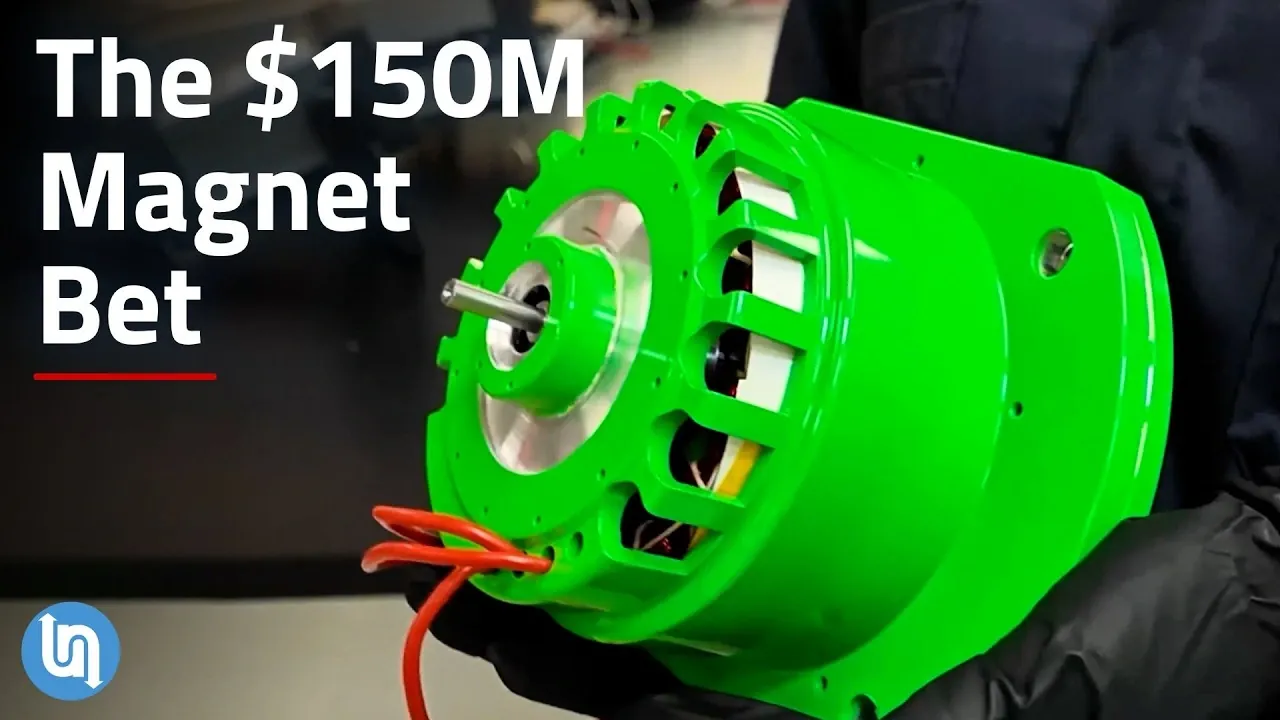
China’s dominance over rare earth magnets has long posed challenges for industries reliant on these critical materials, from electric vehicles to renewable energy systems. Rare earth elements like neodymium and samarium cobalt are essential for producing high-performance magnets, yet over 80% of the global supply is controlled by China. In a recent explainer by Undecided with Matt Ferrell, emerging alternatives such as iron nitride and manganese-bismuth magnets are explored as potential solutions to reduce this dependency. These materials, made from more abundant and environmentally friendly resources, aim to address both supply chain vulnerabilities and ecological concerns, though hurdles like scalability and performance remain.
Dive into the details of how these alternatives are being developed and the specific challenges they face in replacing rare earth magnets. You’ll gain insight into the unique properties of iron nitride magnets, such as their theoretical magnetic strength of up to 2.4 Tesla, and the high-temperature resilience of manganese-bismuth magnets, which makes them ideal for demanding environments. This breakdown also examines the broader implications for industries like renewable energy and electric mobility, offering a clear view of how these advancements could reshape global supply chains.
Understanding Rare Earth Magnet Dependency
TL;DR Key Takeaways :
- Rare earth magnets, critical for technologies like EVs and wind turbines, are predominantly sourced from China, which controls over 80% of the global supply, creating significant supply chain vulnerabilities.
- Emerging alternatives, such as iron nitride and manganese-bismuth magnets, aim to reduce reliance on rare earth elements while addressing environmental and supply chain risks.
- Iron nitride magnets, made from abundant materials like iron and nitrogen, offer potential for high magnetic strength but face challenges in coercivity, scalability and cost-effective production.
- Manganese-bismuth magnets excel in high-temperature resilience and are made from non-toxic, readily available materials, but require further development to match the performance of rare earth magnets.
- Advancements in alternative magnet technologies are reshaping the industry, promoting supply chain resilience and sustainability, though continued research and investment are essential for widespread adoption.
Emerging alternatives, including iron nitride and manganese-bismuth magnets, offer a promising path to reduce this dependency. These materials are being developed to address the limitations of rare earth magnets while mitigating environmental and supply chain risks. However, challenges related to performance, scalability and cost remain, requiring further innovation and investment to meet the needs of modern industries.
Rare earth magnets, such as neodymium and samarium cobalt, are prized for their exceptional magnetic strength and efficiency. These properties make them indispensable in high-performance applications, including EV motors, renewable energy systems and advanced electronics. However, their production is heavily concentrated in China, creating a near-monopoly that leaves industries worldwide vulnerable to supply chain disruptions.
The risks associated with this dependency have become increasingly apparent as trade restrictions and export controls tighten. Without viable alternatives, industries face significant challenges in maintaining the momentum of advancements in renewable energy and electric mobility. This has spurred a global push to develop alternative magnet technologies that can reduce reliance on rare earth elements while maintaining performance standards.
Iron Nitride Magnets: A Sustainable Alternative
Iron nitride magnets, developed by companies like Niron Magnetics, represent a sustainable and innovative alternative to rare earth magnets. These magnets are composed of abundant and environmentally friendly materials, iron and nitrogen, offering a significant advantage in terms of resource availability and reduced environmental impact. Theoretically, iron nitride magnets could achieve a magnetic strength of up to 2.4 Tesla, making them competitive with neodymium magnets in certain applications.
Despite their potential, current prototypes of iron nitride magnets face limitations. Their lower coercivity makes them more susceptible to demagnetization under specific conditions, which can limit their use in demanding environments. Additionally, the manufacturing processes for these magnets are still in development, requiring further refinement to achieve cost-effective and scalable production. Overcoming these hurdles is essential for iron nitride magnets to become a viable alternative in industries that demand high-performance materials.

Browse through more resources below from our in-depth content covering more areas on energy.
- The Island is Shrinking: iPhone 18 Pro Max Leaks Confirm Apple’s Cleanest Display Ever
- The Best Camera Ever: Why the iPhone 18 Pro’s Variable Aperture is the Real Star of 2026
- Ultimate Apple Watch Accessory: EnergyLink Charging Watch Band
- How the Super Soaker Inventor Built a Heat Engine Without Moving Parts
- iPhone 18 Pro: What Apple Isn’t Telling You Yet
- Best Phone Battery Life 2025: OnePlus 15, vivo X300 Pro, & iPhone 17 Pro Max
- The Battery BATTLE ROYALE – iPhone, Pixel, Galaxy, Xiaomi – Who Wins the Drain Test
- iOS 27 Leaks Reveal the End of an Era: Apple’s New Priorities Confirmed
- Apple Just Dropped iOS 26.5 RC2: Here’s Everything New
- Apple Home vs Google Home: How iOS 27 Changes the Ecosystem
Manganese-Bismuth Magnets: High-Temperature Resilience
Manganese-bismuth magnets, under development at institutions such as Ames National Laboratory, offer another promising alternative. These magnets are particularly suited for applications requiring thermal stability, as their coercivity increases with temperature. This unique property makes them ideal for advanced motor technologies and other high-temperature environments where traditional rare earth magnets may falter.
While manganese-bismuth magnets are less powerful than neodymium magnets, they provide distinct advantages in specific use cases. They are made from non-toxic, readily available materials, reducing their environmental footprint and offering a sustainable option for industries seeking alternatives to rare earth elements. However, like iron nitride magnets, they face challenges in achieving the performance and scalability required for widespread adoption. Continued research and development are crucial to unlocking their full potential.
Shifting Market Dynamics
The development of iron nitride and manganese-bismuth magnets is beginning to reshape the magnet industry. While neither technology can fully replace rare earth magnets at present, they offer valuable alternatives for specific applications. Manufacturers are increasingly exploring ways to integrate these new materials into their designs, creating a middle ground between low-cost ferrite magnets and high-performance rare earth magnets.
Ferrite magnets, though inexpensive and widely available, lack the strength needed for demanding applications. In contrast, iron nitride and manganese-bismuth magnets strike a balance between performance, cost and environmental considerations. This diversification of materials has the potential to reduce reliance on rare earth elements, enhance supply chain resilience and mitigate risks associated with geopolitical tensions.
What Lies Ahead
The future of magnet technology hinges on sustained research, innovation and investment. Companies like Niron Magnetics are taking significant steps to scale the production of iron nitride magnets, with facilities such as their plant in Minnesota aimed at advancing manufacturing capabilities. Similarly, research institutions like Ames National Laboratory are making strides in the development of manganese-bismuth magnets, focusing on improving their performance and scalability.
To achieve long-term success, these efforts must address key challenges, including enhancing magnetic strength, improving coercivity and reducing production costs. As global demand for magnets continues to grow, these innovations could play a pivotal role in transforming the magnet industry. By reducing dependency on rare earth elements, they offer a pathway to more sustainable and resilient supply chains, making sure that industries like renewable energy and electric mobility can thrive in the years to come.
Media Credit: Undecided with Matt Ferrell
Disclosure: Some of our articles include affiliate links. If you buy something through one of these links, Geeky Gadgets may earn an affiliate commission. Learn about our Disclosure Policy.
