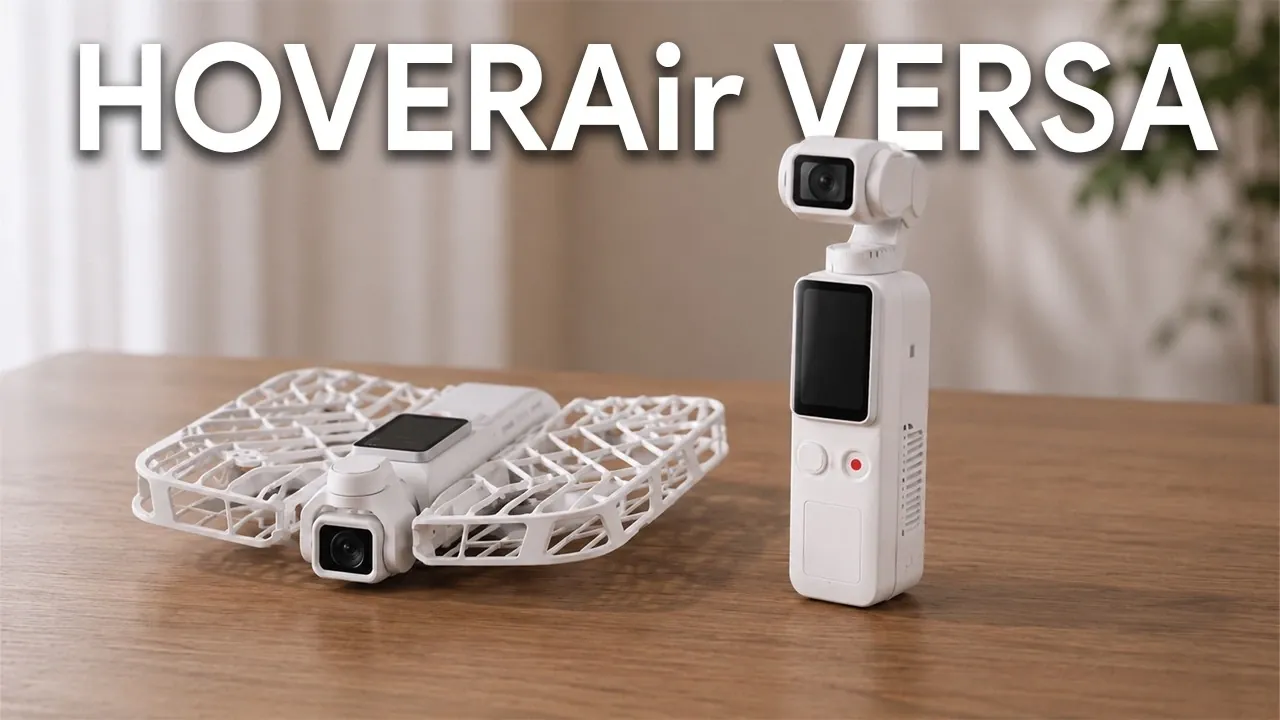
The HOVERAir VERSA is a compact device that merges the capabilities of a drone with a pocket-sized gimbal camera, designed to support versatile content creation. According to TechAvid, one notable feature is the “3D Worlds” mode, which enables the device to autonomously generate a 360° interactive environment around a subject. This functionality highlights its focus on creating immersive content while maintaining portability and ease of use.
Discover how the HOVERAir VERSA addresses challenges such as battery efficiency and heat management in its dual-purpose design. Learn about its modular construction, which allows for potential upgrades and examine the trade-offs involved in combining drone and camera technologies, including considerations around durability and performance.
HOVERAir Versa Apart
TL;DR Key Takeaways :
- The HOVERAir Versa combines a handheld gimbal camera with a compact drone, offering creators a portable and versatile tool for dynamic content creation.
- Key challenges include limited battery life, potential issues with obstacle avoidance, heat management and audio quality, which could impact usability and performance.
- The standout “3D Worlds” feature enables autonomous 360° flights around subjects to create interactive 3D environments, potentially transforming content creation if executed effectively.
- Balancing versatility with durability and performance trade-offs is critical, as the device integrates two functionalities that may not match the specialized capabilities of standalone alternatives.
- Market success hinges on competitive pricing, reliable performance and addressing creators’ practical needs, positioning the HOVERAir Versa as a unique all-in-one solution for content creators.
The HOVERAir Versa distinguishes itself by combining two distinct technologies: a pocket gimbal camera and a drone. This dual-purpose design caters to creators seeking flexibility in capturing dynamic, high-quality content. Its modular construction enhances portability and allows for potential upgrades, making sure adaptability to evolving needs. Unlike conventional drones that emphasize technical specifications, the HOVERAir Versa focuses on usability and convenience, carving out a unique niche in the market. By prioritizing practical application over raw performance, it offers a fresh perspective on how creators can approach their craft.
Key Technical Challenges
While the HOVERAir Versa’s concept is undeniably innovative, it faces several technical challenges that could impact its performance and usability:
- Battery Life: Powering both the drone and camera simultaneously could significantly limit operational time, posing challenges for creators who require extended usage.
- Obstacle Avoidance: The device’s ability to navigate complex environments remains uncertain, necessitating caution during flights to avoid potential collisions.
- Heat Management: The compact design may struggle with effective cooling, potentially affecting performance during prolonged use or in warmer conditions.
- Audio Quality: The small form factor and potential interference from drone components could compromise sound recording, limiting its utility for creators who prioritize audio fidelity.
Addressing these challenges will be critical to making sure the HOVERAir Versa delivers a reliable and seamless user experience.

Gain further expertise in drones by checking out these recommendations.
- 8+ Big drones capable of carrying large payloads and heavy equipment
- DJI Air 4 Leads 2026 Lineup with Upgraded Low-Light Camera
- DJI Neo auto-follow drone for effortless content creation $199
- The Drone Dog Walker is the ideal accessory for your Pet
- How to build a drone tracking radar from scratch
- DJI Osmo 360 II Leaks Reveal a Larger 2150mAh Battery
- DJI Mini 6 Pro Launch is Highly Unlikely Before Late 2026
- Spherical Flying Drone Inspired By The Movies
- DJI Lito X1 Drone Review: 4K Video, Lidar Avoidance, and 26-Minute Flight Time
- Insta360 Patent Suggests Foldable Drone to Rival DJI Neo 2
Image Quality and Standout Features
Details about the HOVERAir Versa’s image quality remain limited, with little information available on its sensor size or lens specifications. However, the device introduces an intriguing feature called “3D Worlds.” This function enables the drone to autonomously fly a 360° path around a subject, creating an interactive 3D environment. This capability has the potential to transform content creation by offering creators a unique way to capture immersive visuals. The success of this feature, however, will depend on the precision of the drone’s flight and the quality of the resulting imagery. If executed effectively, “3D Worlds” could become a defining feature that sets the HOVERAir Versa apart from its competitors.
Balancing Versatility with Practical Risks
The integration of drone and camera technology into a single device introduces inherent trade-offs that must be carefully managed:
- Durability: Combining two functionalities increases the risk of damage in the event of a crash or collision, making durability a key concern for users.
- Performance Trade-offs: The HOVERAir Versa may not match the specialized capabilities of standalone drones or pocket cameras, potentially limiting its appeal to users with specific, high-performance needs.
These trade-offs highlight the delicate balance between versatility and reliability. While the HOVERAir Versa offers a unique solution for creators, its ability to deliver consistent performance across both functionalities will be crucial to its success.
Market Viability and Competitive Edge
The HOVERAir Versa’s market success will largely depend on its pricing strategy and ability to deliver value. To attract creators, it must offer a cost-effective alternative to purchasing separate devices without compromising on quality or functionality. Achieving this balance will be challenging, particularly in a competitive market where both drones and cameras are becoming increasingly specialized. Additionally, the device must provide a seamless and intuitive user experience to gain traction among its target audience. By addressing these factors, the HOVERAir Versa could position itself as a compelling option for creators seeking an all-in-one solution.
Redefining Content Creation
The HOVERAir Versa represents a shift in innovation by prioritizing usability and versatility over incremental technical improvements. If executed effectively, it could establish a new product category and inspire similar devices in the future. By addressing the practical needs of creators, the HOVERAir Versa has the potential to redefine how compact drones and cameras are used in content creation. Its modular design, innovative features like “3D Worlds,” and focus on convenience make it a promising option for those looking to push the boundaries of their creative work. However, its ultimate success will depend on overcoming technical challenges, making sure reliable performance and offering a competitive price point that resonates with its audience.
Media Credit: TechAvid
Disclosure: Some of our articles include affiliate links. If you buy something through one of these links, Geeky Gadgets may earn an affiliate commission. Learn about our Disclosure Policy.
