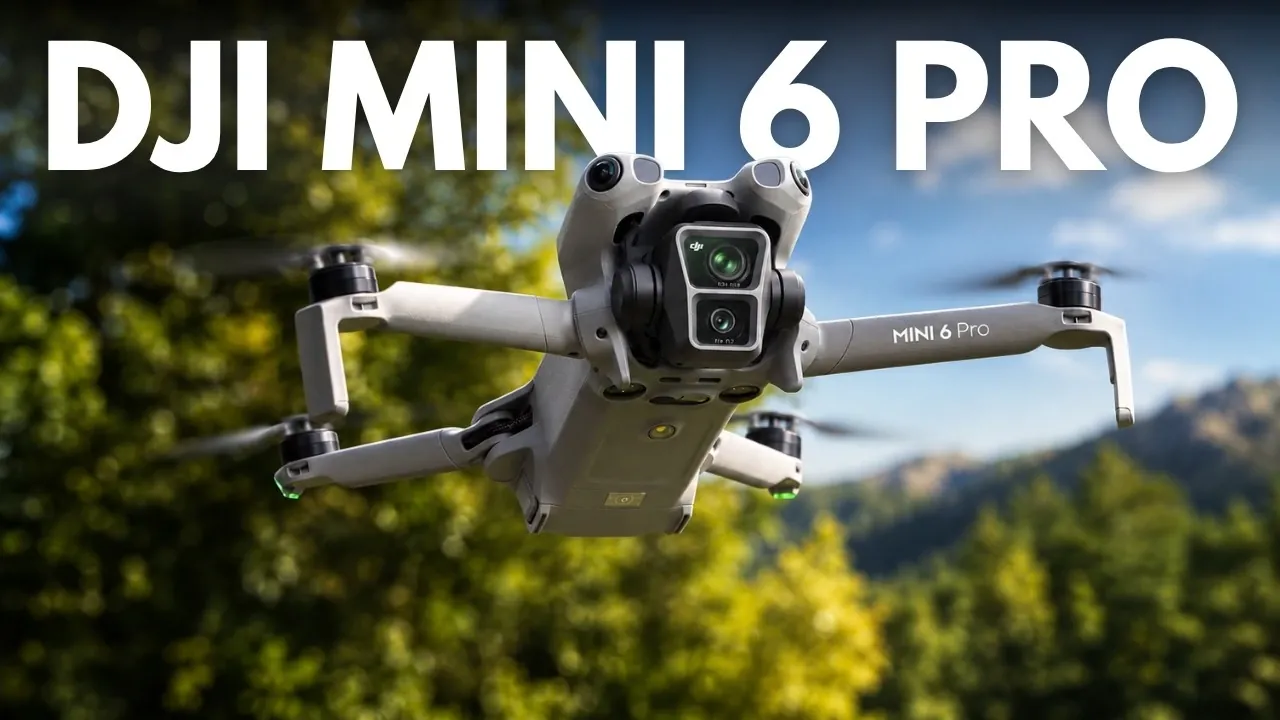
The DJI Mini 6 Pro has sparked widespread discussion, but much of the information circulating about this rumored drone is misleading. As Tech Court explains, the Mini 6 Pro does not currently exist and its release before late 2026 is highly unlikely. This skepticism is grounded in DJI’s predictable two-year product cycle and the significant engineering and regulatory challenges the company faces. For example, integrating features like a stacked CMOS sensor or silicon anode battery technology would require overcoming complex technical hurdles, particularly in terms of heat management and weight optimization.
In this guide, you’ll gain clarity on what’s driving the Mini 6 Pro rumors and how DJI’s historical product strategies can help separate fact from fiction. Explore the plausibility of rumored features like 6K video recording and variable aperture and understand the regulatory and competitive pressures shaping DJI’s decisions. By the end, you’ll be better equipped to navigate the noise and make informed choices about whether to wait for future releases or consider existing options.
Understanding DJI’s Release Cycle
TL;DR Key Takeaways :
- The DJI Mini 6 Pro does not currently exist and rumors about its release are largely based on unverified or AI-generated content, with a potential launch unlikely before late 2026 or early 2027.
- Speculated features include a stacked CMOS sensor, 6K video recording, variable aperture, silicon anode battery technology, predictive tracking and advanced wireless protocols, though these remain unconfirmed.
- Development challenges include noise reduction, battery performance improvements and significant imaging advancements, alongside competition from emerging brands like the Lido X1.
- Regulatory hurdles in the U.S., including DJI’s inclusion on the FCC’s covered list, may delay or limit the Mini 6 Pro’s availability in the American market.
- For now, the DJI Mini 5 Pro is recommended as a reliable option, while consumers are advised to stay informed through credible sources and consider alternatives from other manufacturers.
DJI’s compact Pro series adheres to a relatively predictable two-year release cycle. This pattern suggests that a Mini 6 Pro release is unlikely before late 2026. However, the current wave of rumors lacks credibility, with many leaks originating from speculative AI-driven content rather than reliable sources. This has created confusion among consumers, making it increasingly difficult to distinguish between factual information and baseless claims.
DJI’s historical approach to product development emphasizes gradual innovation rather than dramatic leaps. This measured strategy ensures that each new model offers meaningful improvements while maintaining reliability and user satisfaction. Therefore, any potential Mini 6 Pro release would likely follow this trend, introducing incremental but impactful upgrades.
Rumored Features: What’s Plausible?
While much of the speculation surrounding the Mini 6 Pro is unfounded, some rumored features align with DJI’s technological trajectory and past innovations. These potential upgrades include:
- Stacked CMOS Sensor: This advanced sensor technology could enhance data processing speeds and minimize rolling shutter effects, resulting in superior image quality and smoother performance.
- 6K Video Recording: The possibility of 6K video at 30fps, with short bursts of 60fps, aligns with industry trends. However, thermal management challenges may limit sustained high-resolution recording.
- Variable Aperture: A mechanical aperture ranging from f1.7 to f11 could offer improved exposure control, reducing the need for ND filters in varying lighting conditions.
- Silicon Anode Battery Technology: This innovation might extend flight times to approximately 38–42 minutes. Claims of 60-minute flight durations, however, appear overly optimistic and lack substantiation.
- Predictive Tracking: Enhanced subject tracking capabilities could allow the drone to reacquire moving subjects more effectively, even in obstructed or complex environments.
- Advanced Wireless Protocols: Upgrades to O4+ or O5 transmission protocols may improve signal stability and range, while laser-assisted obstacle detection could enhance navigation in low-light conditions.
These features, while promising, remain speculative and should be approached with caution. DJI’s track record suggests that any new features would be rigorously tested to ensure reliability and practicality.

Gain further expertise in DJI products by checking out these recommendations.
- DJI Pocket 4 Pro is a Much Bigger Upgrade Than Expected
- Why the DJI Osmo Pocket 4P is Launching Under a Completely Different Name in the U.S.
- Why the DJI Pocket 4 Pro’s 1-Inch Sensor is a Game-Changer for Creators
- DJI Pocket 4 Pro Leaks with a 6K Dual-Camera, but US Buyers Might Miss Out
- DJI Osmo Pocket 4P Global Launch is Finally Here
- DJI Osmo Pocket 4 vs Insta 360 Luna Ultra : Everything You Need to Know
- Why the DJI Pocket 4 Pro’s New Dual-Lens System is a Massive Deal
- DJI Pocket 4 vs Pocket 4P : Are the New Pro Features Worth the Upgrade?
- Everything We Know About the DJI Pocket 4 Pro Sensor Upgrade
- How the Half-Priced DJI Lito X1 Drone Outperforms the Mini 5 Pro
Challenges Facing the Mini 6 Pro
The development and potential release of the Mini 6 Pro are not without obstacles. DJI must address several critical challenges to meet consumer expectations and maintain its competitive edge:
- Noise Reduction: Minimizing operational noise is a key priority for consumer drones, particularly for users in urban or noise-sensitive areas.
- Battery Performance: Extending flight times without increasing weight or compromising reliability remains a significant engineering challenge.
- Imaging Improvements: Delivering noticeable advancements in image quality and processing speed is essential to justify an upgrade for existing users.
Additionally, competition from emerging brands like the Lido X1 adds pressure for DJI to innovate meaningfully. These competitors are introducing features that challenge DJI’s dominance, forcing the company to balance innovation with practicality.
Regulatory Hurdles in the U.S.
In the United States, DJI faces heightened regulatory scrutiny, complicating its ability to market and sell new products. The company’s inclusion on the FCC’s covered list has created significant barriers, limiting its access to the U.S. market. This regulatory environment introduces uncertainty regarding the Mini 6 Pro’s availability in the region.
For American consumers, these challenges could result in delays or even the absence of the Mini 6 Pro from the market. Meanwhile, competitors like Autel Robotics may seize this opportunity to expand their presence and capture a larger share of the U.S. drone market.
What Should You Do Now?
For those in immediate need of a drone, the DJI Mini 5 Pro remains a dependable option. It offers a robust feature set and reliable performance, making it a solid choice for both hobbyists and professionals. However, if you are willing to wait and reside in a region unaffected by U.S. regulations, the Mini 6 Pro could be worth considering, provided that rumored features such as the stacked CMOS sensor and variable aperture materialize.
It’s also worth exploring alternatives from other manufacturers, particularly those offering innovative features or competitive pricing. Staying informed through credible sources will help you make an informed decision when the time comes.
Expected Pricing
If the Mini 6 Pro eventually reaches the market, pricing is expected to start at approximately $999 for the base model. Fly More combos, which typically include additional batteries and accessories, are projected to range between $1,299 and $1,499. These price points align with DJI’s existing pricing structure for its Pro series, reflecting the premium nature of the product.
Looking Ahead
The DJI Mini 6 Pro remains a speculative product, with much of the current information rooted in unreliable sources. While some rumored features suggest exciting possibilities, significant challenges must be addressed before the drone can become a reality. For now, consumers are advised to focus on existing models like the Mini 5 Pro or explore competing options while monitoring credible updates about the Mini 6 Pro’s development.
Media Credit: Tech Court
Disclosure: Some of our articles include affiliate links. If you buy something through one of these links, Geeky Gadgets may earn an affiliate commission. Learn about our Disclosure Policy.
