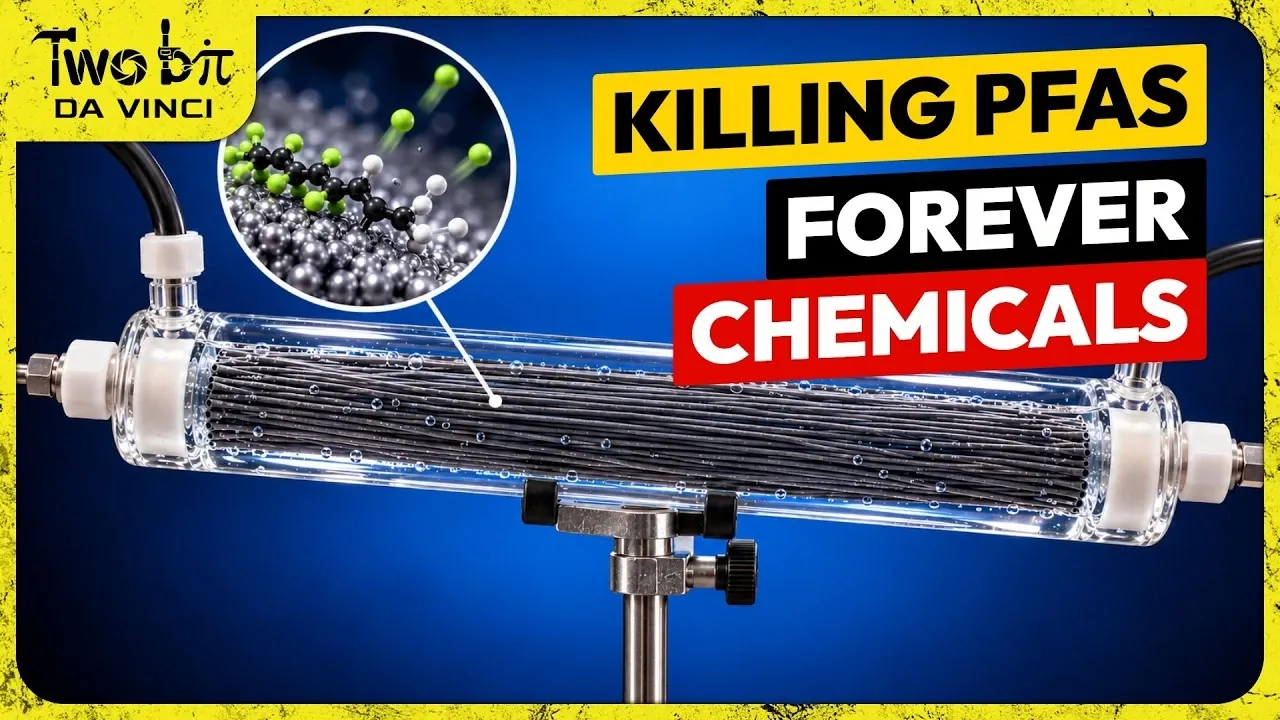
PFAS, often referred to as “forever chemicals,” have long been a persistent environmental challenge due to their resistance to degradation and their links to serious health concerns. In a recent breakdown by Two Bit da Vinci, a new method called hydrodefluorination is explored as a potential solution to this issue. Developed at Arizona State University, this process uses a palladium-coated membrane and hydrogen gas to break the notoriously strong carbon-fluorine bonds in PFAS molecules at room temperature. While the technology has shown promising results, such as achieving 96% removal of PFAS in controlled tests, its scalability and cost remain significant hurdles.
In this guide, you’ll gain insight into how hydrodefluorination differs from traditional PFAS treatment methods, which often fail to destroy the chemicals entirely. Explore the environmental and economic challenges tied to the use of palladium and learn about the steps needed to adapt this technology for real-world applications. By understanding both the potential and the limitations of hydrodefluorination, you’ll be better equipped to appreciate its role in addressing one of today’s most pressing environmental issues.
TL;DR Key Takeaways :
- Arizona State University has developed a new hydrodefluorination technology to break down PFAS (“forever chemicals”) using a palladium-coated membrane and hydrogen gas at room temperature.
- PFAS are synthetic chemicals widely used in consumer and industrial products, but their durability leads to environmental accumulation and serious health risks, including cancer, thyroid disorders and immune system suppression.
- Hydrodefluorination demonstrated promising results in laboratory tests, achieving 96% PFAS removal and 83% fluorine destruction over 58 days, breaking PFAS into less harmful components.
- The technology offers key advantages, such as energy efficiency, environmental safety and the ability to destroy PFAS rather than merely isolating them, unlike traditional methods.
- Challenges like high costs of palladium, membrane durability and scalability for real-world applications must be addressed to make hydrodefluorination a viable large-scale solution for PFAS contamination.
What Are PFAS and Why Should You Care?
PFAS are synthetic chemicals prized for their durability and resistance to heat, water and oil. These properties have made them indispensable across numerous industries, from manufacturing to consumer goods. However, their resilience comes with a major drawback: PFAS do not naturally degrade, leading to their accumulation in the environment and within living organisms.
The widespread presence of PFAS has raised serious health concerns. Research has linked exposure to these chemicals to a range of adverse health effects, including:
- Cancer: Certain types of PFAS have been associated with an increased risk of kidney and testicular cancer.
- Thyroid Disorders: PFAS can disrupt thyroid hormone regulation, leading to metabolic and developmental issues.
- Immune System Suppression: Studies suggest that PFAS exposure may weaken the immune response, reducing the effectiveness of vaccines.
- Developmental Issues: Prenatal and early childhood exposure to PFAS has been linked to developmental delays and reduced birth weights.
Alarmingly, studies indicate that approximately 97% of Americans have detectable levels of PFAS in their blood. This statistic underscores the pervasive nature of PFAS contamination and the urgent need for effective solutions.
Why Are PFAS So Hard to Remove?
The removal of PFAS from the environment poses a significant challenge due to the unique chemical properties of these substances. Traditional methods, such as carbon filtration and reverse osmosis, can extract PFAS from water but fail to destroy them. Instead, these techniques concentrate PFAS into waste streams, which are often incinerated or sent to landfills. Unfortunately, these disposal methods risk reintroducing PFAS into the environment, perpetuating the cycle of contamination.
The difficulty in breaking down PFAS lies in the strength of the carbon-fluorine bond, one of the most stable chemical bonds known. This bond gives PFAS their remarkable durability but also makes them resistant to conventional degradation processes. As a result, developing a method to effectively destroy PFAS has become a critical focus for researchers and environmental scientists.

Explore further guides and articles from our vast library that you may find relevant to your interests in energy.
- Proxima Fusion Plans the Alpha Stellarator for the Early 2030S
- Google Partner Project Red Yields Only 40-60% of Target Power
- Google Project Suncatcher Uses Space Solar Panels for AI
- MIT Says Energy-Storing Concrete Improves 10-fold by Switching to Organic Electrolyte
- Bloom Energy Server – Bloom Box Fuel Cell Gets Official
- 2025’s Best Keyboards : Gamers & Creatives Say Goodbye to Boring Keyboards
- Sun-Ways Installs 18 kW Removable Solar Panels on Train Tracks
- CATL Targets Lithium-Air Batteries for 1,000-Mile EV Range
- Apple Silicon AI Performance: Local Al on Apple Silicon Uses 7X Less RAM
- Apple Watch Ultra 4 Leak Reveals Redesign and Health Features
How Hydrodefluorination Works
Hydrodefluorination offers a novel and potentially fantastic approach to PFAS treatment. The process works by replacing the fluorine atoms in PFAS molecules with hydrogen, effectively breaking apart the molecule. This reaction is facilitated by a palladium-coated membrane and operates under mild conditions, including room temperature and low pressure.
In laboratory experiments, the hydrodefluorination process demonstrated impressive results:
- 96% removal of PFAS from water samples
- 83% destruction of fluorine over a 58-day testing period
Unlike traditional methods, which merely isolate PFAS, hydrodefluorination breaks them down into less harmful components. This capability represents a significant step toward a more sustainable and effective solution for PFAS contamination.
Key Advantages of Hydrodefluorination
Hydrodefluorination offers several distinct advantages over existing PFAS treatment methods, making it a promising candidate for addressing this widespread issue:
- Energy Efficiency: The process operates at room temperature, significantly reducing energy consumption compared to high-temperature methods.
- Environmental Safety: Unlike techniques that rely on harsh chemicals, hydrodefluorination uses hydrogen gas, making it safer for both operators and the environment.
- Destruction of PFAS: The technology not only removes PFAS from water but also breaks them down into less harmful byproducts, preventing recontamination.
These features position hydrodefluorination as a potentially fantastic tool for mitigating PFAS contamination on a broader scale.
Challenges to Overcome
Despite its potential, hydrodefluorination faces several challenges that must be addressed before it can be widely adopted:
- High Costs: The palladium-coated membrane, a critical component of the process, is expensive, with palladium costing approximately $50,000 per kilogram. Reducing reliance on this material or finding alternative catalysts will be essential to make the technology cost-effective.
- Durability Concerns: The membrane degrades over time, raising questions about its long-term viability and the frequency of replacement required.
- Limited Testing: To date, the technology has only been tested in controlled laboratory settings using acidic water. Scaling it for real-world applications, such as municipal water treatment, will require extensive research and development.
Overcoming these obstacles will be crucial to transitioning hydrodefluorination from a laboratory innovation to a practical solution for widespread PFAS contamination.
Regulatory and Environmental Implications
Growing awareness of the health and environmental risks associated with PFAS has prompted stricter regulations at both federal and state levels. Several states have banned PFAS in specific products, while others have implemented tighter limits on PFAS concentrations in drinking water. These regulatory measures are expected to drive demand for advanced treatment technologies like hydrodefluorination.
However, the widespread adoption of hydrodefluorination will depend on several factors, including funding, regulatory mandates and public-private partnerships. Policymakers, scientists and industry leaders must collaborate to ensure that the necessary resources and infrastructure are in place to support the deployment of this technology.
What Lies Ahead for Hydrodefluorination?
The future of hydrodefluorination hinges on addressing key technical and logistical challenges. To realize its full potential, researchers and stakeholders must focus on:
- Cost Reduction: Developing alternative catalysts or reducing reliance on palladium to lower production costs.
- Scalability: Adapting the technology for diverse applications, including large-scale municipal water treatment and industrial waste management.
- Collaboration: Partnering with policymakers, environmental organizations and industry leaders to secure funding and regulatory support.
These efforts will be instrumental in transforming hydrodefluorination from a promising innovation into a practical and widely accessible tool for combating PFAS contamination.
Hydrodefluorination represents a significant advancement in the fight against PFAS pollution. By breaking the carbon-fluorine bonds that make these chemicals so persistent, this technology offers a pathway to reducing their environmental and health impacts. While challenges such as high costs, scalability and regulatory adoption remain, continued research and collaboration could position hydrodefluorination as a cornerstone of sustainable PFAS treatment, safeguarding public health and the environment for generations to come.
Media Credit: Two Bit da Vinci
Disclosure: Some of our articles include affiliate links. If you buy something through one of these links, Geeky Gadgets may earn an affiliate commission. Learn about our Disclosure Policy.
