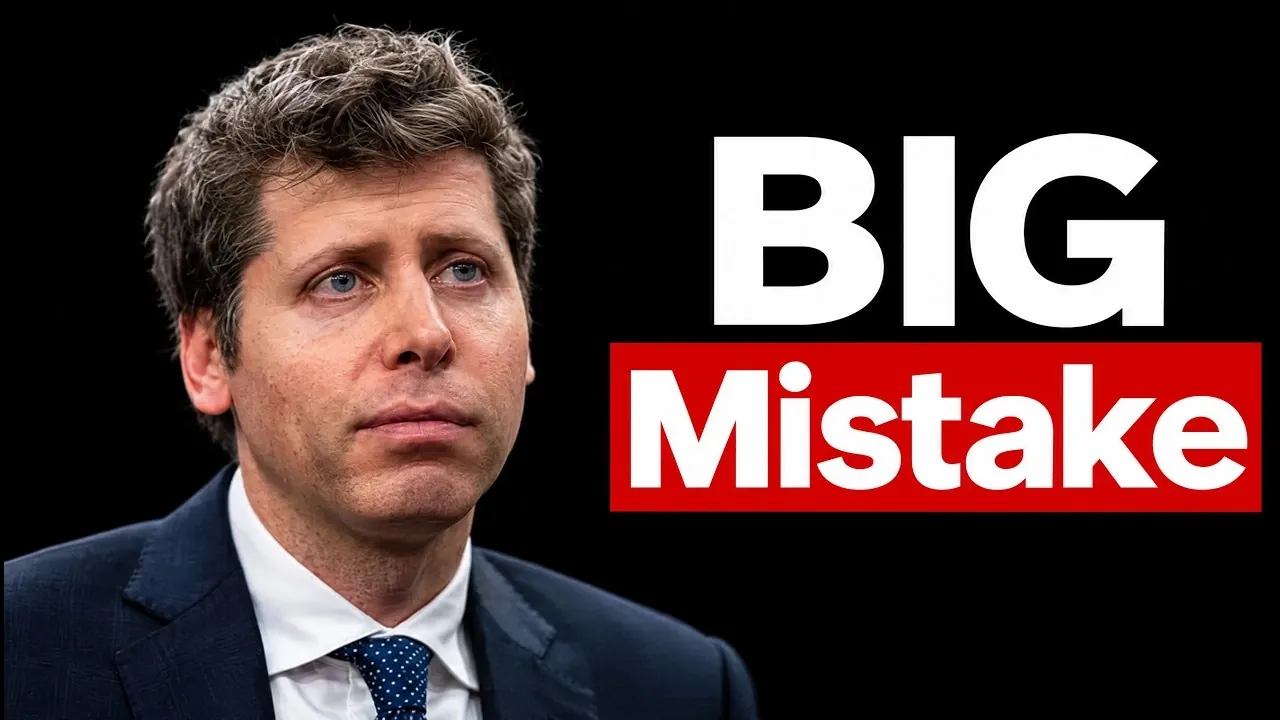
Sam Altman, CEO of OpenAI, recently sparked debate with his assertion that cloud-based AI systems are more efficient than running AI models on personal computers. Speaking on a podcast, Altman pointed to the global shortage of DRAM, a key resource for AI operations, as a major constraint that centralized computing could help address by optimizing resource allocation and reducing costs. However, his remarks were widely interpreted as dismissive of personal computing, fueling broader concerns about access, control and the future of technology. AI Grid examines how this nuanced argument became a focal point for larger discussions about the balance between innovation and individual autonomy.
Dive into the implications of this debate by exploring the trade-offs between centralized and decentralized AI systems, including privacy challenges, recurring expenses for users and the role of personal computing in maintaining autonomy. Understand how the global DRAM shortage impacts AI scalability and consumer costs and examine the public response to Altman’s comments within the broader context of growing skepticism toward AI’s societal influence.
What Did Altman Actually Say?
TL;DR Key Takeaways :
- Sam Altman’s remarks on the inefficiency of running AI models on personal computers sparked controversy, as they were widely misinterpreted as a critique of personal computer ownership.
- Altman advocated for cloud-based AI models to address global DRAM shortages and optimize resource allocation, but his nuanced argument was lost in public backlash.
- Critics of centralized AI models raised concerns about privacy, recurring costs and loss of user autonomy, highlighting tensions between centralized and decentralized computing approaches.
- The incident reflects broader public skepticism toward AI, fueled by concerns over job displacement, rising costs and unequal distribution of benefits, as well as a lack of transparency from AI companies.
- The tech industry faces recurring challenges in communication, with misinterpretations of nuanced discussions amplifying public distrust and hostility toward AI leaders, underscoring the need for transparency and empathetic dialogue.
Altman’s statement was part of a broader discussion on optimizing computing resources for AI. He argued that cloud-based AI models are inherently more efficient than local models, which often fail to fully use available computing power. His reasoning was tied to addressing the global shortage of DRAM (dynamic random-access memory), a critical component for AI systems and promoting cost-effective, widely accessible AI through centralized cloud computing. However, the nuance of his argument was lost in translation, as many interpreted his remarks as an attack on personal computing, sparking widespread backlash.
Public Backlash and Misinterpretation
Altman’s comments quickly became a lightning rod for criticism. Social media platforms were flooded with memes, headlines and out-of-context soundbites that painted his remarks as dismissive of personal computer ownership. This reaction underscores the challenges of conveying nuanced ideas in a digital age dominated by rapid information sharing and reactive discourse. The controversy also reflects a broader tension between the tech industry and the public, as skepticism about AI’s role in society continues to grow.

Expand your understanding of Sam Altman with additional resources from our extensive library of articles.
- OpenAI Plans to Release Astra AGI System by the End Of 2026
- Sam Altman’s Note-Taking Method : Simple System for Complex Ideas
- The Future of AI: Sam Altman’s Controversial Roadmap Explained
- Why OpenAI’s Pivot to Enterprise is Starting to Look ‘Desperate
- OpenAI Launches Vendor-Neutral Agent Plugins Open Standard
- Sam Altman’s Genius Note-Taking Hack to Boost Productivity
- Sam Altman & Elon Musk Just Revealed Their Next AI Models
- Sam Altman Predicts the Singularity: Are We Ready for AI to Surpass Humanity?
- Sam Altman discusses advanced general intelligence (AGI) at Davos
- Sam Altman Reveals ChatGPT-5 : OpenAI’s Simplified AI Promises to Change Everything
The Global Memory Shortage and Its Implications
A key element of Altman’s argument revolves around the ongoing global shortage of DRAM, a vital resource for AI data centers. These facilities require vast amounts of memory to support advanced AI models, driving up demand and costs. However, memory manufacturers have been hesitant to expand production due to fears of repeating past boom-and-bust cycles. This cautious approach has created a bottleneck, impacting not only AI companies but also consumers, who face higher prices and limited availability of personal computing resources.
The memory shortage has far-reaching implications:
- AI Development: Limited memory resources constrain the growth and scalability of AI technologies.
- Consumer Costs: Higher prices for memory components affect both individual users and businesses.
- Technological Access: Restricted availability of memory could widen the gap between those who can afford innovative technology and those who cannot.
Altman’s advocacy for cloud-based AI models is, in part, a response to these challenges, as centralized systems can optimize resource allocation more effectively than individual devices.
Criticism of Centralized AI Models
Despite the potential efficiencies of cloud-based AI, critics have raised valid concerns about this approach. Centralized systems, like those promoted by OpenAI, often benefit large tech companies at the expense of individual autonomy. Key concerns include:
- Privacy: Users may lose control over their data when relying on cloud-based systems, raising questions about how personal information is stored and used.
- Cost: While cloud-based solutions can be cost-effective for companies, they may impose recurring expenses on end users, making them less accessible to some.
- Autonomy: Many users prefer local AI models to maintain independence from large corporations and retain control over their computing resources.
This debate reflects a broader tension between centralized and decentralized computing models, each with distinct advantages and drawbacks. While centralized systems offer scalability and efficiency, they also raise concerns about control, accessibility and equity.
Recurring Challenges in Communication
This is not the first time Altman has faced backlash for his public statements. Previous remarks on topics such as AI risks, energy consumption and the concept of AI as a public utility have also been misinterpreted or taken out of context. Social media platforms often amplify provocative snippets, overshadowing the nuanced discussions behind them. This recurring pattern highlights the difficulty of clear communication in an era of rapid information dissemination and polarized public opinion.
Growing Skepticism Toward AI
The public’s reaction to Altman’s statement is emblematic of a larger wave of skepticism surrounding AI. Concerns about job displacement, rising costs and unequal distribution of benefits have fueled distrust in the technology. Polls indicate that many people fear AI’s impact on their lives, questioning whether its advantages truly outweigh its risks. This skepticism is compounded by a lack of transparency from AI companies, which often focus on promoting the technology’s potential benefits while downplaying its immediate costs and societal impacts.
Hostility Toward AI Leaders
The controversy surrounding Altman’s remarks has also contributed to an increase in hostility toward AI executives. Violent rhetoric and threats against industry leaders have become more common, prompting heightened security measures. This growing hostility risks discouraging transparency and open dialogue, as executives may become more reluctant to engage with the public. The widening gap between AI companies and the general population could hinder efforts to build trust and foster understanding.
Addressing Communication Challenges
The tech industry, particularly in Silicon Valley, has long struggled to effectively address public concerns. While AI leaders often emphasize the fantastic potential of their technologies, they sometimes fail to acknowledge the immediate challenges and trade-offs involved. To rebuild trust and foster a more informed dialogue, the industry must adopt a more transparent and empathetic approach. This includes clearly outlining plans to address pressing issues such as:
- Privacy and Data Security: Making sure that user data is protected and used responsibly.
- Energy Consumption: Reducing the environmental impact of AI systems.
- Resource Allocation: Addressing shortages of critical components like DRAM to ensure equitable access to technology.
By proactively addressing these concerns, AI companies can help bridge the gap between the industry and the public, fostering a more constructive and collaborative relationship.
The Broader Implications of the Debate
While Altman’s comments were misrepresented, the backlash they generated reveals deeper frustrations with the rapid advancement of AI and its associated costs. The incident underscores the importance of clear, transparent communication from AI companies and a commitment to addressing public concerns. Without these efforts, tensions between the tech industry and the public are likely to escalate, potentially hindering the development and adoption of AI technologies. The path forward requires a balanced approach that acknowledges both the opportunities and challenges of AI, making sure that its benefits are shared equitably across society.
Media Credit: TheAIGRID
Disclosure: Some of our articles include affiliate links. If you buy something through one of these links, Geeky Gadgets may earn an affiliate commission. Learn about our Disclosure Policy.
