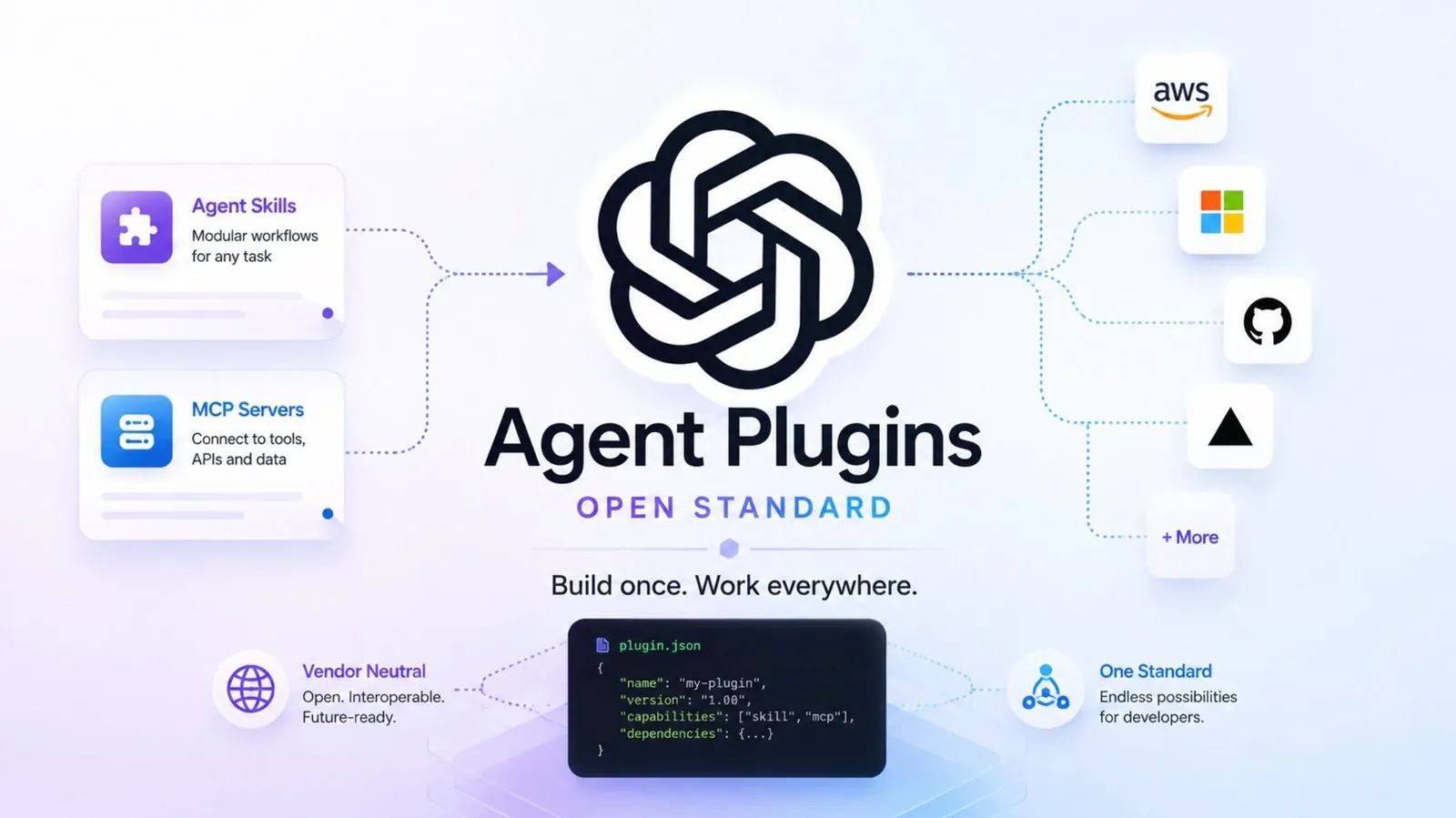
OpenAI introduces Agent Plugins, a vendor-neutral open standard aimed at simplifying the creation and deployment of software agent extensions. By addressing challenges such as platform-specific compatibility, this framework supports more efficient workflows and greater interoperability across systems. The structure is built around two key components: Agent Skills, which are modular workflows for defined tasks and MCP Servers, which assist connections between agents, APIs and external data sources. This design ensures that plugins remain both functional and adaptable as technology evolves.
Discover how the standardized folder structure, including a `plugin.json` manifest, supports consistent integration across platforms. Learn how developers can use the modular design to incorporate Agent Skills, MCP Servers, or both, depending on project needs. This explainer also examines how Agent Plugins balance standardization with flexibility, allowing developers to create scalable solutions without sacrificing customization.
The Importance of Standardization
TL;DR Key Takeaways :
- Agent Plugins introduces a vendor-neutral, open standard developed collaboratively by major tech companies like AWS, GitHub, Microsoft, OpenAI and Vercel, simplifying the creation and deployment of software agent extensions.
- The framework resolves platform-specific compatibility issues by providing a unified structure, accelerating development and enhancing plugin reliability and usability.
- Key components include modular “Agent Skills” for task-specific workflows and MCP Servers for seamless integration with external tools, APIs and data sources.
- The standardized plugin structure, featuring a `plugin.json` manifest, ensures easy discoverability, interoperability and reduced development time across diverse platforms.
- Agent Plugins fosters innovation and collaboration through its open, flexible and developer-centric design, allowing scalable, portable and adaptable solutions for evolving technological needs.
Standardization is a critical factor in the success of Agent Plugins, as it resolves one of the most persistent challenges faced by developers: platform-specific compatibility issues. Without a unified framework, developers often spend significant time and resources adapting plugins to work with different agent platforms. Agent Plugins eliminates this inefficiency by introducing a consistent structure that ensures extensions function reliably across multiple environments. This not only accelerates the development process but also enhances the overall reliability and usability of plugins. By adopting this standard, developers can focus on innovation rather than troubleshooting compatibility problems.
Core Components of Agent Plugins
Agent Plugins is built around two key components that enhance its adaptability and functionality, making it a versatile tool for developers:
- Agent Skills: These are modular, reusable workflows or instructions that enable software agents to perform specific tasks. By packaging these skills into plugins, developers can create scalable and portable solutions that simplify the development process. Agent skills are designed to be flexible, allowing developers to address a wide range of use cases efficiently.
- MCP Servers: Middleware Communication Protocol (MCP) servers act as connectors, linking agents to external tools, APIs and data sources. By integrating MCP servers into plugins, developers can expand the capabilities of their agents without compromising portability or compatibility. This modular approach ensures that plugins remain adaptable to evolving technological requirements.

Here are more detailed guides and articles that you may find helpful on AI Agents.
- How to Design and Implement AI Agents : A Complete Beginners Tutorial
- Why Google Just Split Antigravity 2.0 Into Two Separate Apps
- Stop Struggling with Spreadsheets : Microsoft’s AI Agent Mode is Here
- Inside the Self-Improving AI System Unlocking a Free 1-Million-Token Context Window
- Hermes Agent vs OpenClaw : Hidden Differences That Matter
- Why Hermes Agent is Quietly Replacing OpenClaw for AI Task Automation
- Inside Hermes Agent V2.0: the Hidden Features You Missed
- How Apple Quietly Solved the Biggest Risk in AI Agent Workflows
- Deploy AI Agents 10X Faster Using Anthropic’s Pre-Configured Templates
- The Secret Behind Claude’s 6X Performance Boost: Exploring Dream Mode
Streamlined Plugin Structure
The structure of Agent Plugins is intentionally designed to prioritize simplicity and efficiency. Each plugin is organized as a folder containing a `plugin.json` manifest file at its root. This manifest serves as the blueprint for the plugin, detailing its metadata, capabilities and dependencies. The standardized format ensures that plugins are easily discoverable and interoperable across various platforms. This eliminates the need for custom configurations, reducing development time and allowing seamless integration into diverse environments. By adhering to this structure, developers can create robust and portable plugins that meet the needs of modern software agents.
Developer-Centric Benefits
Agent Plugins offers a range of advantages tailored specifically to the needs of developers, making it an invaluable tool for building and deploying agent extensions:
- Efficiency in Development: The unified format eliminates the need for platform-specific adjustments, allowing developers to focus on creating innovative solutions rather than resolving compatibility issues.
- Enhanced Portability: The open standard ensures that plugins can be easily shared and reused across different systems, reducing redundant work and fostering collaboration.
- Seamless Interoperability: Designed with compatibility in mind, Agent Plugins facilitates smooth integration between agents and third-party tools, enhancing the overall functionality of software ecosystems.
- Scalability for Growth: The flexible architecture supports the addition of new features, allowing developers to adapt their plugins to meet evolving project requirements and technological advancements.
Flexible Implementation Options
Agent Plugins is designed to accommodate a wide variety of use cases, offering developers the flexibility to include agent skills, MCP servers, or both within their plugins. This modular approach allows developers to tailor their solutions to the specific needs of their projects. However, it is important to note that the standard focuses exclusively on packaging and discovery. Elements such as marketplaces, permissions and runtime environments are left open for customization, giving developers the freedom to adapt these aspects to their unique requirements. This balance between standardization and flexibility ensures that Agent Plugins remains a versatile and developer-friendly solution.
A Collaborative and Open Ecosystem
As an open standard, Agent Plugins is freely accessible to all developers, regardless of their preferred platforms or ecosystems. Its vendor-neutral approach encourages collaboration and innovation, breaking down barriers between competing technologies. By adopting this standard, developers contribute to a more unified and efficient ecosystem for software agents, benefiting not only individual projects but also the broader tech community. This collaborative framework fosters the exchange of ideas and resources, driving progress in the field of software agents.
Shaping the Future of Software Agents
Agent Plugins represents a fantastic approach to simplifying the development and integration of software agent capabilities. By providing a standardized, open format, it reduces complexity, enhances portability and promotes interoperability across platforms. Whether you are building modular agent skills, integrating MCP servers, or using both, Agent Plugins offers a flexible and practical solution that enables developers to innovate with confidence. To explore more about Agent Plugins and access additional resources, visit agentplugins.org.
Media Credit: OpenAI
Disclosure: Some of our articles include affiliate links. If you buy something through one of these links, Geeky Gadgets may earn an affiliate commission. Learn about our Disclosure Policy.
