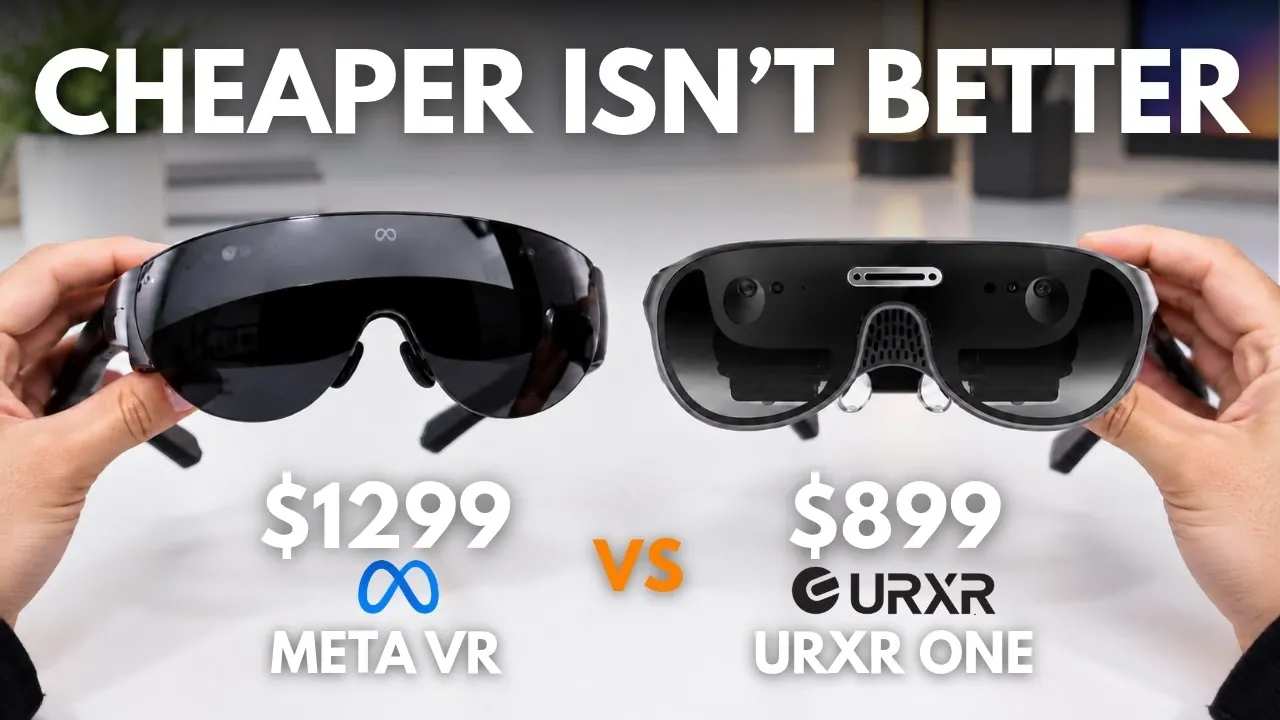
Meta’s latest VR glasses stand out in the crowded wearable tech market by offering a fully integrated computing platform that operates independently of external devices. Unlike competitors such as the URXR1 and XRE 1 Pro, which rely on tethered connections to smartphones or PCs, these glasses are equipped with built-in processing power, storage and an operating system. As Tech Court highlights, this independence allows users to perform essential tasks like web browsing, email management and video conferencing without needing a traditional laptop or desktop. This shift toward standalone functionality positions the glasses as a practical alternative for users seeking portability without sacrificing capability.
Explore how these glasses consolidate multiple devices into a single, lightweight unit while delivering advanced features like hand tracking for natural interaction and Meta AI for intelligent assistance. You’ll also gain insight into how their design prioritizes mobility, making them ideal for remote workers, students and frequent travelers. Additionally, this breakdown examines the challenges Meta must address, such as battery life and text input, to fully realize the potential of this wearable computing solution.
A Fully Integrated Computing Platform
TL;DR Key Takeaways :
- Meta’s VR glasses are a standalone computing platform designed to replace laptops for everyday tasks, offering independence from external devices.
- The glasses feature built-in processing power, storage and an operating system, allowing tasks like web browsing, email management and video conferencing without additional hardware.
- Advanced features such as hand tracking, eye tracking and Meta AI enhance usability, efficiency and interaction for a seamless user experience.
- Targeted at remote workers, students and frequent travelers, the glasses provide a portable and practical alternative to traditional laptops.
- Priced at $1,299, the glasses integrate into Meta’s XR ecosystem, offering access to a wide range of applications and tools, positioning them as a premium wearable computing solution.
At the core of Meta’s VR glasses lies a self-contained computing system that eliminates the need for external devices. These glasses are equipped with built-in processing power, storage and an operating system, allowing them to function independently. When paired with the Compute Puck, users can perform essential tasks such as web browsing, email management and video conferencing without relying on a laptop or desktop. This independence positions the glasses as more than just a wearable accessory, they are a portable computing solution designed to meet the demands of modern users.
By integrating these capabilities, Meta’s glasses aim to simplify workflows and reduce the dependency on traditional hardware. This approach highlights the potential of wearable technology to streamline daily tasks while maintaining high levels of functionality.
Portability Meets Practicality
Meta’s VR glasses are designed with portability and practicality in mind, consolidating the functions of multiple devices into a single wearable unit. This design eliminates the need to carry bulky laptops, keyboards and chargers, offering users greater flexibility and mobility. Whether you’re traveling, working remotely, or simply moving between rooms, the glasses provide a lightweight and efficient way to stay connected and productive.
The compact design of the glasses ensures that users can transition seamlessly between environments without compromising on performance. This portability is particularly beneficial for professionals, students and frequent travelers who require a reliable computing solution on the go.

Discover other guides from our vast content that could be of interest on VR glasses.
- Spring 2027 Launch Set for the $1,300 Meta VR Glasses
- Meta VR Glasses vs URXR One: $1,299 Standalone vs $899 Modular
- Immersive Meta VR Glasses Challenge XREAL Aura AR Vision
- New Meta VR Glasses Pack an IMAX-certified Cinema and Weigh Just 100g
- Meta’s 100-Gram VR Glasses Replace Bulky Headset Designs
- $159 AOC Air Mega AR Glasses Focus on Casual 1080P Gaming
- Meta Connect 2026: Ray-Ban Meta Audio, Ray-Ban Meta Gen 3 and Compact VR Glasses
- $1299 Meta VR Glasses Offer a Portable Laptop Alternative: Hand Tracking, Lightweight
- Wired-only Pimax Dream Air SE Offers a $899 Steam Frame Rival
- Why Xreal Aura’s $1,500 AR Glasses Are Ditching Traditional VR for Spatial Computing
Advanced Features for a Seamless Experience
Meta has incorporated innovative technologies to deliver an intuitive and user-friendly experience. These features are designed to enhance interaction, improve efficiency and reduce reliance on additional peripherals. Key innovations include:
- Hand Tracking: Allows users to interact naturally with virtual interfaces, eliminating the need for physical controllers and creating a more immersive experience.
- Eye Tracking: Improves navigation and input precision, allowing users to complete tasks more efficiently and with greater accuracy.
- Meta AI: Offers contextual assistance, streamlining workflows and enhancing usability by providing intelligent recommendations and support.
These features work together to create a frictionless experience, minimizing setup time and making sure that the glasses are accessible to a wide range of users. By prioritizing ease of use, Meta has positioned its VR glasses as a practical solution for both personal and professional applications.
Target Audience and Use Cases
Meta’s VR glasses are designed for individuals seeking a wearable computing solution that goes beyond being a simple external display. This distinction sets them apart from competitors like the URXR1 and XRE 1 Pro, which focus on augmenting existing devices rather than replacing them. The glasses are particularly well-suited for users who need a device capable of handling basic computing tasks independently.
Potential use cases include:
- Remote workers who require a portable and efficient computing solution.
- Students looking for a lightweight alternative to traditional laptops.
- Professionals who frequently travel and need to stay productive on the go.
By addressing these needs, Meta’s glasses offer a compelling alternative to traditional computing devices, catering to a diverse range of users.
Integration with Meta’s XR Ecosystem
One of the standout features of Meta’s VR glasses is their seamless integration into Meta’s established XR ecosystem. This ecosystem includes a comprehensive library of applications, games and developer tools, making sure a polished and versatile user experience. For users, this means access to a wide range of compatible software and services that enhance the functionality of the glasses. For developers, the ecosystem provides the tools needed to create innovative content and features, fostering a dynamic and evolving platform.
This integration not only enhances the value of the glasses but also positions Meta as a leader in the wearable computing space. By using its existing ecosystem, Meta ensures that users and developers alike can benefit from a cohesive and well-supported platform.
Competitive Landscape
Meta’s VR glasses stand out in a competitive market by offering a fully integrated computing platform. Here’s how they compare to other leading devices:
- XRE 1 Pro: Lightweight external display glasses designed for basic tasks such as watching videos or checking notifications, but reliant on external devices.
- URXR1: Immersive spatial display glasses that require connection to a smartphone or PC for functionality, limiting their independence.
- Meta VR Glasses: A standalone computing solution designed to replace laptops for specific tasks, offering greater independence and versatility.
This differentiation highlights Meta’s commitment to delivering a product that not only competes with but also surpasses existing options in terms of functionality and usability.
Addressing Challenges
Despite their potential, Meta’s VR glasses face several challenges that must be addressed to ensure their success as a laptop alternative:
- Hand Tracking: Making sure reliable and intuitive hand tracking is crucial for natural interaction and user satisfaction.
- Battery Life: The glasses need to support extended use without frequent recharging to meet the demands of active users.
- Text Input: Effective solutions such as virtual keyboards or advanced voice recognition are essential for productivity tasks.
- Software Interface: A user-friendly and robust interface is necessary to make the glasses practical for everyday use.
By addressing these challenges, Meta can enhance the usability and appeal of its VR glasses, paving the way for broader adoption and long-term success.
Pricing and Value Proposition
Priced at $1,299, Meta’s VR glasses are positioned as a premium product. This price reflects the inclusion of advanced hardware, integrated computing capabilities and access to Meta’s XR ecosystem. While the cost may seem high compared to simpler display devices, it underscores the glasses’ role as a standalone computing platform rather than a mere accessory.
For users seeking a versatile and portable computing solution, the glasses offer significant value by consolidating multiple functions into a single device. This pricing strategy aligns with Meta’s goal of delivering a high-quality product that meets the needs of modern users.
The Future of Wearable Computing
Meta’s VR glasses represent a bold step forward in the evolution of wearable computing. By integrating a complete computing platform into a portable device, Meta aims to reduce reliance on traditional hardware while delivering a seamless and intuitive user experience. With features such as hand and eye tracking, Meta AI and access to a robust XR ecosystem, the glasses offer a glimpse into the future of technology.
However, their success will depend on Meta’s ability to address key challenges related to usability, battery life and text input. If these issues are resolved, the glasses have the potential to redefine how users approach portable computing, setting a new standard for innovation in the wearable technology space.
Media Credit: Tech Court
Disclosure: Some of our articles include affiliate links. If you buy something through one of these links, Geeky Gadgets may earn an affiliate commission. Learn about our Disclosure Policy.
