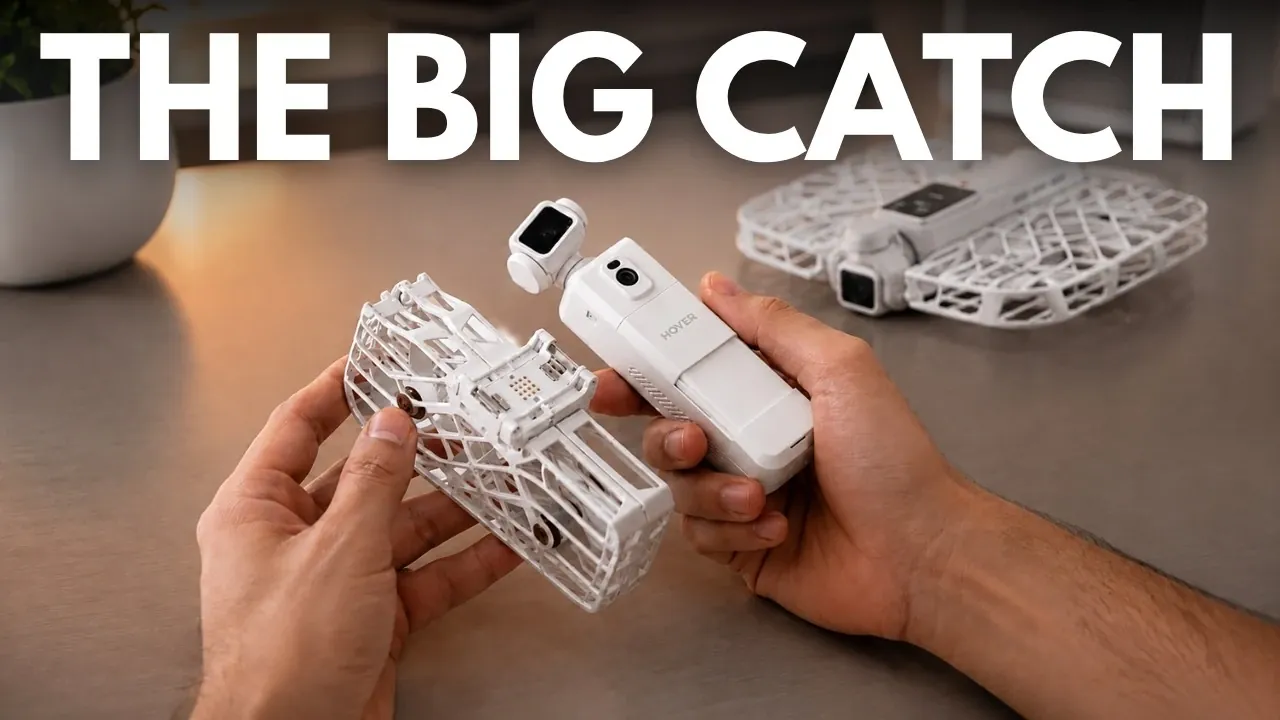
The HoverAir Versa aims to bridge the gap between handheld cameras and drones, offering creators a compact device that transitions seamlessly between ground and aerial footage. With features like a three-axis mechanical gimbal for stabilization, a rotating touchscreen for ease of use and a lightweight design that keeps the total weight under 250g, the Versa prioritizes portability and versatility. However, as Tech Court highlights, its potential is significantly hindered in the U.S. due to regulatory restrictions that prevent the sale of its flight module, effectively limiting the device to a handheld camera in this market.
Explore how the HoverAir Versa stacks up against competitors and what its hybrid design means for creators navigating its unique set of strengths and limitations. You’ll gain insight into its flight performance, including a 14-minute maximum flight time and limited obstacle sensing and learn how these factors impact its usability in real-world scenarios. Additionally, discover how the absence of the flight kit in the U.S. reshapes its appeal and forces it to compete directly with established handheld cameras like the DJI Pocket.
What Sets the HoverAir Versa Apart?
TL;DR Key Takeaways :
- The HoverAir Versa combines a handheld camera and lightweight drone, offering seamless transitions between ground and aerial footage for content creators.
- Key features include a three-axis gimbal for stability, a rotating touchscreen, a removable battery system and lightweight construction under 250g for regulatory compliance.
- Its flight capabilities are limited by a 14-minute maximum flight time and basic obstacle sensing, which may not meet the needs of professional users.
- Regulatory restrictions in the U.S. prevent the sale of the flight kit, reducing its functionality to a handheld camera and impacting its competitiveness in the market.
- Priced starting at $469, the Versa targets creators seeking portability and dual functionality, but faces stiff competition from specialized devices like DJI and Insta360 products.
The HoverAir Versa is built around the concept of combining two essential tools for content creators: a handheld camera and a drone. Its modular design allows users to attach or detach the flight module effortlessly, allowing quick transitions between ground-based shooting and aerial perspectives. This dual-purpose functionality is intended to simplify workflows, reduce the need for multiple devices and provide a streamlined solution for creators who are constantly on the move.
What makes the Versa particularly intriguing is its focus on convenience. By integrating two distinct functionalities into one compact device, it caters to creators who prioritize mobility without compromising on versatility. This approach is especially appealing for travel vloggers, outdoor enthusiasts and social media influencers who often face the challenge of carrying bulky equipment.
Key Features and Design Highlights
The HoverAir Versa’s design emphasizes portability, ease of use and adaptability. Several standout features contribute to its appeal:
- Three-axis mechanical gimbal: Ensures smooth and stable footage, whether shooting on the ground or in the air.
- Rotating touchscreen: With 800 nits of brightness, the screen allows for clear visibility and operation without relying on a smartphone.
- Removable battery system: Extends usability by supporting both handheld and flight modes, making it ideal for longer shooting sessions.
- Lightweight construction: The flight kit weighs just 66-67g, keeping the total weight under 250g to comply with drone regulations in many regions.
These features make the Versa a practical choice for creators who value convenience and mobility. Its lightweight design and modular functionality are particularly advantageous for those shooting in dynamic or remote environments where carrying multiple devices is impractical.

Here is a selection of other guides from our extensive library of content you may find of interest on drones.
- DJI Air 4 Leads 2026 Lineup with Upgraded Low-Light Camera
- DJI Neo auto-follow drone for effortless content creation $199
- How to build a drone tracking radar from scratch
- Rumoured DJI Neo 3 Drone Targets a September 2026 Launch
- DJI Osmo 360 II Officially Launches Tomorrow
- Insta360 Luna Ultra’s 8K Video Tops the DJI Osmo Pocket 4
- DJI Osmo 360 II Leaks Reveal a Larger 2150mAh Battery
- DJI’s Lito 1 : Redefining What an Entry-Level Drone Can Do
- DJI Mini 6 Pro Launch is Highly Unlikely Before Late 2026
- Insta360 Patent Suggests Foldable Drone to Rival DJI Neo 2
Performance: Balancing Strengths and Limitations
The HoverAir Versa delivers commendable performance in certain areas but reveals notable shortcomings in others. Its camera is equipped with a 1/1.3-inch sensor capable of recording 4K video at 60fps and capturing 12MP still images. Additionally, AI-driven features such as auto-framing and low-light optimization enhance its usability, making it a versatile tool for various shooting conditions.
However, the device’s flight capabilities are constrained by a maximum flight time of just 14 minutes, which may be further reduced under real-world conditions such as wind or frequent maneuvering. Furthermore, its obstacle sensing is limited to downward detection, which poses challenges for autonomous flying in complex or crowded environments. These limitations may deter users who require robust drone functionality for professional or high-stakes projects.
Regulatory Challenges in the U.S.
One of the most significant obstacles for the HoverAir Versa is its inability to offer the flight kit in the U.S. market. The Federal Communications Commission (FCC) recently revoked authorization for the flight module, effectively restricting U.S. buyers to the handheld camera functionality. This regulatory setback undermines the Versa’s core value proposition as a hybrid device, significantly reducing its appeal to potential customers who were drawn to its dual functionality.
For U.S. consumers, the absence of the flight kit transforms the Versa into a standalone handheld camera, forcing it to compete directly with established alternatives like the DJI Pocket and Insta360 Luna. This shift in market positioning raises concerns about its ability to attract buyers in a highly competitive landscape.
Market Position and Competitive Landscape
Globally, the HoverAir Versa positions itself as a versatile alternative to owning both a pocket camera and a compact drone. Its hybrid design is its primary differentiator, offering a unique solution for creators who value portability and dual functionality. However, in the U.S., where the flight kit is unavailable, the Versa faces stiff competition from established brands specializing in either cameras or drones.
Competitors such as DJI and Insta360 offer more refined and specialized products that excel in their respective categories. While the Versa’s hybrid design is innovative, it does not outperform dedicated cameras or drones in terms of features, performance, or reliability. This makes it a niche product that may struggle to gain traction, particularly in markets where its dual functionality is compromised.
Pricing and Availability
The HoverAir Versa is currently available for pre-order through crowdfunding platforms, with pricing starting at $469 for the camera-only option. The FlyMore combo, which includes an extra battery and charging hub, is priced at $699. Shipping is expected to begin in October 2026, with public demonstrations planned at IFA Berlin. However, the lack of flight capabilities in the U.S. could deter potential buyers in this critical market, limiting its overall reach and adoption.
Considerations for Potential Buyers
Before purchasing the HoverAir Versa, it’s essential to evaluate whether its hybrid design aligns with your specific needs. Key questions to consider include:
- Does the combination of a handheld camera and lightweight drone meet your content creation requirements?
- Are you willing to accept limitations in flight performance, such as reduced flight time and minimal obstacle sensing?
- If you’re in the U.S., is the handheld camera compelling enough without the flight kit?
These considerations will help you determine whether the HoverAir Versa is the right choice for your workflow. While its hybrid design offers undeniable convenience, its compromises in performance and regulatory challenges may influence its suitability for your needs.
Media Credit: Tech Court
Disclosure: Some of our articles include affiliate links. If you buy something through one of these links, Geeky Gadgets may earn an affiliate commission. Learn about our Disclosure Policy.
