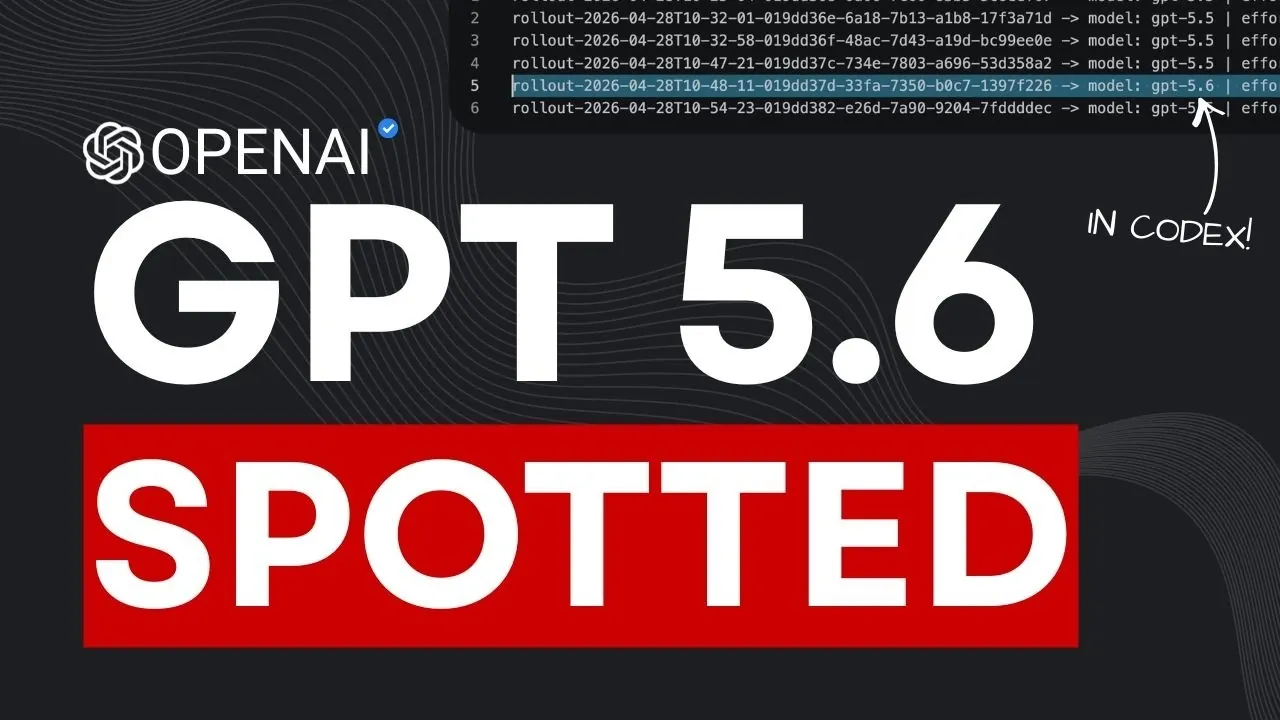
OpenAI’s latest advancements have sparked widespread attention, with GPT 5.6 reportedly in advanced testing phases. According to Universe of AI, this iteration is being evaluated within the Codex environment, a platform known for its focus on AI-driven coding and software development. Alongside this, updates to Codex itself are anticipated, potentially introducing features aimed at tackling cybersecurity challenges and improving efficiency for developers. Meanwhile, the rumored merger between DeepSeek and Kimi could create a major new player in the open source AI ecosystem, highlighting the increasing importance of collaboration in shaping the industry’s future.
In this analysis, you’ll explore the potential impact of GPT 5.6 on natural language processing and multimodal AI, as well as what the Codex updates could mean for developers navigating complex coding tasks. Additionally, gain insight into how the DeepSeek-Kimi merger might reshape global AI competition and foster innovation in open source frameworks. These developments underscore the dynamic interplay between technical progress and strategic realignments in the AI landscape.
ChatGPT 5.6
TL;DR Key Takeaways :
- OpenAI is testing ChatGPT 5.6, a next-generation generative AI model, with potential to set new standards in natural language processing and multimodal AI, while enhancing its Codex platform for developers.
- OpenAI’s Codex platform is expected to receive significant updates, including advanced features for cybersecurity and software development, solidifying its role as a leading AI-driven coding tool.
- A potential merger between DeepSeek and Kimi could create a major open source AI entity, boosting innovation, collaboration and competition in the global AI market.
- DeepSeek is preparing to launch Version 4 of its multimodal AI model, focusing on cost-effective and versatile solutions for text, image and audio processing across various sectors.
- Google’s partnership with the Pentagon has sparked ethical debates over AI’s role in military applications, highlighting the tension between technological innovation and ethical responsibility.
OpenAI is in the advanced stages of testing ChatGPT 5.6, a model poised to set new standards in generative AI. Early indications suggest that this iteration is being evaluated within OpenAI’s Codex environment, which specializes in AI-driven coding and software development. If released, GPT 5.6 could challenge existing leaders in natural language processing and multimodal AI, such as MTOS, by offering enhanced capabilities and performance.
The rapid pace of AI innovation is evident in the frequency of major updates, which now occur almost monthly. This relentless drive reflects the industry’s commitment to expanding the boundaries of AI applications, from improving natural language understanding to advancing multimodal functionalities. By refining its models, OpenAI aims to address both technical challenges and user demands, making sure that GPT 5.6 not only meets but exceeds expectations in diverse use cases.
Codex Update: Enhancing Developer Tools
OpenAI’s Codex platform, renowned for its ability to generate code and assist developers, is on the brink of a significant update. Speculation suggests that the upcoming enhancements could include a new Codex model or advanced features designed to tackle cybersecurity challenges and streamline software development processes. These updates are expected to further solidify Codex’s position as a leader in AI-driven coding solutions.
Codex is evolving into a comprehensive “super app” for developers, integrating plugins and tools tailored to meet their specific needs. Reports indicate that its adoption rate is surpassing competitors like Cloud Code, reflecting its growing influence in the developer community. By simplifying complex coding tasks and improving productivity, Codex enables developers to focus on innovation, making it an indispensable tool in modern software development.

Take a look at other insightful guides from our broad collection that might capture your interest in ChatGPT 5.
- OpenAI Spud Leak: Everything We Know About ChatGPT 5.5 Pro
- ChatGPT 5.4 Thinking vs Earlier Models : Token Savings and Stronger Self-Checks
- OpenAI Prepares ChatGPT 5.5 Release
- OpenAI Launches ChatGPT 5.5 for Advanced Coding Workflows
- ChatGPT 5.4 1M-Token Context, Extreme Reasoning Mode: Longer Tasks, Fewer Mistakes
- GPT-5.5 vs GPT-5.4: What Changes in OpenAI’s Newest Model
- ChatGPT 5.5 vs Claude Opus 4.7: A Comprehensive Performance Test
- OpenAI GPT-5.4 Leak During Codex Demo Sparks Release Questions
- ChatGPT 5.3 Instant Cuts Unneeded Disclaimers
- Opus 4.6 vs ChatGPT 5.3 : Code Size, Speed & Build Tradeoffs
DeepSeek-Kimi Merger: A New Open source Giant
The rumored merger between Chinese AI labs DeepSeek and Kimi has the potential to create a dominant force in the open source AI community. This strategic consolidation aligns with China’s broader approach to enhancing global competitiveness by uniting top players in the industry. If finalized, the merger could significantly boost Kimi’s IPO valuation, potentially doubling it from $18 billion, while also strengthening its position in the global market.
The combined entity is expected to prioritize the development of cost-effective and efficient AI models capable of competing with industry leaders like Frontier Labs. By pooling resources and expertise, the merger could accelerate innovation in open source AI, fostering collaboration and driving competition. This development highlights the growing importance of strategic partnerships in shaping the future of AI technology.
DeepSeek Version 4: Advancing Multimodal AI
DeepSeek is preparing to launch Version 4 of its multimodal AI model, which integrates text, image and audio processing capabilities. This update is designed to enhance efficiency and affordability, addressing the increasing demand for versatile AI solutions across commercial and academic sectors. By focusing on cost-effectiveness, DeepSeek aims to challenge resource-intensive models from competitors like Frontier Labs.
The forthcoming release underscores the rising significance of multimodal AI in applications ranging from content creation to data analysis. By offering adaptable and accessible technologies, DeepSeek is positioning itself as a leader in the next generation of AI solutions. This shift reflects the industry’s broader trend toward developing AI models that are not only powerful but also practical for a wide range of users.
Google-Pentagon Partnership: Ethical and Strategic Implications
Google’s recent agreement with the Pentagon has sparked widespread debate, highlighting the complex ethical and strategic implications of AI in defense. The partnership enables the U.S. Department of Defense to use Google’s AI for classified applications, including mission planning and weapons targeting. While this collaboration underscores the strategic potential of AI in military operations, it has also raised significant ethical concerns.
As part of the agreement, Google has reportedly adjusted its AI safety settings and content filters to meet government requirements. However, the partnership has faced internal opposition, with over 600 Google employees signing a petition to protest the collaboration. Critics argue that this move contradicts Google’s earlier commitments to avoid developing harmful technologies. The controversy illustrates the ethical dilemmas that arise when AI intersects with military objectives, prompting broader discussions about the responsibilities of tech companies in such partnerships.
Balancing Innovation and Ethics in AI
The developments surrounding GPT 5.6, Codex, the DeepSeek-Kimi merger and Google’s Pentagon agreement reflect the rapid evolution of the AI industry. As companies strive to deliver more advanced and versatile models, they must also grapple with the ethical challenges that accompany these innovations. The growing influence of AI in diverse sectors, from software development to defense, underscores the need for a balanced approach that prioritizes both technological progress and ethical responsibility.
In the coming months, further breakthroughs and debates are expected to shape the trajectory of AI technology and its role in society. For stakeholders, navigating this complex landscape will require a commitment to fostering innovation while addressing the ethical and societal implications of their advancements. The future of AI will depend not only on its technical achievements but also on the industry’s ability to align its innovations with the broader values and needs of society.
Media Credit: Universe of AI
Disclosure: Some of our articles include affiliate links. If you buy something through one of these links, Geeky Gadgets may earn an affiliate commission. Learn about our Disclosure Policy.
