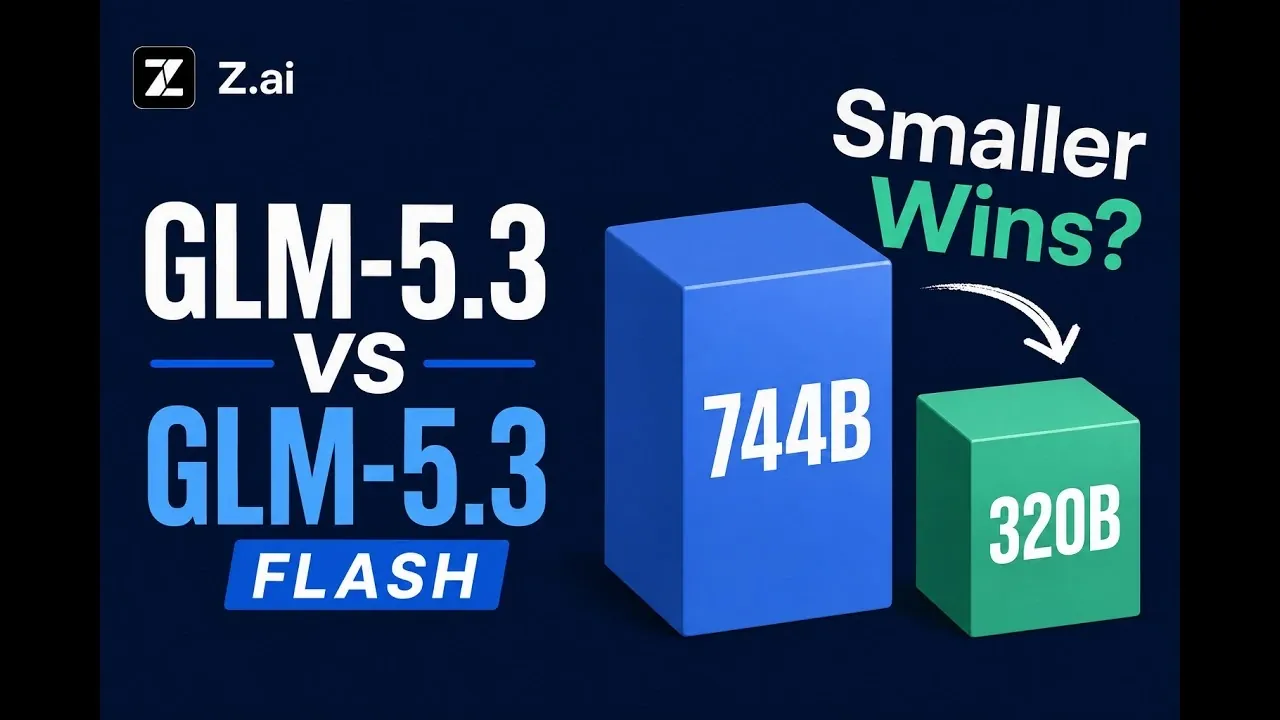
The GLM 5.3 Flash and GLM 5.3 represent two distinct approaches to AI model design, each tailored to different needs and constraints. As Sam Witteveen explains, the GLM 5.3 Flash offers a smaller, multimodal architecture with 320 billion parameters, supporting text, image and video inputs. In contrast, the GLM 5.3 is a larger, text-only model with 744 billion parameters, optimized for advanced reasoning tasks. These differences highlight a trade-off between the Flash model’s affordability and versatility and the original model’s focus on precision and reasoning depth, making the choice highly dependent on specific use cases.
Explore how these models compare across key dimensions, including their performance in multimodal tasks like image captioning and video summarization, as well as their cost implications. Gain insight into the Flash model’s hybrid attention mechanisms and how they enhance efficiency for users with limited hardware resources. By the end of this explainer, you’ll be equipped to decide which model aligns best with your project’s requirements and constraints.
GLM 5.3 vs GLM 5.3 Flash
TL;DR Key Takeaways :
- The GLM 5.3 Flash is a smaller, cost-effective, multimodal AI model with 320 billion parameters, supporting text, image and video inputs, while the larger GLM 5.3 focuses on advanced text-only tasks with 744 billion parameters.
- GLM 5.3 Flash is pre-trained on 30 trillion multimodal tokens, allowing tasks like image captioning, video summarization and content generation, with hybrid attention mechanisms enhancing efficiency.
- The Flash model is significantly more affordable, priced at $0.50 per million output tokens compared to $440 for the GLM 5.3 and supports local deployment with reduced hardware requirements.
- While the Flash model excels in multimodal and agentic tasks, it has trade-offs such as slower processing in max reasoning mode and higher token usage for complex operations.
- The GLM 5.3 Flash is ideal for cost-sensitive, multimodal applications, while the original GLM 5.3 is better suited for tasks requiring maximum reasoning power and highly refined text outputs.
Key Differences in Model Design
While the GLM 5.3 and GLM 5.3 Flash share a common lineage, they differ substantially in size, capabilities and intended use cases. These differences are critical to understanding their respective strengths:
- GLM 5.3: A text-only model with an impressive 744 billion parameters, of which 40 billion are active during inference. It is optimized for tasks requiring advanced reasoning and highly refined outputs.
- GLM 5.3 Flash: A smaller, multimodal model featuring 320 billion parameters and 18 billion active parameters. It supports text, image and video inputs, making it versatile for a wide range of multimodal applications.
The GLM 5.3 Flash uses its reduced size and hybrid attention mechanisms, combining sparse and linear attention, to enhance computational efficiency. This design ensures strong performance across most tasks while remaining accessible to users with limited hardware resources.
Training and Multimodal Efficiency
The GLM 5.3 Flash is pre-trained on 30 trillion multimodal tokens, slightly surpassing the 28.5 trillion text-only tokens used for the GLM 5.3. This broader training dataset equips the Flash model with the ability to excel in tasks requiring multimodal understanding, such as:
- Image captioning: Generating descriptive captions for images with contextual accuracy.
- Video summarization: Condensing video content into concise, meaningful summaries.
- Content generation: Producing creative outputs across text, image and video formats.
The hybrid attention mechanisms integrated into the Flash model further enhance its efficiency by reducing computational overhead. This makes it an attractive option for users aiming to minimize energy consumption or operate within hardware constraints without compromising task performance.

Expand your understanding of GLM with additional resources from our extensive library of articles.
- New GLM 5.3 Beats GLM 5.2 with 34% Accuracy on 75,000 Tokens
- Alibaba Qwen 3.8 Rivals Claude Opus with Local 13.5GB RAM Operation
- What ChatGPT 5.6’S Delay Means for the Future of Open Source AI
- What GLM 5.2 Reveals About the Enterprise AI Talent Gap
- Z.AI Prepares August 2026 Launch for GLM 5.5 to Target ChatGPT and Claude
- Qwen 4.0 Leak Reveals Possible September 2026 Launch
- How Anthropic’s Claude Oceanus is Writing 80 Percent of Merged Code
- China May Lock Down Open-Source AI Models: Qwen, GLM 5.2 & DeepSeek?
- Claude Opus 5 is Poised to Challenge GPT-5.6 in Token Efficiency
Cost and Accessibility
One of the most notable advantages of the GLM 5.3 Flash is its affordability. The API for the Flash model is priced at just $0.50 per million output tokens, a stark contrast to the $440 per million tokens charged for the GLM 5.3. This significant cost reduction democratizes access to advanced AI capabilities, making them available to smaller organizations, startups and independent developers.
Additionally, the Flash model supports local deployment, eliminating the need for continuous cloud-based processing. Its reduced hardware requirements further lower operational costs, making it an ideal choice for those seeking to integrate AI into workflows without investing in high-end infrastructure.
Performance: Strengths and Trade-Offs
Despite its smaller size, the GLM 5.3 Flash delivers competitive performance, surpassing its predecessor, GLM 5.2 and holding its own against mid-level models like Opus 4.8 and Gemini Flash. Its key strengths include:
- Agentic task performance: Excels in tasks requiring autonomy, such as function and tool calling.
- Reliability in workflows: Demonstrates high reliability and autonomy in managing complex workflows.
However, the Flash model does come with certain trade-offs. It processes tasks more slowly in max reasoning mode and consumes more tokens for complex operations. These limitations may impact its suitability for real-time applications or scenarios requiring highly refined outputs.
Strengths and Limitations
- Strengths: Cost-effective, efficient and capable of handling multimodal inputs. Excels in agentic tasks, supports local deployment and reduces energy consumption.
- Limitations: Slower processing in max reasoning mode, higher token usage for complex tasks and less refined outputs compared to the GLM 5.3.
Ideal Use Cases
The GLM 5.3 Flash is particularly well-suited for cost-sensitive applications that require multimodal capabilities. Examples of ideal use cases include:
- Content creation: Generating text, image and video content for marketing, education, or entertainment purposes.
- Image and video analysis: Performing tasks such as image recognition, video summarization and multimedia data processing.
- Agentic tasks: Automating workflows that demand autonomy and tool-calling capabilities.
However, its slower processing speed in max reasoning mode may limit its effectiveness for real-time applications or scenarios requiring rapid decision-making. For tasks demanding maximum reasoning power and highly refined outputs, the original GLM 5.3 remains the better option.
Future Implications for AI Development
The GLM 5.3 Flash exemplifies a broader trend in AI development toward smaller, more efficient models that deliver competitive performance. Its affordability and support for local deployment highlight the growing potential for AI to become more accessible and sustainable. As the demand for scalable AI solutions continues to rise, models like the GLM 5.3 Flash could pave the way for a new generation of cost-effective, high-performing AI systems, allowing broader adoption across industries and use cases.
Which Model is Right for You?
Selecting between the GLM 5.3 and GLM 5.3 Flash ultimately depends on your specific needs and constraints. If affordability and multimodal capabilities are your primary concerns, the Flash model is the clear choice. However, for tasks requiring maximum reasoning power, refined outputs and advanced text-only processing, the original GLM 5.3 remains a strong contender. By carefully evaluating the strengths and limitations of each model, you can make an informed decision that aligns with your goals and resources.
Media Credit: Sam Witteveen
Disclosure: Some of our articles include affiliate links. If you buy something through one of these links, Geeky Gadgets may earn an affiliate commission. Learn about our Disclosure Policy.
